
NFT Market Analysis: How to Assess an NFT's Investment Value
What determines an NFT's investment value?
An NFT's investment value depends on genuine demand, verifiable rights, and exit liquidity—not its floor price alone. To decide whether an NFT deserves attention, examine contract authenticity, supply structure, holder distribution, sales history, executable bids, copyright terms, and the team's ability to deliver. A rise in any one metric does not prove that the asset has developed lasting value.
The NFT market has no universal valuation model, and tokens in the same collection can differ greatly in price because of their traits, provenance, and history. Research is therefore not about calculating one perfectly accurate price. It is about establishing why the asset attracts demand, whether current quotes are credible, and how large a discount may be required to exit when the market weakens.
If you are not yet familiar with the fundamentals, start with the Complete Beginner's Guide to NFTs.
How can you confirm that an NFT is authentic?
Use blockchain records—not a name, avatar, or marketplace verification badge—to authenticate an NFT. Find the official contract address on the project's website, then verify the network, Token ID, creator address, initial mint, and transfer history. Names and images can be copied; the contract address and Token ID uniquely identify the on-chain asset.
Which on-chain details should you verify?
- Contract address: Cross-check the project's website, official social accounts, and a block explorer to avoid counterfeit collections.
- Token ID: Use the Token ID to distinguish a specific asset within an ERC-721 or ERC-1155 contract.
- Creation record: Check the minting address, initial recipient, and subsequent transfers for unusual movements.
- Media storage: Determine whether the image and metadata live on-chain, on IPFS or Arweave, or on the project's own server.
According to OpenSea, an NFT item page can display its creator, owner, transaction history, contract address, Token ID, and blockchain. You can continue verifying these details through a block explorer such as Etherscan. Source: OpenSea item page guide
Does the NFT floor price represent real value?
An NFT floor price is only the lowest valid ask on a particular marketplace. It does not mean every item in the collection can sell at that price. The lowest listing may be a common item, a distressed sale, or an order close to expiry. Without enough buyers, even an NFT listed at the floor can remain unsold, so you must also examine the highest bid, the spread, and sales frequency.
Which liquidity metrics matter most?
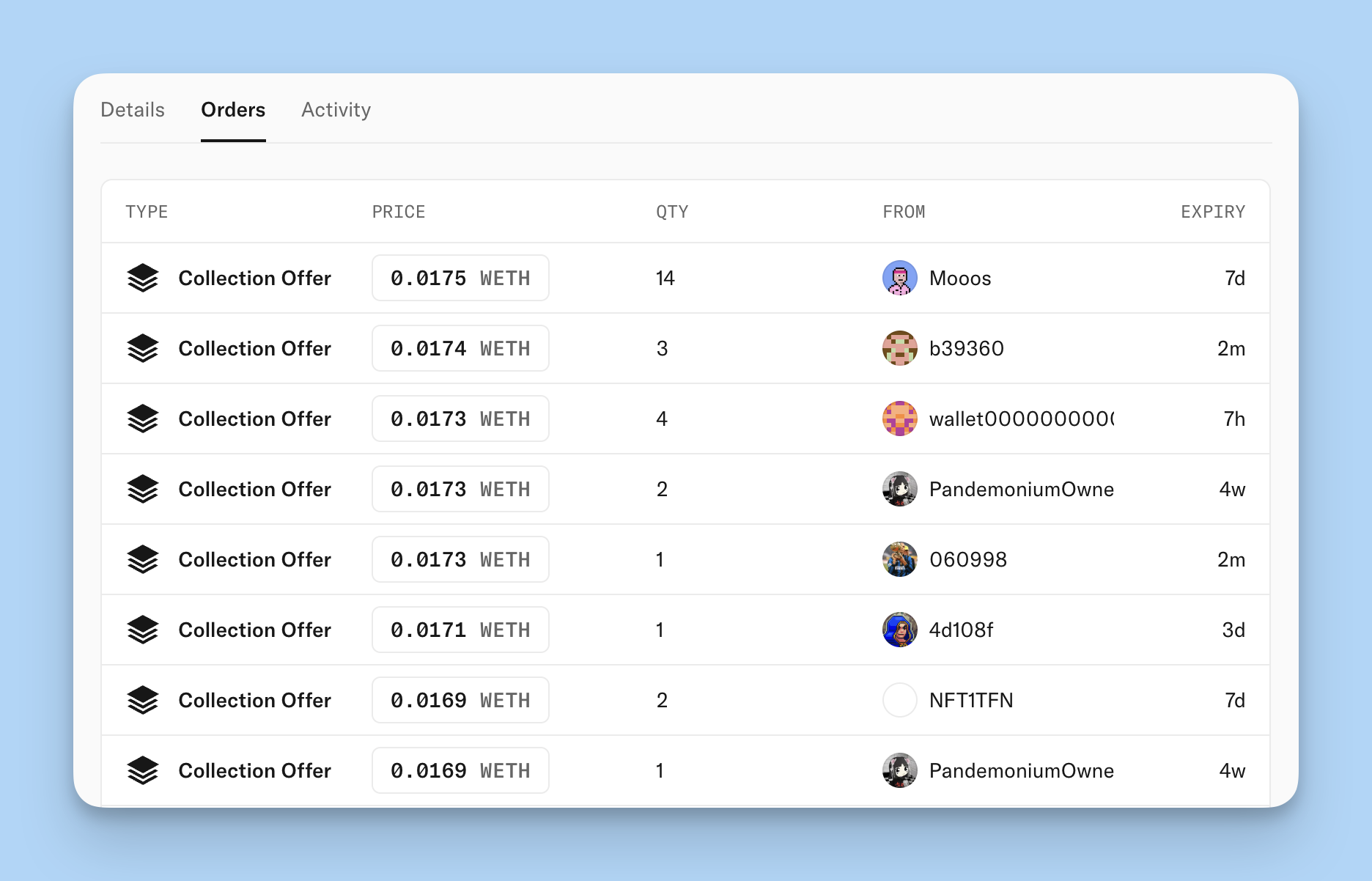
- Highest executable bid: This shows what a buyer is currently willing to pay immediately and is closer to instant exit value than an ask alone.
- Bid-ask spread: A wider gap between the floor and the highest bid usually signals greater disagreement and a larger discount for a quick sale.
- Bid depth: Look beyond the best bid and determine how many NFTs buyers can absorb at different price levels.
- Sales frequency: Compare transaction counts over the last 24 hours, 7 days, and 30 days to distinguish sustained trading from isolated activity.
“Floor market cap” is usually calculated by multiplying the floor price by total supply. It is a display metric, not the value at which the entire collection could be liquidated. If many holders sell at once, limited bids can be consumed quickly and subsequent prices may fall repeatedly. Executable bids and market depth should take priority over floor market cap in an NFT analysis.
How can you tell whether NFT volume is genuine?
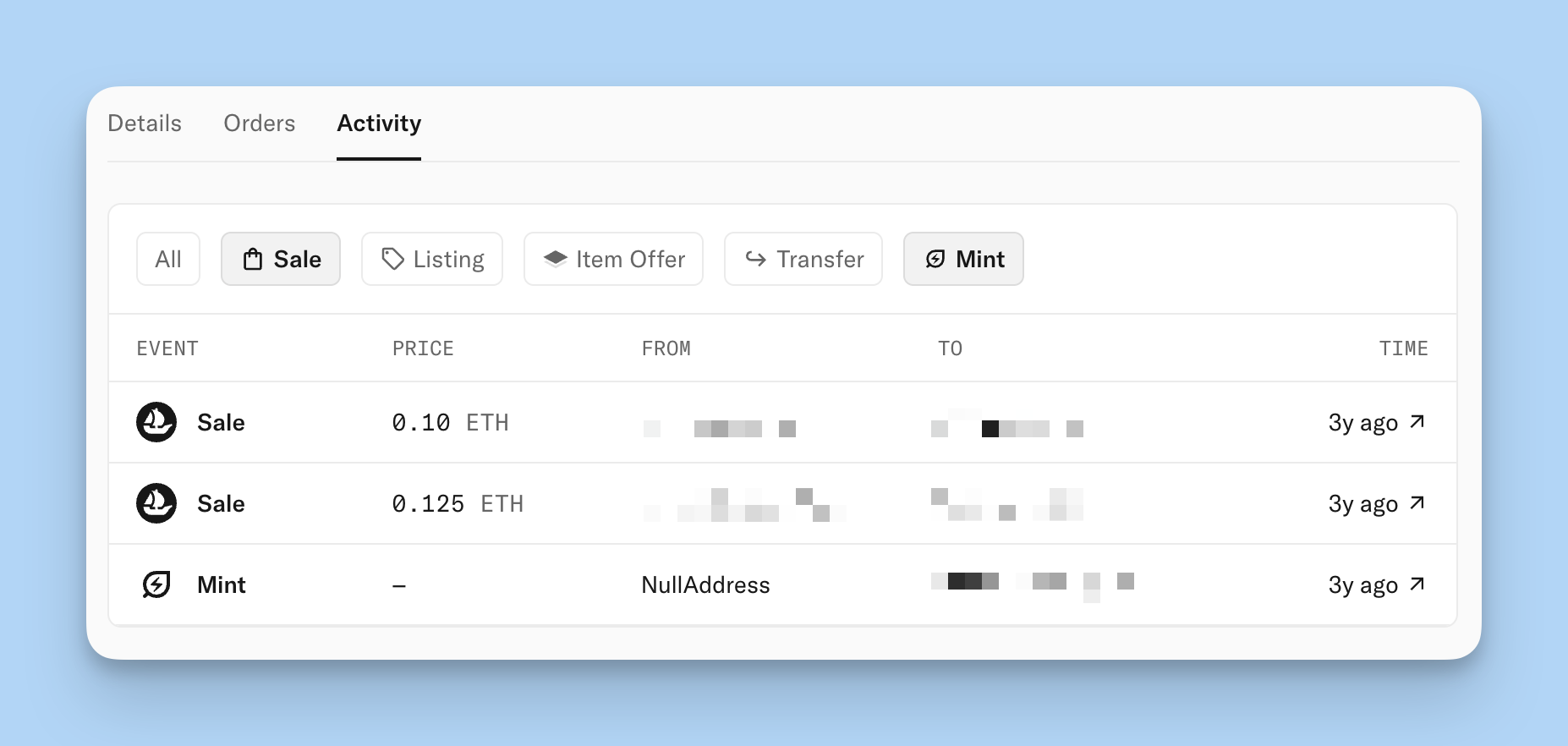
NFT trading volume can be distorted by trading rewards, related wallets, or wash trading, so it cannot be treated as genuine demand by itself. Compare whether the numbers of unique buyers and sellers, holder growth, and executable bids move in the same direction. If volume surges while assets merely circulate among a few wallets, apparent market interest may be artificial.
What are common signs of wash trading?
- Rapid round trips: The same NFT repeatedly returns to the original wallet or a related address over a short period.
- Shared source of funds: Buyer and seller wallets receive funds from the same address, with funds flowing back after the trade.
- Abnormal pricing: A sale is far above comparable items without rarity, provenance, or utility differences to justify it.
- Volume divergence: Volume grows sharply while unique holders, genuine bids, and follow-on demand do not.
- Mechanical behavior: A few wallets trade the same collection at regular intervals and similar amounts, unlike normal collector activity.
OpenSea activity entries link to the relevant block explorer, where you can inspect transaction times, wallet addresses, sale amounts, and some fee flows. A single expensive sale is useful for valuation only when the funding source is clear, the counterparties are independent, and comparable demand remains afterward. Source: OpenSea sales record guide
Why does holder distribution affect NFT prices?
Holder distribution determines whether potential selling pressure is concentrated. If a few wallets control much of the supply, their sales can quickly consume bids and break the floor. A more distributed holder base, stable long-term ownership, and a continuing influx of new buyers generally make the market more resilient to one address, although they do not eliminate the risk of a broad demand decline.
Check the ratio of unique holders to total supply, the concentration among the top 10 or 20 addresses, and whether large wallets have recently accumulated or sold. Distinguish project treasuries, staking contracts, marketplace custody addresses, and ordinary investors; the mere presence of a large address does not prove manipulation.
Are rarer NFTs always more valuable?
No. Rarity only shows that a trait appears in a smaller portion of the collection. Scarcity becomes market value only when collectors continue to prize that trait and transaction history shows that buyers pay a premium for it. A rare trait without real demand may remain unsold for a long time.
To assess trait value, find NFTs in the same collection with similar visual features, rights, and history, then compare several recent sales instead of citing one record price. Some traits in collections such as CryptoPunks and Bored Ape Yacht Club have commanded clear premiums, but one project's aesthetic preferences and collector consensus cannot simply be applied to another.
How do utility and copyright affect valuation?
The clearer an NFT's utility and the more reliably it is delivered, the easier it is to identify a basis for demand. Game items, event tickets, memberships, digital identity, or commercial licenses may increase holding value, but an unreleased roadmap remains only a future promise. Separate benefits that work today, verifiable development progress, and plans supported solely by promotional material.
Buying an NFT generally gives you control of the on-chain token; it does not automatically grant copyright in the image, trademark rights, or unlimited commercial use. FINRA notes that buying an NFT does not necessarily transfer associated intellectual property and that on-chain provenance does not validate every claim an issuer makes about rights to the work. Source: FINRA crypto asset types
For more on creator income, secondary-market royalties, and marketplace policies, read NFT Royalties and the Creator Economy: How Artists Earn from NFTs.
What risks exist in smart contracts and metadata?
An NFT's value depends not only on its image but also on the long-term reliability of its smart contract and media files. If the project retains the ability to mint without limit, pause transfers, freeze assets, or change metadata, holders bear additional centralization risk. If an image depends on a single server, the token may remain on-chain after that server closes while its content no longer displays correctly.
Which technical permissions should you inspect before trading?
- Minting permissions: Determine whether total supply is fixed and whether the project can issue more tokens later.
- Administrative permissions: Check whether the contract supports pausing, freezing, upgrading, or replacing metadata.
- Storage method: Determine whether media is stored on-chain, on IPFS or Arweave, or on a centralized server.
- Approval scope: When connecting to a DApp, review what you are signing and avoid unlimited approvals to unknown contracts.
- Security controls: Check whether administrative powers are governed by a multisig, time lock, or transparent governance process.
An upgradeable contract is not automatically unsafe; some game NFTs need updates to character states or equipment traits. What matters is whether the permissions are disclosed, whether multisig or time-lock controls constrain changes, and whether the team can alter core asset properties without holder consent.
How can you estimate a reasonable NFT purchase price?
NFTs have no universal pricing formula, so a price range is more appropriate. Start with recent comparable sales to establish a base range, then adjust for traits, provenance, rights, and liquidity. Finally, use current genuine bids to estimate a conservative exit value. If an optimistic valuation relies on several unmet conditions, apply a substantially larger risk discount.
A five-step valuation method
- Select comparable assets: Choose NFTs from the same collection with similar traits, rights, and transaction dates, excluding clearly abnormal trades.
- Set a base range: Use the middle range of several normal sales rather than one record price to represent the market.
- Adjust for trait premiums: Add value for a rare trait only when historical data shows buyers consistently paying for it.
- Deduct exit costs: Subtract marketplace fees, creator earnings, Gas Fees, and potential slippage from the expected sale price.
- Build three scenarios: Estimate prices under rising demand, stable conditions, and contracting liquidity.
Suppose the floor is 1 ETH but the highest executable bid is only 0.65 ETH. Immediate exit value is closer to 0.65 ETH than to the displayed 1 ETH. Before trading, review ETH market information and include ETH price volatility and on-chain Gas Fees in your costs.
What is Hotcoin's six-dimension NFT verification framework?
The Hotcoin Learn six-dimension framework is an original checklist for preliminary NFT screening. It examines authenticity, demand, liquidity, ownership, rights, and technical risk in sequence. It does not predict prices; it helps researchers identify information gaps. If a core dimension cannot be verified, short-term hype is not a reason to skip due diligence.
- Authenticity: Can the contract address, Token ID, creator, and on-chain provenance be cross-checked?
- Demand: Are unique buyers, real users, and organic community discussions sustained?
- Liquidity: Do the highest bid, spread, bid depth, and transaction frequency support an exit?
- Distribution: Are holdings excessively concentrated among the team, whales, and related wallets?
- Rights: Are usage rights, commercial licenses, membership benefits, and delivery status set out in clear terms?
- Security: Have contract permissions, media storage, wallet approvals, and website domains been verified?
Authenticity and security are preconditions for trading and cannot be offset by expected high returns. Demand, liquidity, and ownership distribution determine the market's ability to absorb sales, while rights explain why users may continue to hold. Evidence across all six dimensions creates a more complete investment analysis than a story focused only on price.
What warning signs appear in risky NFT projects?
High-risk NFT projects often combine opaque information, abnormal trading, and pressure to buy. Warning signs include a contract address that cannot be independently verified, guaranteed appreciation, sudden social-media growth, repeated trades among related wallets, highly concentrated ownership, and a roadmap focused on airdrops and price without a verifiable product.
- Guaranteed returns: Claims such as “it can only go up,” “risk-free profit,” or a fixed return conflict with NFT volatility.
- Manufactured urgency: Direct messages urging an immediate mint, a time-limited claim, or a connection to an unknown site may be phishing attempts.
- Unnatural trading: Volume rises without matching growth in unique buyers, holders, or genuine bids.
- Unclear rights: Copyright, commercial licenses, media storage, and the project's administrative powers are not disclosed.
- Theft or disputes: Stop and verify provenance when a marketplace displays suspicious, stolen, or ownership-dispute warnings.
OpenSea recommends checking the seller, collection, and history before trading, never sharing a seed phrase, treating unknown links cautiously, and regularly reviewing smart-contract approvals. NFT transactions are generally irreversible, and one malicious signature may affect other digital assets in the wallet. Source: OpenSea security guide
What is the complete NFT investment analysis process?
A complete NFT analysis begins by confirming the asset's identity and ends with a conservative exit-value estimate. Verify the official contract and rights first, then inspect supply, holder concentration, historical sales, executable bids, and contract permissions. Finally, calculate the total cost including fees and Gas Fees, rather than buying first and searching for reasons to justify the purchase later.
- Confirm identity: Verify the blockchain, contract address, Token ID, and creator through official channels.
- Inspect supply: Review total supply, team allocations, future minting, and metadata modification permissions.
- Analyze demand: Compare unique buyers, use cases, community activity, and the team's delivery record.
- Verify sales: Sample expensive transactions and exclude round trips among related wallets and abnormal fund flows.
- Assess liquidity: Compare the floor, highest bid, spread, bid depth, and sales frequency.
- Read the terms: Confirm copyright, commercial licenses, membership benefits, and related restrictions.
- Calculate net value: Deduct marketplace fees, royalties, Gas Fees, and the potential discount for a fast sale.
- Set a limit: Use only funds you can afford to lose completely and define exit conditions in advance.
If you are preparing to trade, see How to Buy and Sell NFTs: An OpenSea and Blur Tutorial.
NFT market analysis FAQ
What does NFT floor price mean?
The NFT floor price is the lowest valid ask for a collection on a particular marketplace. It represents the seller's lowest current asking price; it does not mean every NFT can sell at that price or that equal buying power exists. To estimate real exit value, also inspect the highest executable bid, the spread, bid depth, and recent sales frequency.
Are rarer NFTs more valuable?
Not necessarily. Rarity measures how often a trait occurs in a collection. Scarcity affects price only when buyers continue to value the trait and pay a consistent premium in genuine transactions. Compare multiple sales of similar assets rather than relying solely on a marketplace rarity rank or one expensive trade.
How can you identify NFT wash trading?
Check whether the same NFT makes rapid round trips among a few wallets, whether buyers and sellers share a funding source, whether funds return after a trade, and whether volume growth coincides with more unique buyers and executable bids. One signal is not conclusive, but when several appear together, exclude the suspicious sales from valuation.
Are NFTs suitable for long-term investment?
Long-term suitability depends on whether a project can sustain real demand, deliver its promises, maintain copyright or usage rights, and preserve enough liquidity. NFT prices are highly sensitive to changing narratives and attention. Historical highs do not guarantee future returns, so participants should size exposure for a complete-loss scenario.
How can you use a Web3 wallet safely for NFT trading?
Enter DApps through official channels and confirm the domain, blockchain network, counterparty, and approval scope before signing. You can separate an everyday interaction wallet from long-term storage and use a hardware wallet for valuable assets. After a one-time interaction, review and revoke approvals you no longer need.
You can use Hotcoin Web3 Wallet to manage multichain assets and interact with DApps, or download the Hotcoin App to explore related Web3 services.
Conclusion
Assessing an NFT's investment value is not about finding a project “guaranteed to rise.” It is about verifying authenticity, genuine demand, and exit liquidity. Floor price, rarity, and volume each provide only partial information; combine them with holder distribution, rights, contract permissions, and on-chain transactions to reduce the risk of being misled by artificial hype.
Prioritize executable bids when estimating exit value. Discount undelivered roadmaps and ambiguous intellectual-property rights, and limit exposure to funds you can afford to lose completely. The less evidence available, the wider the spread, and the more concentrated the holdings, the greater the required risk discount should be.
Visit the Hotcoin website for more blockchain and Web3 educational content.
Risk warning: This article is for educational and informational purposes only and does not constitute investment, legal, or tax advice. NFTs carry risks including extreme price volatility, poor liquidity, smart-contract vulnerabilities, phishing, infringement, theft, and project failure. Conduct independent research and make decisions cautiously before trading.
Lettura consigliata
Visualizza altro



Service@hotcoin.com
Product@hotcoin.com
Business@hotcoin.com
Casecn@hotcoin.com