
How to Create Your Own DAO: From Zero to Launch
Creating a DAO is not simply issuing a governance token and opening Discord and a voting page. The real task is to connect mission, members, assets, decisions, execution, and accountability into an institution that can operate. Tools can encode rules in an interface or contract, but they cannot decide who should hold power, what deserves a vote, or who is accountable when a proposal fails.
For most new teams, gradual launch is the safest path. Start with a charter, forum, and Safe multisig to test collaboration, then use Snapshot to gather member input. Consider governance tokens, Governor, Timelock, and a more complex legal structure only after the treasury, membership, and protocol permissions expand.
This guide covers the complete journey from idea to live operations. Before starting, you can read the Complete Guide to DAOs for the wider framework of members, proposals, voting, execution, treasury management, and legal boundaries.
Step 1: Confirm That You Really Need a DAO
A DAO suits projects that need several people to manage assets, protocols, public resources, or community rules together. An open-source protocol may want users to control upgrades; an investment community may need joint approval of capital; a service collective may allocate budgets by contribution; and a creator community may jointly manage its brand and events.
If a project has only two or three founders, has not validated its business model, and relies on one team for every critical task, a conventional company with a multisig may be more efficient. Introducing universal voting too early adds communication, compliance, and security costs without automatically creating a community.
Answer three questions first: Which decisions truly require collective approval? Which assets require shared custody? Can the organization continue if the founders leave? If the answers are unclear, run a small collaboration experiment before issuing a tradable token.
Step 2: Write a One-Page DAO Charter
A charter does not need to begin as a lengthy legal document, but it should define the mission, governance scope, membership requirements, proposal process, treasury principles, emergency powers, and amendment process. Those rules become the basis for configuring governance tools.
The mission should fit into one sentence, such as maintaining public infrastructure for an open-source protocol or allocating shared revenue for a creator network. A mission that is too broad makes every proposal appear reasonable and turns the treasury into an unfocused grant pool.
Governance scope should state both what the DAO controls and what it does not. A DAO may control the treasury and brand but not hiring at a development company; it may manage protocol parameters but cannot compel an independent front end to implement commercial decisions. Clear boundaries reduce misunderstandings about token rights.
Define how the charter can change. Routine operating rules may use a lower threshold, while changes to the core mission, token supply, upgrade authority, or dissolution terms should require a longer discussion period and stronger approval.
Step 3: Choose a DAO Type and Membership Model
Protocol DAOs focus on contract upgrades, risk parameters, and developer coordination. Investment DAOs focus on capital commitments, custody, and exits. Social DAOs emphasize access, culture, and events, while service DAOs care more about project allocation, delivery, and compensation. Different types should not copy the same voting rules.
Decide how members enter. Common models include a founding-member list, contribution review, ownership of an NFT, ownership or staking of tokens, and invitations from existing members. Open admission supports growth, while reviewed admission can improve collaboration density but increases the power of gatekeepers.
Membership and voting rights can also be separated. Someone may join discussions without treasury voting rights; a technical committee may review protocol proposals; a community token may set direction while Safe signers verify execution. See the Guide to DAO Types: Protocol, Investment, Social, and Service DAOs for a full comparison.
Step 4: Map Power and Responsibility
List every DAO control point, including domains, forums, social accounts, code repositories, front ends, contract administrators, treasuries, oracles, servers, trademarks, and legal entities. Each one needs a current owner, a backup owner, and a removal process.
Do not map only on-chain permissions. An attacker who controls a forum administrator or domain can publish fake proposals and phishing links. A development company that controls upgrade code and deployment may retain significant informational power even without governance tokens.
A founding multisig may temporarily retain some authority, but the DAO should disclose which powers are not yet decentralized and what conditions will trigger transfer. A vague promise to hand control to the community later is not a roadmap; specify dates, tests, audits, and acceptance criteria.
Step 5: Determine Legal, Tax, and Contract Arrangements
Smart contracts can hold on-chain assets, but they do not naturally solve banking, employment, taxation, intellectual property, vendor contracts, or litigation. Whether a DAO needs a foundation, association, company, cooperative, DAO LLC, or DUNA depends on its activities, members' locations, and applicable laws.
Do not assume anonymous voting or on-chain registration eliminates liability. The U.S. Ooki DAO enforcement case shows that regulators and courts may treat a DAO as an organization capable of bearing liability, while other jurisdictions may take different approaches.
Before accepting substantial funds, issuing a tradable token, selling rights to the public, or providing financial services, obtain legal and tax advice in the relevant jurisdictions. The charter should also explain the relationship between on-chain votes and the directors, administrators, or signatories of any legal entity so that two rule systems do not conflict.
Step 6: Design the Treasury and Budget System
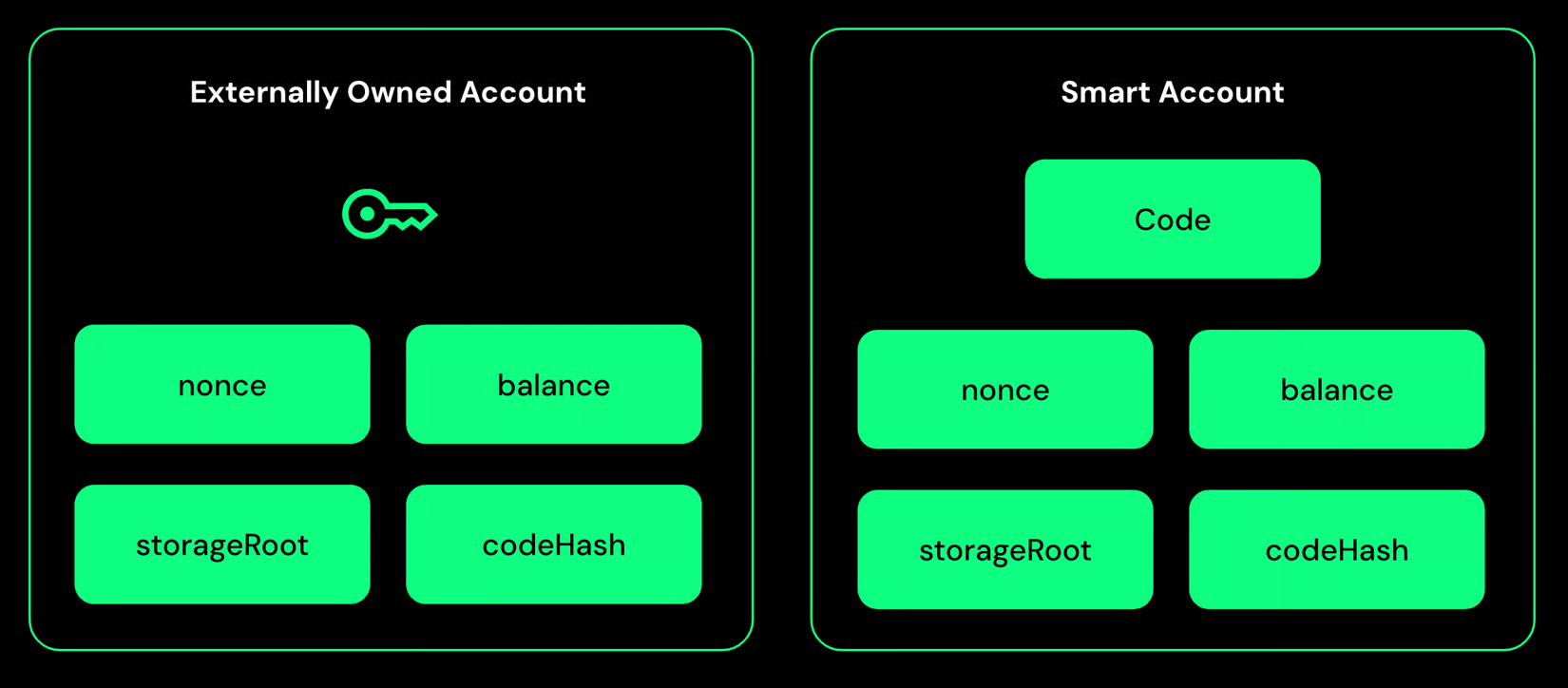
A DAO treasury should not sit in a founder's personal wallet. At an early stage, deploy a Safe Smart Account with multiple owners and a confirmation threshold. Safe's core multisig model requires a specified number of signatures before a transaction executes, reducing single-key risk.
Signers should use different devices and, where possible, belong to different organizations and locations. Configurations such as 2-of-3 or 3-of-5 are examples, not universal answers; the threshold must balance security, time zones, and emergency availability.
After creating the treasury, rehearse a small deposit, a routine payment, transaction rejection, signer replacement, and recovery before moving significant assets. Record the Safe address, network, owners, threshold, and enabled modules, and verify them through multiple public channels.
The budget system should cover annual or quarterly limits, proposal authorization, recipient-address verification, milestone payments, reporting, and treatment of unused funds. Routine small expenses may use spending limits, while core assets should still require multisig or governance approval.
Step 7: Choose a Network and Infrastructure
When selecting a network, consider member wallet support, gas costs, the chain holding the assets, governance-tool compatibility, confirmation times, bridges, and security assumptions. A low-cost network makes voting cheaper, but if the treasury lives elsewhere, cross-chain execution creates new trust and operational risks.
Do not assume the same multisig address has been deployed on every network. Safe documentation notes version and network compatibility limits for multichain accounts. Sending assets to an undeployed or incompatible address can make recovery difficult.
Infrastructure also includes forums, documentation, calendars, notifications, block explorers, data indexing, and backups. If a governance front end fails, members should still know how to read proposals, find contracts, and reach emergency contacts.
Step 8: Select Governance Tools for the Current Stage
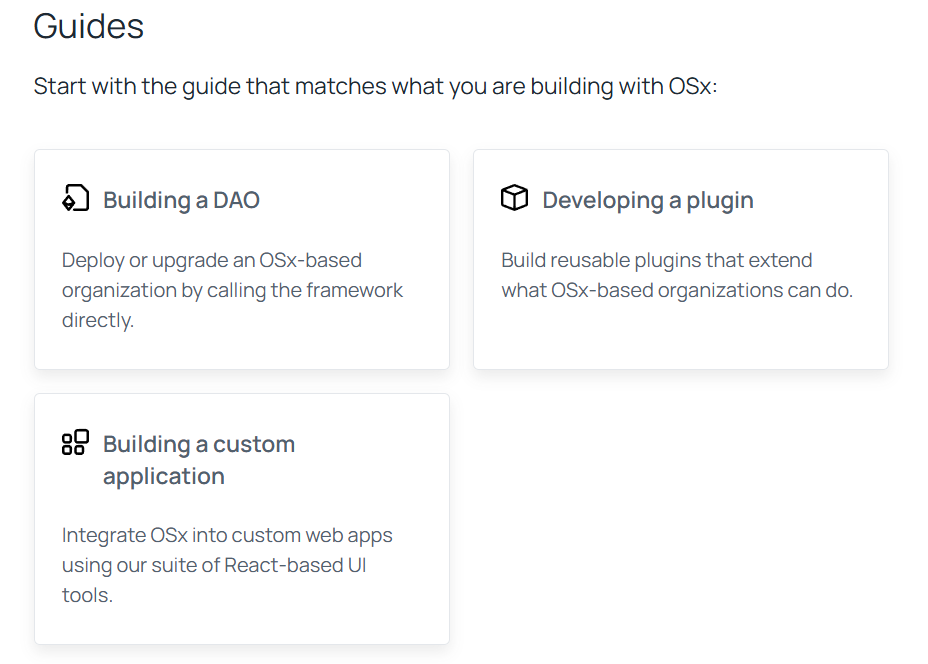
A small team can begin with a forum, Safe, and a membership list. Add Snapshot when low-cost voting is needed. Evaluate Snapshot X, Aragon OSx, or OpenZeppelin Governor with Timelock when automatic execution and stronger censorship resistance become necessary.
Aragon OSx treats a DAO as an on-chain organization that can hold assets, execute actions, install plugins, and manage permissions. It suits teams that need modular permissions and custom plugins, but every permission granted to a plugin must be audited.
OpenZeppelin Governor suits protocols that need independently deployed governance contracts. It can combine Votes, Counting, Quorum, Settings, Timelock, Late Quorum, and other modules. Greater flexibility also means greater responsibility for deployment, testing, and maintenance.
Do not evaluate only the front end. Verify the voting-power source, execution contract, administrators, upgrade rights, Timelock, alternative interfaces, and recovery path if the tool shuts down. See DAO Governance Tools: Snapshot, Tally, and Governor for a detailed comparison.
Step 9: Create a Snapshot Space
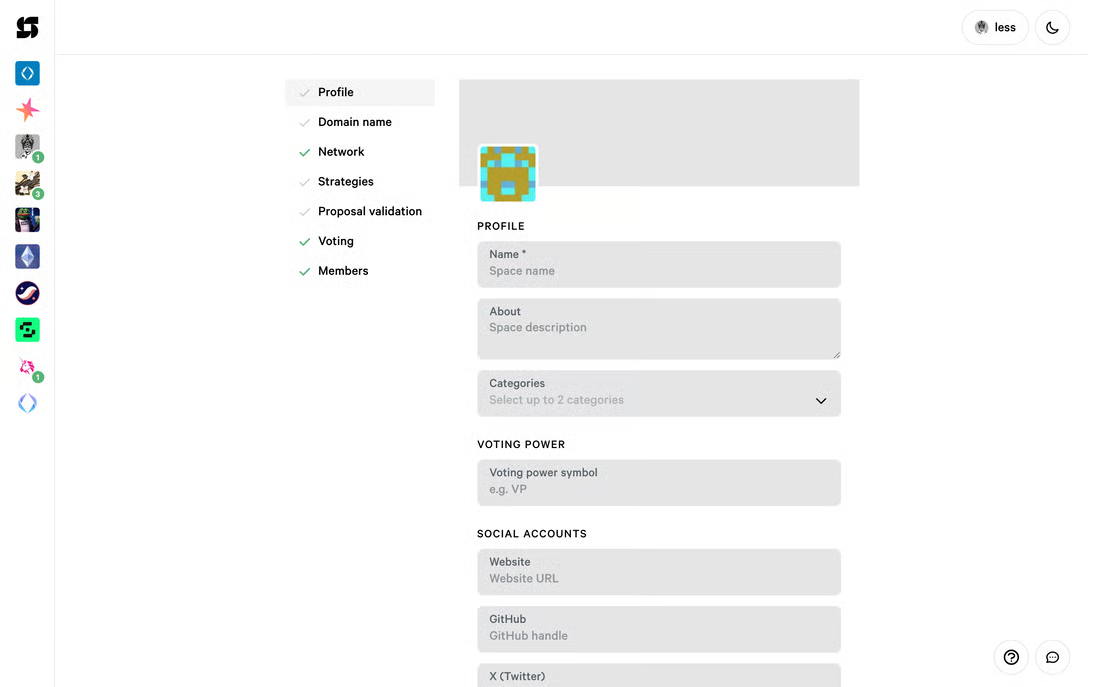
Under current official documentation, creating a Space on Snapshot mainnet requires an Ethereum mainnet ENS name; the test environment uses Sepolia ENS. From the Space creation page, configure the profile, domain, base network, voting strategies, proposal validation, voting rules, and members.
A Voting Strategy determines who has voting power and how much. It may read ERC-20 balances, NFTs, allowlists, delegation, or other data. A Voting Type determines how choices are expressed, such as single choice, weighted, ranked choice, or for/against/abstain. Do not confuse the two.
Proposal Validation limits who may create proposals and helps prevent spam and phishing. Thresholds may depend on holdings, an allowlist, or another condition. Author permissions, administrators, and the Space Controller should also be distributed and documented.
Before creating the production Space, rehearse the entire process on Snapshot's test environment. Publish a test proposal and verify member voting power, snapshot block, start and end times, quorum, delegation, and signatures from several wallets.
Importantly, oSnap support ended in December 2025 and it should no longer be used as a Safe automation method. Existing projects should migrate according to official guidance to Snapshot X or SafeSnap, and new DAOs should not copy outdated oSnap tutorials.
Step 10: Decide Whether to Issue a Governance Token
A DAO does not necessarily need a token. Early organizations can govern through Safe signers, allowlists, contribution records, or membership NFTs, then issue a tradable asset only after power distribution and economic use are clear.
If the DAO issues an ERC-20 governance token, define total supply, allocation, lockups, vesting, treasury share, delegation, and minting authority. Founder and investor unlock schedules directly affect governance concentration; a marketing graphic showing a community allocation is not enough.
Governor commonly expects a token with historical voting-power checkpoints, such as ERC20Votes or ERC721Votes. Holders may also need to self-delegate or delegate to a representative before their balance counts as governance power.
A token needs a clear purpose. Issuing one merely to look like a DAO adds regulatory, tax, liquidity, and speculation risks. Governance power does not automatically represent equity, profit rights, redemption rights, or legal membership.
Step 11: Configure Governor and Timelock
On-chain governance must define the voting-power source, proposal threshold, Voting Delay, Voting Period, Quorum, counting method, and execution delay. Choose parameters based on the actual participating supply and the risk of decisions, not by copying a famous DAO.
Voting Delay gives members time to review, delegate, and detect malicious proposals. Voting Period should cover major time zones. Proposal Threshold discourages spam, while Quorum prevents a few addresses from taking control during low participation.
The Timelock must actually hold the governed assets, contract ownership, and access roles. OpenZeppelin documentation emphasizes that the Timelock executes proposals in this configuration, so putting authority on Governor itself may prevent governance from operating the relevant assets.
After deployment, inspect Admin, Proposer, Executor, and Canceller roles. An extra Proposer or Canceller may bypass governance or block an approved proposal. The initialization administrator should transfer or renounce authority after setup, as designed.
Step 12: Establish a Proposal Template
Each proposal should state the title, problem, objective, background, alternatives, budget, owner, schedule, milestones, conflicts of interest, risks, execution steps, and failure handling. For on-chain actions, include the target contract, amount, function, and simulation result.
Use separate discussion, temperature-check, and formal-execution stages. Discussion should permit revision rather than rushing to a vote. The temperature check confirms direction, while a formal proposal must use final addresses and executable payloads.
Avoid bundling unrelated actions. The community may support a budget but oppose a permission change; bundling forces a false choice. High-risk actions should have separate proposals and an independent reviewer.
Require a post-proposal report. Approval is not delivery. The owner should update spending, milestones, and outcomes on fixed dates, with predefined treatment for unused funds, delays, and failure.
Step 13: Design Daily Operations and Delegation
Community-wide voting is appropriate for mission, annual budgets, core upgrades, and major elections, not every invoice. The DAO can establish working groups, committees, and service providers to act within a defined scope and budget.
Every delegation should specify the responsible party, permissions, spending cap, term, reporting frequency, and revocation method. Separate an operating multisig from the core treasury; a small-expense account should not also control protocol upgrades.
Safe Spending Limits can let a designated address make rapid payments within a cap, but such permissions bypass ordinary multisig confirmations. Review every limit, module, and beneficiary regularly, and revoke them immediately when a project ends.
Delegate systems also need accountability. Delegates should disclose compensation and conflicts, publish voting rationales and participation records, and allow members to withdraw or override delegation so a few representatives do not accumulate permanent power.
Step 14: Run Testnet and Tabletop Exercises
Before launch, complete at least one full proposal lifecycle: creation, delay, voting, reaching or missing quorum, queueing, waiting through Timelock, execution, and result verification. Also test failed proposals, cancellation, and rejection of an incorrect address.
A tabletop exercise simulates real incidents. If a signer disappears, the forum is compromised, a malicious proposal reaches quorum, the front end goes offline, or the treasury receives the wrong asset, does the team know whom to contact, which contract to use, and which permissions can pause the system?
At least two members should independently verify every address and parameter. Deployment transactions, owners, threshold, token, Governor, Timelock, and permission transfers all need a release record rather than being stored only in personal messages.
Launch on mainnet with small funds and low-risk permissions. Observe one or two governance cycles before expanding the treasury or transferring core contracts. A one-time move to complete decentralization can make configuration mistakes hard to recover from.
Step 15: Launch the DAO
The launch announcement should publish the official domain, forum, documentation, Snapshot Space, treasury, governance contracts, block-explorer links, and support channel. Cross-check every address through multiple channels so members do not enter a fake site through a search advertisement.
Publish the terms and authority of the initial members, signers, administrators, delegates, and working groups. If participants are anonymous, explain selection, verification, and replacement. Anonymity should not eliminate accountability.
The first proposals should cover low-risk matters such as confirming community rules, a small event budget, or committee elections. Do not combine token issuance, a full treasury migration, and a protocol upgrade in the first vote.
Also create an incident channel and governance calendar. Members should know when discussion and voting occur, who sends reminders, and how to report phishing, contract vulnerabilities, or abnormal signer behavior.
What Should the DAO Do After 30, 60, and 90 Days?
During the first 30 days, focus on basic operation. Check whether proposals are understandable, voting power is correct, signers respond on time, reports are published, and members can find official entry points.
From days 31 to 60, evaluate parameters. Adjust the proposal threshold, Voting Period, and Quorum based on real participation, remove unused administrators and modules, and review treasury limits.
From days 61 to 90, conduct the first governance retrospective. Compare proposal cycle time, budget completion, delegation concentration, and security incidents, then decide which powers can be delegated further and which processes still need human review.
Parameter changes should occur through public proposals, not silent administrator edits. A DAO earns trust through continuous records, not by declaring that governance was transferred to the community on launch day.
The Most Common Mistakes When Creating a DAO
First, issuing a token before finding its purpose. Once speculators arrive, establishing a mission and membership culture becomes harder.
Second, voting on every decision. Members quickly become fatigued, and truly important proposals receive less attention.
Third, checking only the multisig threshold and ignoring Safe Modules. A malicious or overpowered module may bypass the owner threshold and execute arbitrary transactions.
Fourth, copying Quorum from a large project. If much of the token supply does not participate, an excessive threshold can paralyze a new DAO.
Fifth, allowing the written proposal and calldata to differ. On-chain systems execute addresses, amounts, and functions; they do not interpret the community's intent.
Sixth, retaining founder authority without exit conditions. A temporary administrator becomes a permanent backdoor.
Seventh, ignoring off-chain responsibilities. Voting cannot fulfill real-world contracts, tax duties, intellectual-property management, and delivery obligations. See DAO Challenges: Governance Attacks, Voter Apathy, and Efficiency Bottlenecks for more risks.
Hotcoin's Six-Dimension LAUNCH Checklist
18.1 L: Logic — Is There a Valid Reason to Create the DAO?
Confirm that the DAO solves a shared-asset and shared-decision problem, rather than existing only to issue a token or support marketing.
18.2 A: Authority — Are Permissions Visible?
List the controllers of contracts, treasury, domains, front ends, multisigs, and legal entities. Every authority needs boundaries and a removal method.
18.3 U: Users — Are Members and Delegates Defined?
Explain joining, leaving, delegation, voting, and conflict-of-interest rules. Do not mistake the number of wallets for the number of real members.
18.4 N: Numbers — Have Governance Parameters Been Tested?
Test thresholds, Quorum, voting periods, Timelock, and multisig settings against the real token distribution and expected participation rate.
18.5 C: Controls — Are Security Defenses Complete?
Check snapshots, least-privilege access, modules, pause and cancellation controls, monitoring, backups, incident communications, and recovery exercises.
18.6 H: Handoff — Can Power Be Transferred Safely?
Define how founding administrators transfer authority, signers rotate, working groups close, and governance continues if the front end fails.
How Can Ordinary Members Join a New DAO Safely?
Read the charter and authority map first. Confirm which assets the DAO actually controls and whether its token provides only voting rights. Inspect the treasury, multisig, administrators, and execution contracts rather than relying on social-media follower counts.
Before connecting a wallet, verify the official site, network, and contracts. Use a separate wallet for proposals, delegation, and claims so your main assets remain isolated from a new project's risks.
Delegation normally assigns voting power and should not require sending tokens to a delegate. Independently verify every Permit, token approval, or asset transfer request.
Read executable proposal data, especially recipient addresses, amounts, permissions, and Timelock settings. Popular comments, influencer endorsements, and current vote totals cannot replace personal verification.
Frequently Asked Questions
20.1 Must a DAO Issue a Token?
No. A small organization can manage membership and voting with a multisig, allowlist, contribution record, or NFT, then issue a token only after it needs transferable governance power.
20.2 Do You Need to Know How to Code to Create a DAO?
A simple DAO can use interfaces such as Safe and Snapshot, but permissions, strategies, and security still need professional review. Custom Governor contracts, plugins, and cross-chain execution usually require development and auditing expertise.
20.3 How Many Signers Should a DAO Treasury Have?
There is no universal number. Base the setup on treasury size, signer independence, time zones, devices, and emergency availability, and ensure that no single person can move core funds.
20.4 Does a Successful Snapshot Vote Automatically Make a Payment?
Classic Snapshot normally records an off-chain vote only. Payment requires Safe signers or a configured on-chain execution mechanism such as Snapshot X or SafeSnap.
20.5 Can a DAO Operate Without a Legal Entity?
Technically yes, but contracts, taxes, liability, and employment still exist. Seek professional advice based on the DAO's activities and relevant jurisdictions before choosing whether and how to establish an entity.
20.6 Can Governance Parameters Change After Launch?
Yes, but the charter or governance contracts should define the process. Core parameter changes require adequate discussion, a public vote, and permission verification, not an opaque administrator.
20.7 How Do You Know a DAO Is Ready to Launch?
At minimum, complete the charter, authority map, treasury exercises, full proposal test, incident plan, legal assessment, and public address verification. Deploying a token and voting page alone is not a launch-ready DAO.
Conclusion: Validate Collaboration Before Expanding Autonomy
The right creation sequence is mission, members, accountability, treasury, proposals, tools, testing, and handoff—not token, airdrop, and promotion. Governance design must answer who decides, who executes, who can pause, and who is responsible for results.
Using Safe and Snapshot early does not mean the DAO has failed or is insufficiently decentralized. If temporary powers are disclosed, limited, and governed by clear transfer conditions, gradual governance is usually safer than abandoning all control at once. As the organization matures, it can transfer high-value authority to Governor, Timelock, and audited modules.
DAO launch is only the beginning. Participation, execution time, delegation concentration, budget completion, and security incidents require ongoing review. The organization also needs migration plans for tool shutdowns, member departures, and legal changes.
Return to the Complete Guide to DAOs to connect this launch guide with articles on DAO types, governance tools, challenges, and case studies.
To manage multichain assets and connect to governance applications, use Hotcoin Web3 Wallet. For mobile market and trading tools, visit Hotcoin App. Browse more educational content at Hotcoin.
Risk warning: This article is for education and information only and does not constitute investment, legal, or tax advice. DAO tokens, tools, contract permissions, legal structures, tax obligations, and project status may change. Before creating or joining a DAO, verify current official documentation, audits, contract addresses, wallet signatures, and local rules.
Lettura consigliata
Visualizza altro


Service@hotcoin.com
Product@hotcoin.com
Business@hotcoin.com
Casecn@hotcoin.com