
Farcaster Explained: Silicon Valley's Leading Decentralized Social Protocol
Farcaster is an open social protocol built within the Ethereum ecosystem. It places the critical operations — account registration, ownership, app keys, and storage purchases — on OP Mainnet, while handing high-frequency social messages such as posting, following, liking, and profile updates to the Snapchain network. Users can carry the same Farcaster ID across different clients, and developers can read public data to build feeds, community tools, and Mini Apps.
Farcaster earned the label "Silicon Valley's most hyped decentralized social protocol" thanks to a dense cluster of crypto founders, the Frames boom, and a large funding round. But that label only describes a moment of attention; it does not mean Farcaster has surpassed traditional platforms. After Neynar took over protocol maintenance, the official client, and Clanker in 2026, the project entered a new phase focused more heavily on developers and app distribution.
If the relationship between open identity, the social graph, and on-chain monetization is still unfamiliar, start with SocialFi: The Present and Future of Decentralized Social Networks, then use this article to understand why Farcaster adopts a hybrid architecture that puts critical rights on-chain and high-frequency messages off-chain.
What Is Farcaster?
Farcaster is a protocol for building public social networks. Users can create accounts, publish Casts, react, and follow; developers can run nodes, read protocol data, or create alternative clients and recommendation algorithms.
The official documentation describes it as a "sufficiently decentralized" social network. The word "sufficiently" matters: Farcaster does not require that recommendation algorithms, push notifications, search, direct messages, and content moderation all be decentralized. It prioritizes making sure users control their core account, that valid messages can be verified by the network, and that third parties can build alternative clients. Even if one app refuses to display a user, other apps can still read protocol state and continue serving them.
Farcaster is therefore neither a general-purpose smart contract chain nor merely an X-style app. It consists of on-chain contracts, an off-chain message network, clients, and Mini Apps working together. "Farcaster" sometimes refers to the protocol and sometimes to the official client renamed from Warpcast, so the distinction matters in any discussion.
Why Did Farcaster Attract Silicon Valley and the Crypto Industry?
2.1 Founders Who Understand Both Social and Crypto Products
Farcaster was founded by former Coinbase executives Dan Romero and Varun Srinivasan. The team knows both crypto infrastructure and consumer products, which led them to protect identity and authorization with a blockchain while placing high-frequency social activity on an off-chain network.
2.2 Open Data Reduces Platform Risk for Developers
Traditional platforms can raise API prices, restrict third-party clients, or change distribution rules. Farcaster turns public identity, follows, and messages into protocol-level capabilities, so a new app does not have to build accounts and relationships from scratch — though it still has to solve product, moderation, and business problems on its own.
2.3 Frames Demonstrated "Software as Content"
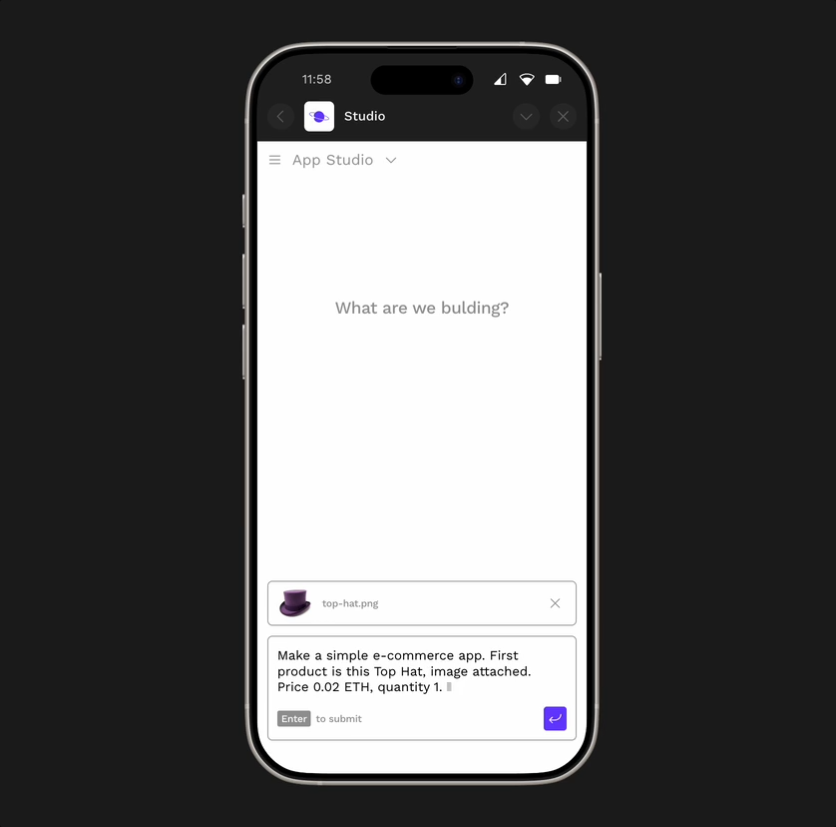
In 2024, Frames let users vote, mint, play games, and transact directly inside a post, driving a sharp short-term spike in industry attention. Frames v2 later evolved and was renamed Mini Apps, expanding from simple interactive cards into web applications that run inside the client.
2.4 Capital and Developers Amplified the Hype Together
Farcaster closed a $150 million round in 2024 led by Paradigm, with participation from a16z crypto, Haun Ventures, USV, Variant, and Standard Crypto. The size of the raise, an active community of crypto founders, and a fast-growing wave of app experiments together created the impression of "Silicon Valley hype."
That said, funding is not proof of product-market fit. In 2026 the original team transferred the protocol, codebase, official client, and Clanker to Neynar — a sign that open social is still searching for sustainable user growth and revenue models.
What Is the Difference Between the Protocol, the Official Client, and Third-Party Apps?
The protocol layer defines accounts, keys, message formats, storage, and node synchronization rules. It determines what counts as a valid FID, which key may post on behalf of an account, and how Casts, Reactions, and Links are verified.
The official client handles registration flow, interface, feeds, notifications, channels, and moderation. The early official client was named Warpcast and was renamed Farcaster in 2025 to reduce the confusion of "the protocol is Farcaster, the app is Warpcast." Old domains and some legacy documentation may still show Warpcast.
Third-party clients can use the same FID and public messages to offer different recommendations, search, long-form writing, analytics, or community experiences. Users typically create an account through a wallet-style client first, then grant an app key to a Connected App. A third-party app can publish off-chain messages on the user's behalf, but an app key alone cannot transfer account ownership.
An open protocol does not require every client to display all content. Apps can still hide posts, restrict accounts, or adjust recommendations. What users gain is the ability to switch entry points and revoke app permissions — not an absolute right to be heard in any given interface.
How Does Farcaster's Hybrid Architecture Work?
4.1 The On-Chain Layer: Accounts, Keys, and Storage
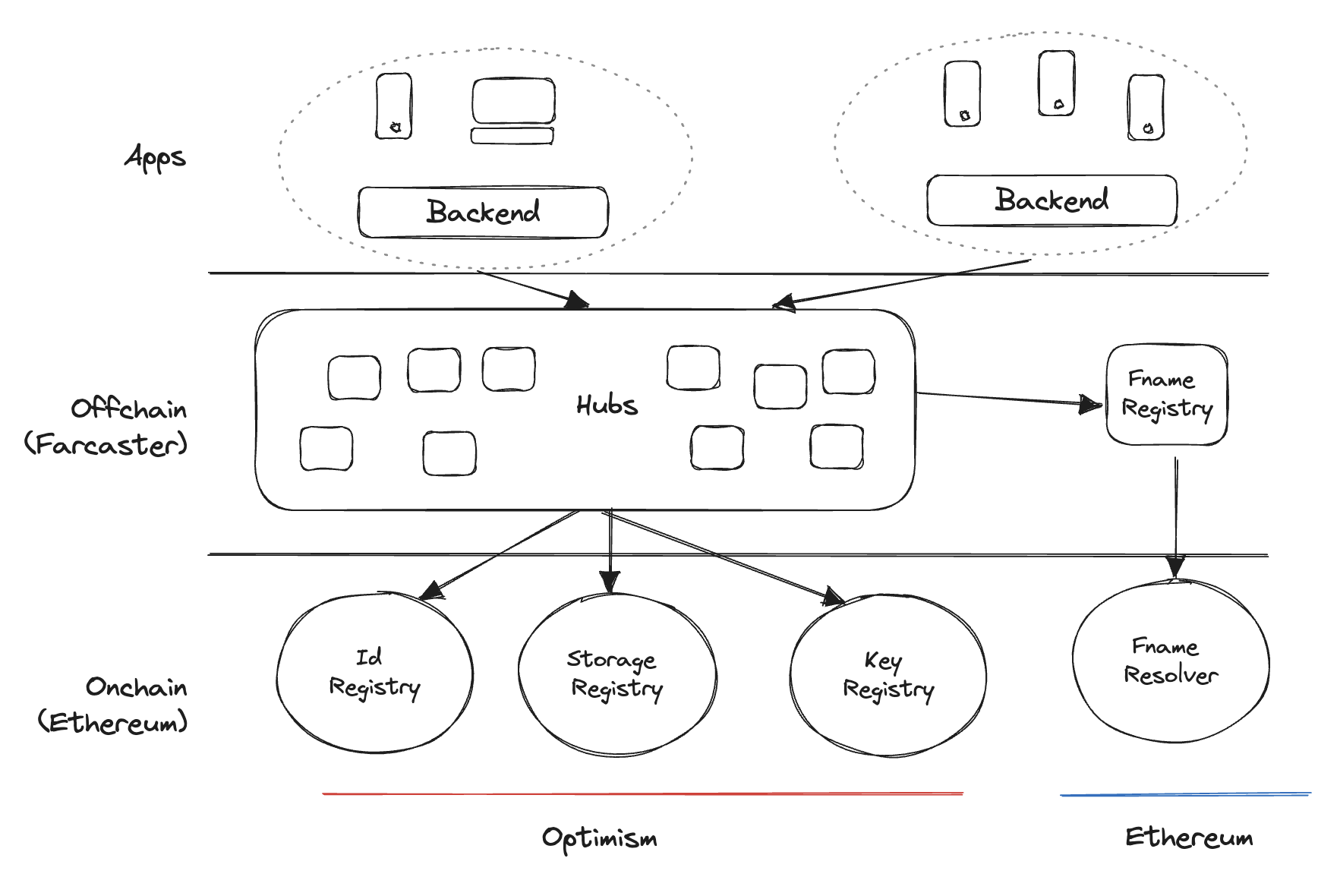
Farcaster's main contracts are deployed on OP Mainnet. The Id Registry creates and manages Farcaster IDs; the Key Registry adds or removes app keys; the Storage Registry handles message storage rentals. On-chain operations are kept few and are used only where ownership, security, and consistency matter.
Users do not pay gas for each individual Cast or like, yet they can still prove account ownership through on-chain records and revoke client keys.
4.2 FID: The Account's Stable Identifier
Once an account is created, the system assigns a unique Farcaster ID, or FID. Clients display a username and avatar, but internally the protocol points to accounts primarily by FID. When a user changes their username, historical messages and follow relationships remain attached to the same FID.
An FID can move with account ownership and can be assigned a recovery address. Recovery services reduce the risk of losing a device, but they also create a new trust boundary — users must understand exactly what recovery powers a third party holds.
4.3 App Keys: Separating Social Actions From the Main Wallet
Users can add separate keys for different apps, letting a client post and interact on their behalf. The ownership wallet retains higher privileges and can revoke keys, which reduces frequent signing from the main wallet and prevents a Connected App from directly taking over the account.
Even so, an app key can still publish messages as the user. Before connecting an unfamiliar client, verify its source and permissions, and revoke access as soon as you stop using it. Wallet private keys, recovery addresses, and app keys are three distinct risk layers and should not be conflated.
4.4 The Off-Chain Layer: Snapchain Stores Social Messages
Messages such as Cast, Reaction, Link, Profile Data, and Verification are signed by the user or an app key and then submitted to Snapchain. Nodes verify the signature, account status, and storage eligibility, then sync valid messages to other nodes.
Posts are not written to OP Mainnet. The blockchain provides the root of trust for accounts and keys, while Snapchain handles high-frequency social state — a deliberate trade-off among performance, cost, and deletability.
How Do Usernames, Wallets, and Account Ownership Relate?
A Farcaster account is registered by an Ethereum address and receives an FID, while the username exists to make the account easier for others to search and mention. The official documentation splits usernames into free fnames and on-chain ENS names.
An fname is an off-chain ENS name provided by Farcaster, displayed as @alice for example. It is quick and cheap to obtain, but the official documentation states explicitly that an fname can be revoked by Farcaster. An on-chain ENS name is controlled by the wallet and requires registration and renewal costs; Farcaster cannot unilaterally revoke it the way it can an fname.
Owning a Farcaster account therefore does not mean a free username is yours forever, nor does it confer any trademark rights. To assess control, check the FID owner, the recovery address, the username proof, and the app keys separately.
Where Are Casts, Follows, and Likes Stored?
Farcaster's main message types are: the public post Cast, the Reaction to a Cast, the Link between accounts, the account's Profile Data, and the Verification that proves address ownership. All are signed by an authorized key and stored in the protocol's data network.
Users can remove original content by publishing a delete message; the network keeps a tombstone record to prevent old messages from reappearing. This suits privacy and content correction better than writing every sentence permanently to a public chain — but deletion cannot guarantee that copies vanish from the internet, since third-party indexers, screenshots, caches, and archive services may already hold the content.
Protocol messages and client features are also not identical. The official documentation still marks some Channel metadata, follows, and moderation as experimental client features; after switching clients, channel display, recommendations, and host settings may not migrate completely.
Why Does Farcaster Charge Storage Rent?
Open social networks are vulnerable to spam and Sybil accounts. If every message were stored free and forever, node costs would grow without limit. Farcaster has accounts buy storage units by the year, controlling resource consumption with fixed capacity and per-category message caps.
As of this review, the official documentation lists one storage unit at $7 for one year, providing capacity for 5,000 Casts, 2,500 Reactions, 2,500 Links, 50 Profile Data entries, and 50 Verifications respectively. Prices, terms, and capacity change, so always check the latest official page.
When one message category exceeds its cap, the oldest messages are pruned to make room for new ones. There is a grace period after storage expires, but continuing without renewal may mean losing messages from the protocol network. This shows that Farcaster offers a sustainable rental of social state, not an indefinite digital archive.
Anyone who needs to preserve articles or images long term should use their own website, decentralized storage, or independent backups — do not treat a Farcaster storage unit as permanent cloud storage.
Why Did Snapchain Replace the Early Hub Sync Model?
Early Hubs used a CRDT-based Deltagraph and propagated messages via gossip. As nodes and message volume grew, it became harder for the network to detect missing data, and global rate limiting and consistency grew more complex.
Snapchain adds block-style ordering and consensus to social messages. Nodes can detect missing data block by block, and scale is controlled through account sharding and pruning. It behaves more like a purpose-built "blockchain-style social database" than a general-purpose asset network.
The consensus described in the Snapchain whitepaper requires validators to reach majority confirmation on blocks and allows older, non-critical messages to be pruned. The benefit is more stable synchronization and more consistent global rules; the cost is new risks around the validator set, upgrade coordination, and downtime.
Decentralization cannot be judged solely by whether you can run a read node. Official pages currently describe Snapchain as using a trusted validator set, with the main validators controlled by a small number of operators. Reading and verifying data is not the same as having equal block production rights; validator diversity and governance transparency remain the key questions.
What Did Frames and Mini Apps Change?
Early Frames turned posts from static links into interactive entry points. Without leaving the feed, users could tap a button to vote, claim a digital item, play a small game, or execute an on-chain action. This low-friction distribution helped small developers reach crypto-native users quickly.
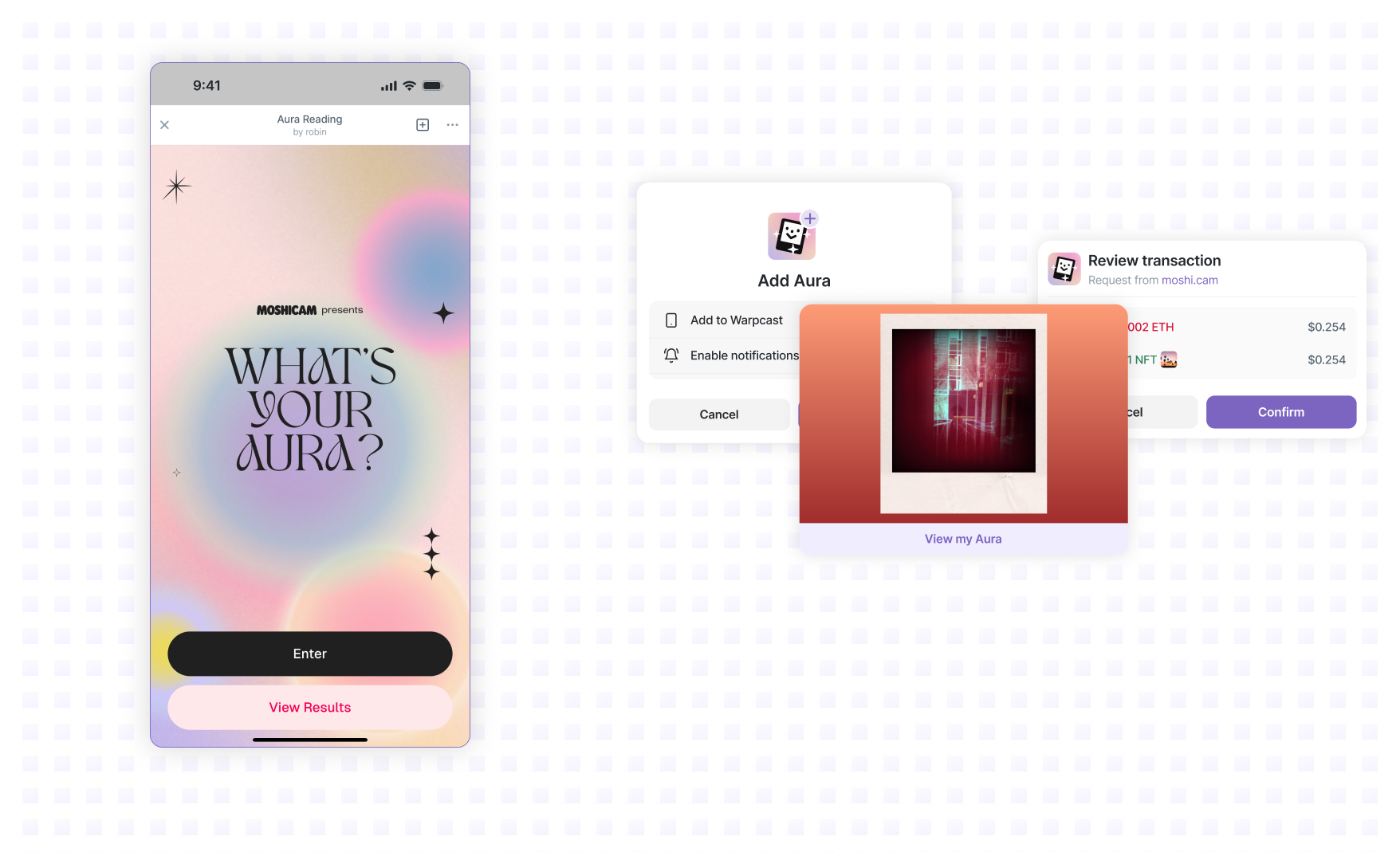
Today the official name is Mini Apps. Mini Apps are web applications built with HTML, CSS, and JavaScript that can be discovered and run inside compatible Farcaster clients, calling an SDK for authentication, notifications, and Ethereum or Solana wallet interactions.
Their advantage is merging content distribution with software distribution: a developer publishes one shareable entry point and users open the app straight from a Cast; users do not have to fill in a registration form again, and the app can send notifications once granted permission. Games, minting, payments, prediction markets, AI tools, and community quests can all be embedded into the social path.
But a Mini App is not an app-store product that has passed a uniform security audit. A web page can change its content, and wallet interactions may include approvals, swaps, or transfers. A client providing the entry point is not an endorsement of a third-party contract — users still need to check the domain, token, chain, amount, and approval scope.
How Does Farcaster Support the Creator Economy?
Farcaster itself guarantees no creator income, but open identity and Mini Apps can shorten the path from content to payment. Creators can accept tips, sell digital collectibles, run paid communities, distribute subscription products, or split revenue among collaborators according to on-chain rules.
An open graph also lowers the cost of switching clients. As long as a new app reads the same protocol state, a creator keeps their FID, public follow relationships, and historical Casts instead of rebuilding an audience from zero. Different clients can offer differentiated tools around long-form writing, video, collectibles, or professional communities.
Still, wallet connectivity is not a stable business model. Token rewards can attract farming, minting revenue can fall with the market, and algorithms and clients still decide whether content gets seen. For a systematic look at subscriptions, tipping, digital collectibles, and on-chain revenue splits, read The Creator Economy: How Web3 Is Changing Content Monetization.
What Do Clanker and Social Tokens Reveal?
Clanker lets users create tokens through social messages and automated agents, putting issuance, discussion, and trading in the same social environment. It demonstrates Farcaster's composability: a public identity, a single Cast, and an on-chain execution tool can connect into a complete product flow.
This experience also amplifies financial risk. Lookalike names, thin liquidity, concentrated holdings, front-running, and inadequate disclosure of interests do not disappear just because the entry point is convenient, and account reputation is no substitute for contract review.
Social tokens are better suited to expressing membership, contribution, or community coordination than to turning every human relationship into a price curve. For the structure of personal tokens, community tokens, and fan rights, read Social Tokens: Taking the Fan Economy On-Chain.
How Does Farcaster Differ From Lens Protocol?
Farcaster and Lens both try to reduce user dependence on a single social platform, but their technical emphases differ. Farcaster uses OP Mainnet contracts to manage FIDs, app keys, and storage purchases, then stores signed social messages via Snapchain; Lens offers modular social components on Lens Chain — Accounts, Graphs, Feeds, Groups, Rules, and Actions — and handles content storage through Grove.
Farcaster is more like a public social network with fixed message types, emphasizing replaceable clients, fast message sync, and Mini App distribution. Lens is more like a programmable social toolbox where developers can deploy different graph, feed, and rule instances.
Neither one puts "all data permanently on-chain." Farcaster prunes and deletes some messages, and large Lens files typically sit in a storage layer such as Grove. When choosing, compare actual users, developer tooling, account recovery, content portability, and app experience rather than only the underlying chain. For the full comparison background, read Lens Protocol: Infrastructure for the Web3 Social Graph.
What Does Neynar's 2026 Takeover Mean?
In January 2026, Neynar announced it was taking over Farcaster from Merkle. Public statements indicate that Neynar will maintain the protocol, operate the Farcaster client, and take responsibility for Clanker, with some team members joining Neynar. The original co-founders are gradually stepping back from day-to-day operations, and the product direction has shifted toward helping developers move from idea and distribution to sustained revenue.
This does not mean Farcaster is shutting down. If anything, it creates a "handover test": can the protocol, code, and community keep running after the original company changes direction?
But the handover also exposes concentration concerns. If protocol maintenance, the dominant API, the official client, and most validators sit with a single operator, open code alone cannot eliminate platform risk. Keep watching alternative clients, validator distribution, and data export capability.
What Are Farcaster's Core Risks?
14.1 User Scale and Content Density
An open protocol does not automatically create demand. A concentration of crypto founders helps form a professional community, but it can also over-financialize the content. Long-term growth still requires stable communities and better discovery mechanisms for newcomers.
14.2 Client and Infrastructure Concentration
Most users depend on the official client and a small number of API providers, so recommendations, notifications, search, and registration can still form a de facto center. Snapchain validator concentration also warrants ongoing attention.
14.3 Spam and Bots
Cheap messages, token incentives, and AI agents all increase spam. Storage fees curb only part of the abuse; clients still need ranking, moderation, and anti-Sybil systems.
14.4 Privacy and Public Profiling
Casts, follows, address verifications, and on-chain transactions can be combined into a long-term profile. Deleting protocol messages does not delete third-party copies. Users should not publish precise locations, identity documents, seed phrases, or any sensitive information they cannot afford to have spread permanently.
14.5 Mini App and Wallet Security
Malicious apps may induce signatures, approvals, or transfers. Signing in with a Farcaster identity only proves the relationship between a user and an account; it proves nothing about app safety or whether a trade is a good deal. The smoother the social recommendation, the more important it is to independently check what is being executed.
14.6 Business Model and Governance
Storage rent, developer services, and on-chain transactions can generate revenue, but whether they can fund long-term protocol maintenance remains to be seen. Farcaster governs through FIPs and a "rough consensus and running code" approach, which is highly flexible but lacks the formal constraints of traditional token voting.
The Hotcoin CASTER Six-Dimension Framework
To avoid judging a Farcaster app on funding, celebrities, or token hype alone, use the six-dimension CASTER method. It is not an investment rating but a product and risk checklist.
15.1 C: Content — Is It Worth Following Consistently?
Look at whether the community still has genuine conversation, professional discussion, and steady creators once rewards and airdrops are stripped away. Interaction counts are no substitute for content quality.
15.2 A: Account — Is Control Clearly Defined?
Confirm the FID owner wallet, the recovery address, the username type, and the app keys. Being able to switch clients does not mean all client data migrates automatically.
15.3 S: Storage — Is It Sustainable?
Check message capacity, expiry dates, renewal responsibility, pruning rules, and independent backups. Anything that must be preserved permanently needs a separate archiving plan.
15.4 T: Third-party — Is the Ecosystem Open?
Look for alternative clients, nodes, indexers, and developer tools, and check whether they can run without depending on a single proprietary API.
15.5 E: Economy — Do the Economics Serve the Social Layer?
Analyze whether Mini Apps, tokens, and tipping solve real needs, whether returns depend on new speculators arriving, and check asset liquidity, permissions, and fees.
15.6 R: Resilience — Can the Protocol Withstand Team Changes?
Observe validator distribution, code maintenance, FIP governance, data reconstructability, and client competition. The 2026 change of operating entity is exactly the kind of real-world test of protocol resilience worth studying.
How Can Everyday Users Use Farcaster Safely?
First, download the client from the official Farcaster website or a trusted app store, and verify the domain and developer information. Old Warpcast links may still work, but never reach a registration or recovery page through an unsolicited direct message.
Second, understand your recovery setup. Record which wallet owns the account and who controls the recovery address, and confirm the process for switching devices. Never hand your seed phrase to support staff, a channel moderator, or a Mini App.
Third, use a separate small-balance wallet for social activity. Do not expose a long-term savings wallet directly to a large number of Mini Apps, token tools, and experimental clients.
Fourth, review app keys and wallet approvals regularly. Remove Connected Apps you no longer use, revoke unnecessary token allowances, and reject any signature request you do not recognize.
Fifth, confirm the current price, capacity, and term before buying extra storage. Keep independent backups of important long-form posts, images, and transaction records so nothing is lost to expiry or pruning.
Sixth, keep account reputation separate from investment judgment. A well-known creator resharing something, a hot channel, or a pile of likes proves nothing about contract safety or asset value.
To connect to Farcaster Mini Apps or manage related on-chain assets, you can set up a separate wallet with Hotcoin Web3 Wallet and carefully verify the network, contract, approvals, and transaction amounts.
Frequently Asked Questions
17.1 Is Farcaster a Blockchain?
Not a general-purpose smart contract blockchain. It uses OP Mainnet contracts to manage accounts, keys, and storage, and handles dedicated social messages with Snapchain.
17.2 What Is the Relationship Between Farcaster and the Former Warpcast?
Farcaster is the protocol name; Warpcast was the name of the official client. Warpcast was renamed Farcaster in 2025, so the official app and the protocol now share one brand, though the old name may still appear in links and documentation.
17.3 Are All Farcaster Posts On-Chain?
No. Accounts and critical authorizations live on OP Mainnet, while Casts, likes, follows, and profiles are stored mainly by Snapchain. A post carries a signature, but that is not the same as being written into an Ethereum block.
17.4 Is a Farcaster Account Free to Use?
Registration, storage, or client services may incur fees. Official storage prices and capacity change, and some clients may subsidize the flow, so rely on the page as it appears when you use it.
17.5 Does a Cast Disappear Completely After Deletion?
The protocol can remove the original content with a delete message, but third-party indexes, screenshots, and caches may retain copies. Do not publish sensitive information on a public social network if you cannot afford to have it spread.
17.6 Are Mini Apps Always Safe?
Not necessarily. A Mini App is a third-party web application that can request login, notifications, and wallet interaction. Verify the domain before opening it, and check the token, amount, recipient, and approvals before transacting.
17.7 Does Farcaster Have an Official Token?
The presence of DEGEN, assets issued through Clanker, or other community tokens in the ecosystem does not make them official Farcaster protocol tokens. Treat any token's status as valid only per the latest official announcements from the protocol and project.
Conclusion: Farcaster Is More Than a Crypto Version of X
Farcaster's most important innovation is finding a middle ground among account ownership, open data, and consumer-grade experience. OP Mainnet contracts provide the root of identity and authorization, Snapchain carries high-frequency social messages, clients handle recommendations and moderation, and Mini Apps connect software, social distribution, and on-chain transactions.
It draws Silicon Valley attention not only because of funding and crypto celebrities, but because an open protocol could redistribute power between social platforms and developers. Yet the 2026 operational handover, validator concentration, storage rental, and user growth challenges are a reminder: open code and on-chain identity are only a starting point, and real decentralization still has to be proven through multiple clients, multiple operators, and a durable community.
For everyday users, the order of judgment should be: first decide whether the community is worth joining, then whether your account and content can migrate, and finally whether Mini Apps and the on-chain economy deliver real value. After finishing this article, you can return to SocialFi: The Present and Future of Decentralized Social Networks to keep building a complete knowledge framework across decentralized social, the creator economy, and social tokens.
To manage multi-chain assets, use Hotcoin Web3 Wallet; for mobile market data and trading tools, visit Hotcoin App; to browse more educational content, go to Hotcoin.
Risk disclaimer: This article is for education and information sharing only and does not constitute investment, legal, or tax advice. Farcaster's protocol, clients, validators, storage prices, Mini Apps, and ecosystem assets may keep changing; before participating, verify the latest official documentation, genuine domains, wallet approvals, and regional rules.
Lettura consigliata
Visualizza altro
service hotcoin.com
producthotcoin.com
businesshotcoin.com
casecnhotcoin.com