
What are Centralized Stablecoins and Decentralized Stablecoins?
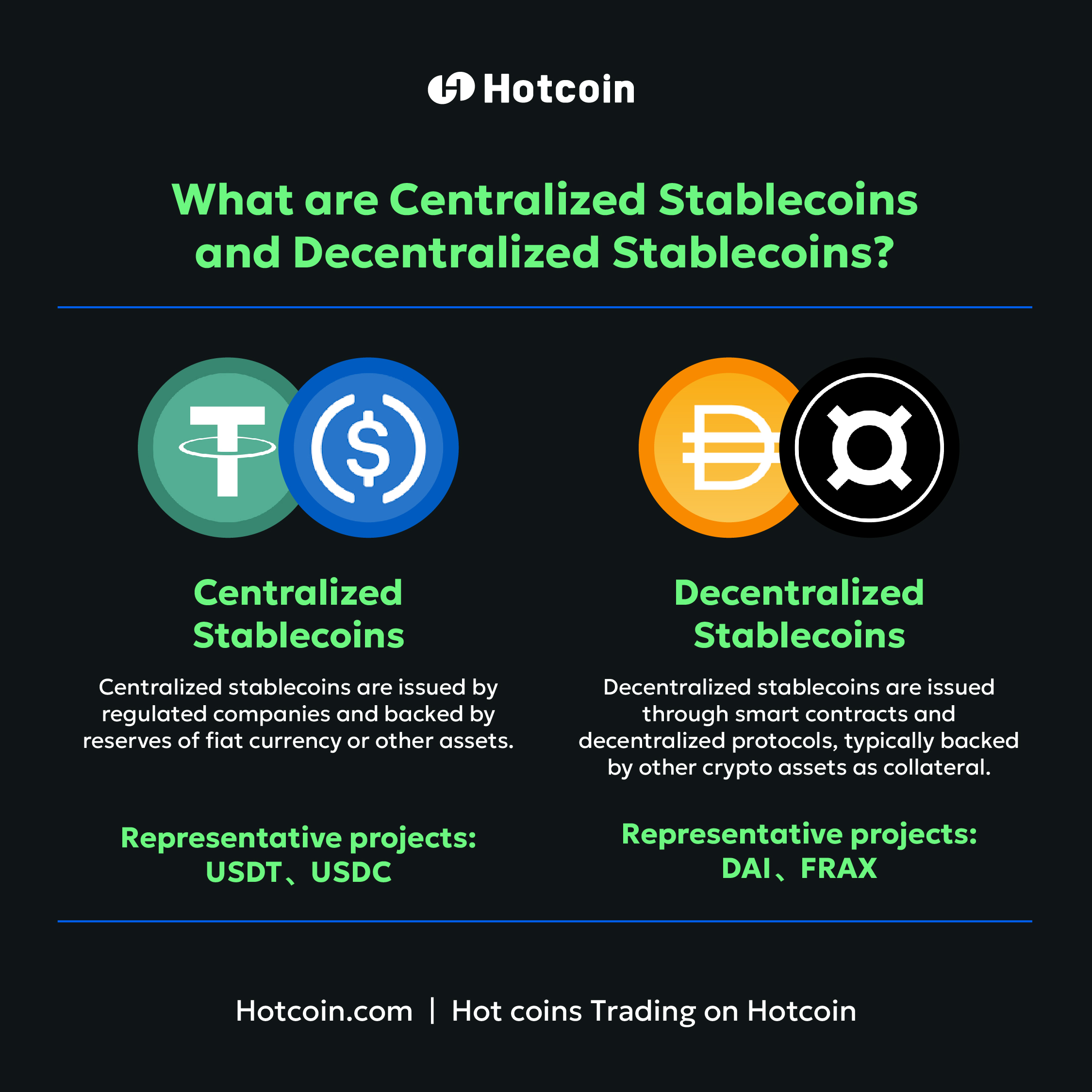
Stablecoins are cryptocurrencies pegged to fiat currencies or other assets, designed to reduce volatility in the crypto market. Based on their issuance and management, stablecoins can be classified into centralized stablecoins and decentralized stablecoins.
Centralized Stablecoins
Centralized stablecoins are issued by regulated companies and backed by reserves of fiat currency or other assets. The issuing institutions hold equivalent fiat reserves in banks to ensure the value of the stablecoins. These stablecoins are popular due to their stability and transparency in being pegged to fiat currencies, but they rely on centralized entities, posing regulatory and trust risks.
Representative projects: USDT (Tether) and USDC (issued by Circle and Coinbase) are typical examples of centralized stablecoins. Their issuing companies undergo regular audits to reassure the public that each USDT or USDC is backed by an equivalent dollar reserve.
Decentralized Stablecoins
Decentralized stablecoins are issued through smart contracts and decentralized protocols, typically backed by other crypto assets as collateral. They do not depend on a single centralized institution but rely on algorithms and market mechanisms to maintain price stability. The advantage of decentralized stablecoins is that they are not controlled by any single entity, reducing the risk of centralized control. However, they face risks related to the price volatility of collateralized assets.
Representative projects: A notable decentralized stablecoin is DAI, issued by MakerDAO. DAI is created when users deposit Ethereum and other crypto assets into smart contracts, which automatically adjust collateral ratios based on market conditions to keep DAI's price stable relative to the US dollar. Another example is FRAX, which uses a hybrid model of partial algorithmic control and partial collateral backing.
Overall, centralized stablecoins are trusted for their simplicity, transparency, and direct peg to fiat currencies, while decentralized stablecoins are favored by DeFi users for their innovative collateral mechanisms and decentralized nature. Both represent different design philosophies with their respective strengths and weaknesses in various use cases.
Lettura consigliata
Visualizza altro



Service@hotcoin.com
Product@hotcoin.com
Business@hotcoin.com
Casecn@hotcoin.com