Cross Margin vs Isolated Margin: Differences, Examples, and How to Choose
Cross margin and isolated margin are the two margin modes in futures trading: cross margin puts your whole account balance behind the risk, while isolated margin limits risk to a single position. Beginners are usually better off starting with isolated margin.
In crypto futures trading, the mode you pick decides whether a loss spills over into your other funds and how liquidation risk is contained. The comparison, examples, and guidance below will help you see the difference quickly and judge which mode fits you.
What Is Isolated Margin
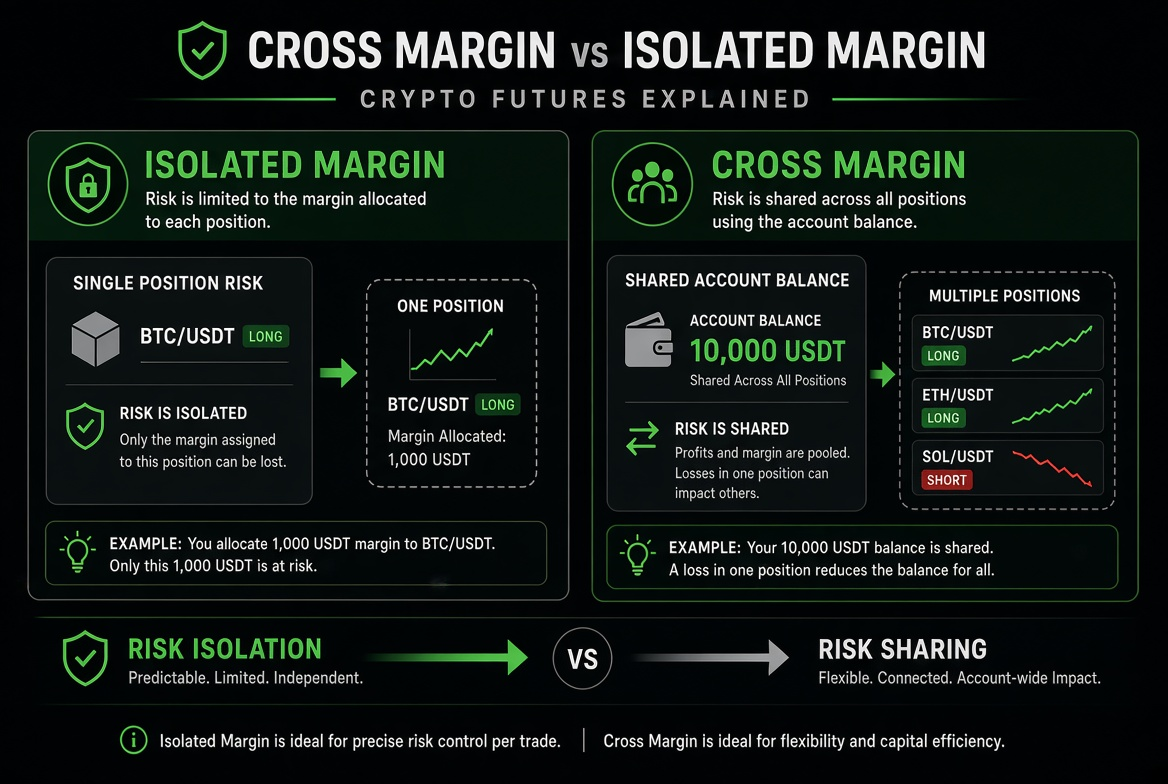
Isolated margin assigns margin to each position separately.
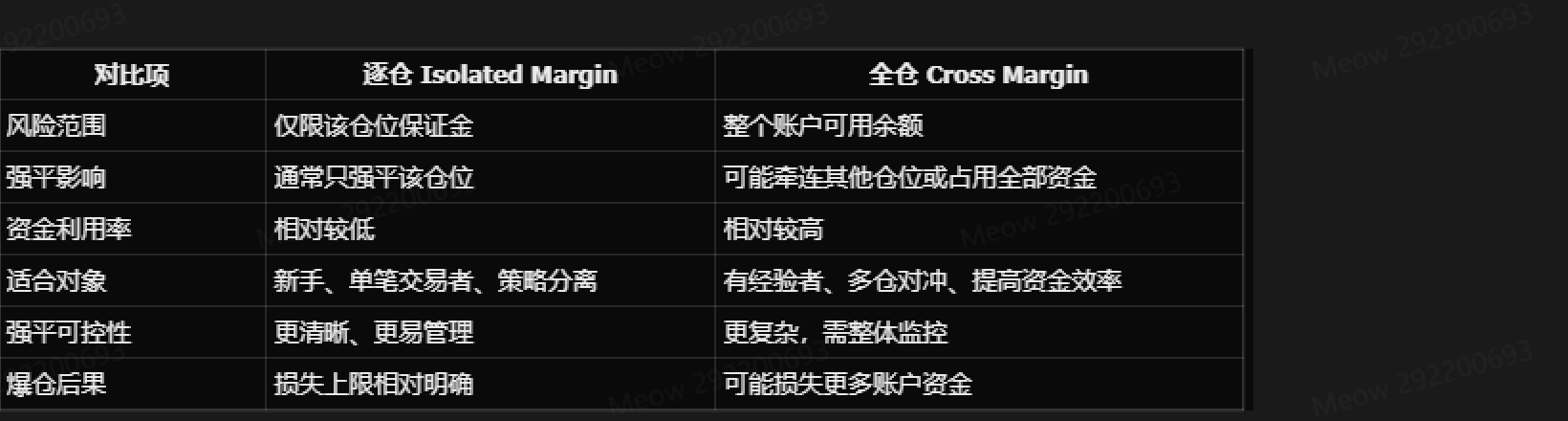
Gains, losses, and liquidation of that position affect only the margin assigned to it
Even if the position is liquidated, the rest of your account funds are usually not directly affected
Well suited to controlling the risk of a single trade precisely
In short: isolated margin = risk isolation. One blown position does not immediately drag down the whole account.
What Is Cross Margin
Cross margin uses the available balance in your account as shared margin.
All positions share the account equity
When one position is at a floating loss, the system may draw on other available funds to keep it open
It can improve capital efficiency, but risk travels through the account
In short: cross margin = risk sharing. A problem in one position can affect the safety of the entire account.
Key Differences Compared
Worked Examples
Assume an account holds 1,000 USDT and opens a BTC futures contract.
Isolated margin example: you allocate only 200 USDT of margin to this BTC position with 10x leverage. If price moves sharply against you, the most you lose is that 200 USDT, and the remaining 800 USDT usually stays in the account.
Cross margin example: you open the same position but without setting aside separate margin, so the system can draw on nearly the full 1,000 USDT to keep it open. When price moves against you, losses may keep eating into more of the balance and, in extreme cases, hit the whole account harder.
Now consider multiple positions:
Isolated: liquidation of a coin A position generally does not affect the margin of a coin B position
Cross: a large floating loss on coin A may pull away the funds supporting coin B, raising the odds that coin B is liquidated
When to Use Isolated Margin and When to Use Cross Margin
Cases better suited to isolated margin:
Beginners trading futures for the first time
A single trade where you want a clear loss limit
Testing a new strategy or an unfamiliar coin
You do not want one mistake to touch all your funds
Trades with a strong directional view and higher risk
Cases better suited to cross margin:
You already have solid experience and can manage account risk as a whole
You are hedging or arbitraging, and positions offset each other's risk
You want to improve capital efficiency
You can monitor margin ratio and overall exposure frequently
For most beginners and traders with a moderate risk appetite, starting with isolated margin is the safer choice.
Practical Guidance and Risk Control
Beginners should default to isolated margin and control single-trade risk first
Whether you use cross or isolated margin, always set a stop loss
Check the liquidation price before opening a position and leave a safety buffer
In cross margin mode, avoid holding too many highly correlated positions at once
Reduce leverage and position size during periods of high volatility
Review your account margin ratio regularly instead of only watching the profit and loss of one trade
Risk warning: Futures trading is high risk and can result in the total loss of your principal. Cross and isolated margin merely distribute risk differently; they do not remove market risk. This article is for educational purposes only and is not investment advice. Choose your mode according to your own experience and risk tolerance, and use only funds you can afford to lose.
FAQ
**Q1: Should beginners choose cross margin or isolated margin?**A: Start with isolated margin. Risk isolation is clearer, and a single mistake is less likely to affect all your funds quickly.
**Q2: Is cross margin more likely to be liquidated?**A: Not necessarily "more likely", but once the market turns against you, losses can spread across the whole account and the consequences are often more severe.
**Q3: If a position is liquidated under isolated margin, will I lose my entire account?**A: Usually not. The main loss is the margin allocated to that position, though the specific platform rules apply.
**Q4: Do I have to use cross margin for arbitrage?**A: No. Some traders use cross margin for hedging positions to improve efficiency, while others manage each position with isolated margin. What matters is whether the hedge genuinely offsets risk.
**Q5: Can I switch between cross and isolated margin mid-trade?**A: Most platforms allow adjustments, but switching while positions are open may be restricted or may affect margin calculations. Check the platform documentation before you act.
Inirerekumendang pagbabasa
Tingnan ang higit pa