
The Future of GameFi: AAA Games, Fully Onchain Games and Autonomous Worlds
GameFi's future will not follow a single path. AAA blockchain games chase the visuals, gameplay and content depth of mainstream commercial blockbusters. Fully onchain games hand core state and rules over to smart contracts. Autonomous worlds go further still, aiming for persistence, openness and composability while letting communities keep extending them. The three can overlap, but they are not synonyms. The more realistic mainstream approach is likely to keep real-time combat, rendering and anti-cheat on traditional servers while moving assets, settlement and critical rules onchain as needed. Games that genuinely run entirely onchain suit strategy, simulation, economics and community co-creation far better.
If you are not yet clear on how game tokens, NFTs and player economies fit together, start with GameFi Blockchain Games: The New Play-to-Earn Economy, then use this article to work out what "AAA", "fully onchain" and "autonomous world" each actually solve.
Why Does GameFi Have to Move to Its Next Stage?
Early GameFi revolved around Play-to-Earn: players bought NFTs, completed tasks, earned tokens and sold them. The model proved that open assets and global rewards can attract users quickly, but it also exposed structural weaknesses. When gameplay is merely a tool for acquiring tokens, and emissions keep rising while sinks stay thin or new-player growth slows, price, activity and NFT demand tend to fall together.
The next stage has to answer three questions. Would players still play without rewards? Does the blockchain enable gameplay a traditional database could not provide? And once the studio or official website shuts down, how much usable value is left in the world?
Three routes have emerged from this. The AAA route improves the consumer experience, the fully onchain route changes how rules are enforced, and autonomous worlds attempt to redefine who builds, maintains and sustains a digital world.
What Separates AAA Games, Fully Onchain Games and Autonomous Worlds?
"AAA" has no official certification. It generally describes a larger budget, a bigger team and a longer production cycle, with visuals, audio, gameplay, performance and distribution approaching those of mainstream commercial blockbusters. It answers the question "how polished and how large is this game", and it guarantees nothing about whether the product has launched, whether it is fun, or whether its economy is sustainable.
A fully onchain game keeps core state and core rules on the blockchain. Characters, resources, map changes and match outcomes are recorded and verified by smart contracts, and third-party clients can read the same world. It answers the question "who controls the rules and the state".
An autonomous world is built on public, persistent rules that let users and developers create tools, content, institutions and new gameplay without asking the original team for permission item by item. It answers the question "can this world be built collectively by a community over the long term".
A game can have cinematic visuals while putting only a handful of items onchain, or look visually simple while writing its entire map and every action into contracts. AAA is a production dimension, fully onchain is a technical-architecture dimension, and autonomous worlds are a dimension of openness and longevity.
How Will Future AAA GameFi Be Designed?
3.1 Make the Game Fun First
A genuinely competitive product needs a complete core loop, stable performance, a steady content pipeline and mature player support. Blockchain should strengthen asset control, marketplace settlement or creator revenue, not paper over thin gameplay. Calling yourself "AAA" is positioning, nothing more, so players should still check the actual build, update cadence, team track record and user feedback.
3.2 Push the Blockchain Into the Background
Ordinary players care about logging in and starting to play quickly, not about which chain is underneath. Email, social accounts, passkeys, embedded wallets, session keys and gas sponsorship all reduce the friction created by seed phrases, browser extension wallets and per-transaction signing.
Immutable Passport's official documentation shows players signing in with Google, Apple or email and receiving an embedded wallet. Starknet's gaming tooling supports permission-scoped session keys, letting players authorize once and then act continuously within defined limits.
3.3 Make Onchain Features Optional
Not every player wants to trade NFTs. GUNZ's official materials show that Off The Grid players can choose to convert the items they earn into tradable NFTs, or simply play the free game. Illuvium likewise made wallet connection optional in its Open Beta documentation.
This design lets casual players enjoy the game first, while collectors and traders enter onchain markets on their own terms, avoiding forced financialization for everyone.
3.4 Adopt Hybrid Architecture
Shooters, fighting games and MMOs need millisecond response times, and public-chain confirmation cannot simply replace a game server. The more sensible split is this: clients and servers handle rendering, physics, movement and anti-cheat, while the blockchain handles assets, markets, tournament rewards, creator revenue splits and important world state.
Hybrid architecture does not mean a "fake blockchain game". What matters is that the project publicly explains which data lives onchain, what the server can modify, what powers contract administrators hold, and which layer prevails in a dispute.
How Do You Tell Whether a Game Is Truly Fully Onchain?
Fully onchain does not mean writing high-resolution textures, music and every animation frame to the blockchain. The core test is this: if you replace the official client, can a third party read the same world state and keep interacting according to public rules?
Four things are worth checking:
Readable state: can characters, resources and world changes be reconstructed without the official private database?
Verifiable rules: are action validity and reward settlement determined by public contracts?
Replaceable clients: can the community build interfaces, plugins, analytics tools or new gameplay?
Durable world: if the original team leaves, do the contracts, data and community entry points still function?
If a project merely issues NFTs or tokens while combat, drops and economic data all stay on private servers, "onchain asset game" is the more accurate label. That can still have value, but it is not the same as a fully onchain game.
What New Experiences Can Fully Onchain Games Deliver?
5.1 Verifiable Rules
Players can inspect the contracts and onchain state instead of taking the operator's backend settlement entirely on trust. This matters most for high-value tournaments, scarce resources and markets that players run together.
5.2 Multiple Clients and Composability
One world can be accessed through a web client, a 3D client, mobile apps and data dashboards at the same time. Developers can also add marketplaces, quests, guild tools or derivative gameplay that read existing characters and resources directly.
5.3 Long-Term Records of Player Contribution
Match records, construction, governance and creative work can form a verifiable history. But public data also brings risks around privacy, behavioral profiling and mistaken records that persist indefinitely.
5.4 Community Takeover and Forks
If the rules, code and state are open enough, the community can in principle keep developing clients or create a fork after the original team stops maintaining the game. Even so, permanent onchain data does not equal a permanently playable game, because front ends, indexers, storage and the community all need ongoing maintenance.
Why Have Fully Onchain Games Not Gone Mainstream Yet?
The first reason is latency and throughput. Sending high-frequency actions onchain one by one means both waiting and fees. Session keys, batched transactions, appchains and paymasters can improve the experience, but the cost is only redistributed, not eliminated.
The second is public state. Blockchains expose positions, resources and actions, and bots can exploit transaction ordering to front-run other players. Dark Forest's important contribution was using zero-knowledge proofs to verify that actions were valid without revealing full private information, achieving a "fog of war" on a public chain.
The third is contract security. When a traditional game suffers an item-duplication exploit, the studio can take servers offline and restore the database. In a fully onchain world that emphasizes immutability, fixes are far harder. Upgradeable contracts can serve as an emergency valve, but they reintroduce administrator privileges.
The fourth is long-term data dependency. A contract existing does not mean the game is playable. RPCs, indexers, front ends, domains and image assets can all stop working. A genuinely durable world needs multiple entry points, open-source clients, rebuildable indexes and a clear storage plan.
So more onchain is not automatically better. Asynchronous strategy, turn-based play and economic simulation suit public state well, while real-time shooters and large-scale physics simulation are a better fit for hybrid architecture.
Why Do MUD and Dojo Matter?
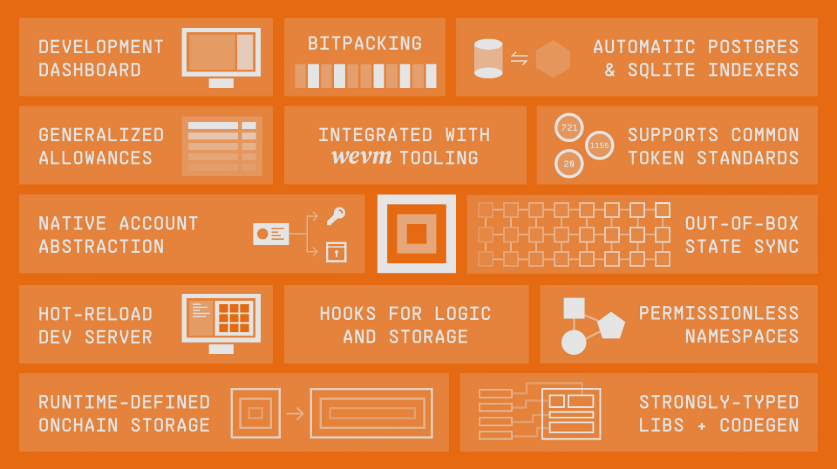
Early developers had to build their own data structures, contract permissions, indexers and front-end synchronization, which was expensive. Frameworks such as MUD and Dojo turn those common capabilities into developer tooling.
MUD is Lattice's open-source framework for onchain applications, serving autonomous worlds in the Ethereum ecosystem. It provides the World data model, systems, indexing and client synchronization, so developers do not have to build an onchain database from scratch.
Dojo is a provable game engine and toolchain built on Starknet and Cairo, used to create fully onchain games and autonomous worlds. It can be combined with account abstraction, passkeys, session keys and gas sponsorship to lighten the operational burden of high-frequency interaction.
Neither is a full replacement for Unity or Unreal Engine. The more common combination going forward is a traditional engine handling visuals, physics and audio, with an onchain framework handling shared state, rules and proofs.
What Is an Autonomous World?
An autonomous world is a persistent, open digital environment that a community can keep extending. Players do more than follow official content; they can create tools, rules, economic systems and new gameplay. Third parties can read the shared state, and the community has a real chance of maintaining or forking the world after the original team steps away.
But autonomy is not a switch. A world might open up its assets while a single team controls upgrades. Its rules might be immutable while only one official front end exists. It might be fully open source with no community willing to maintain it. True autonomy requires four conditions at once: reconstructible state, verifiable rules, permissionless extension, and governance and infrastructure that can be sustained.
Autonomous worlds are also distinct from the metaverse. The metaverse emphasizes immersive socializing, virtual identity and the creator economy, while autonomous worlds emphasize public state, open rules and long-term operation. A 3D social space can be a metaverse without being autonomous, and an onchain strategy world made only of text and maps can be highly autonomous. For more background, read What Is the Metaverse? The Economy and Technology Behind Virtual Worlds.
What Kind of Future Does EVE Frontier Show?
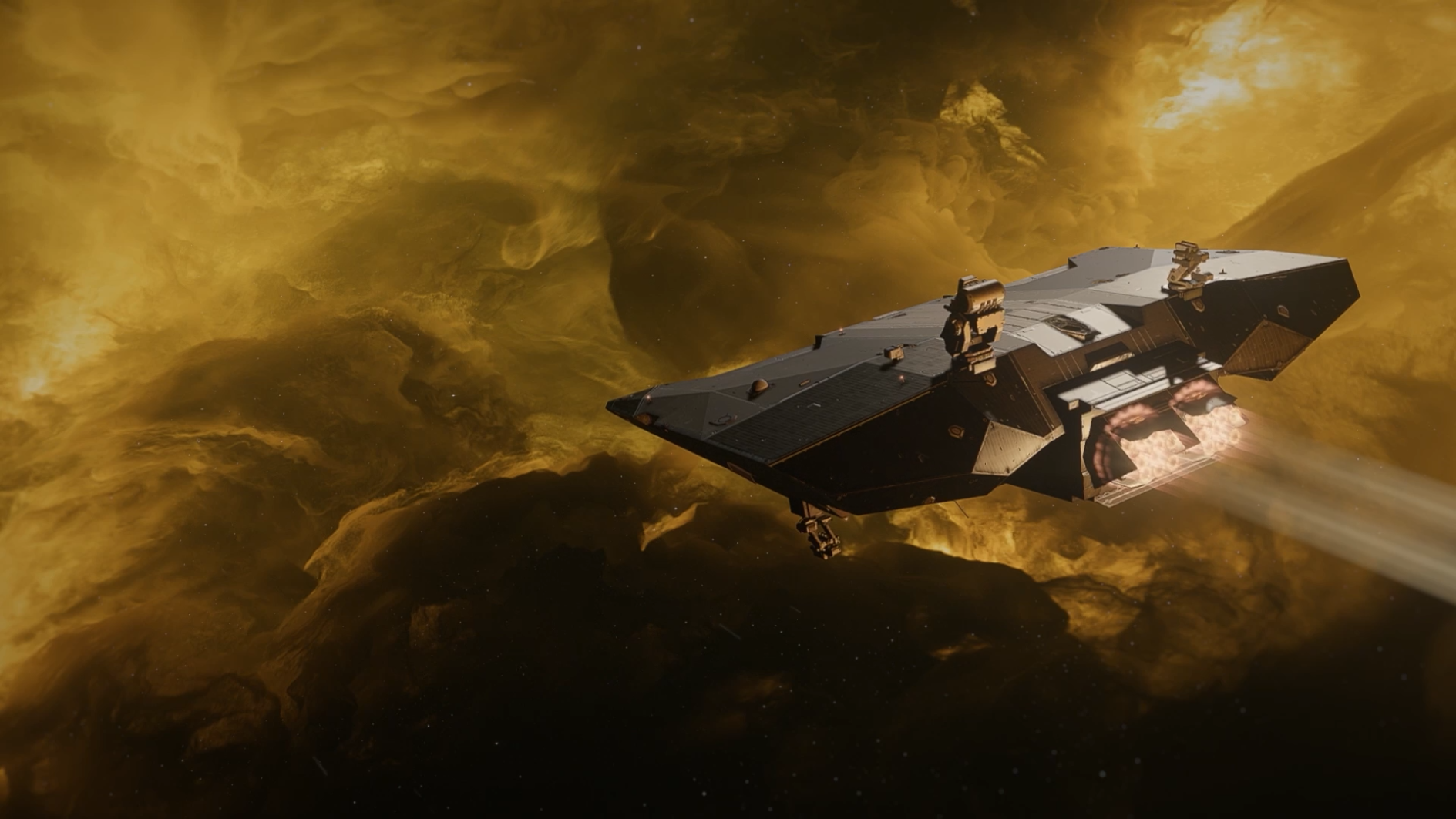
EVE Frontier is a space survival MMO still in development from the creators of EVE Online. Its official FAQ states that the game is currently accessible through Founder Access, that no release date has been announced, and that progress is wiped at the end of each Cycle before the full launch. It is therefore an experiment worth watching rather than a proven, mature product.
The project's core design is Smart Assemblies. Players can deploy and program storage units, turrets, gates and other structures so they charge tolls, trade automatically, hand out rewards or distinguish friend from foe. A public data layer lets third parties build tools and systems for the shared universe.
It pushes "players own items" toward "players can program the world's infrastructure". The project still has to prove that its survival gameplay is compelling, that community-built structures are safe, and that its economy can be sustained without leaning too heavily on speculation.
Can Players Really Own Game Assets Forever?
Holding an NFT in your wallet proves control over an onchain token. It does not guarantee that the game will recognize that item forever, that servers will stay open, that you own the copyright, or that the asset can move directly into another game.
Complete digital ownership means checking onchain control, in-game utility, content licensing, transferability, client accessibility and recourse when rules change, all at once. A weapon NFT can be transferred freely while developers still adjust its stats. A fully onchain character can persist forever and still end up as nothing more than a string of data if no client and no community remain.
Realistic cross-game interoperability is more likely to appear first in identity, achievements, creator reputation and community standing than in carrying a realistic rifle straight into a fantasy RPG. For more on where ownership ends and usage rights begin, continue with Onchain Game Assets: Why Your Game Items Should Live on a Blockchain.
How Will GameFi Business Models Change?
From expensive entry to free-to-play: onchain assets become an optional collecting, creation or trading feature rather than a ticket to start playing.
From heavy token emissions to real spending: skins, seasons, tournaments, creation tools and marketplace services generate revenue, reducing dependence on capital from new players.
From closed storefronts to player markets: developers earn through reasonable fees or services while users retain the ability to transfer assets.
From one-way studio production to player co-creation: communities build maps, quests and items, with revenue distributed automatically by contracts.
From all-purpose tokens to separated functions: payments, rewards, governance and reputation use different instruments, so every goal is not crammed into one volatile token.
The heart of a healthy economy is not whether assets can appreciate, but why players are willing to spend over the long term and why creators are willing to keep building.
The Hotcoin FUTURE Six-Dimension Framework
To avoid being misled by labels like "AAA", "fully onchain" and "autonomous", you can assess a product with the six-dimension FUTURE method. It is not an investment rating, but a checklist to run through before you play.
12.1 F: Fun, Is It Actually Enjoyable
Look at the playable build, the core loop and content updates. If there is no reason to keep playing once rewards are removed, no amount of technical sophistication will retain a community.
12.2 U: User Experience, Does It Feel Natural
Check login, wallets, signing, gas, performance and support. Onchain features should surface when verification and trading are needed, not block every single action.
12.3 T: Trust Boundary, Is It Clearly Defined
Confirm which data sits onchain, what the server can modify, and who can upgrade contracts and ban accounts. Partial centralization is not a sin in itself; concealing where control lies is the risk.
12.4 U: Utility, Do Assets Have Real Uses
Utility should come from gameplay, creation, identity or services, not solely from future buyers. Also check supply, sinks, fees and who holds the power to adjust stats.
12.5 R: Resilience, Can the World Last
Examine contract security, clients, data availability, team funding and community developers. A permanent onchain record is not the same as permanent playability.
12.6 E: Extensibility, Is Extension Allowed
See whether third parties can read state, build mods, make clients or compose new protocols. Open projects usually provide documentation, SDKs, licenses and examples.
How Can Ordinary Players Participate Safely?
First, play the game before buying assets. Favor projects with a real playable build, a patch history and a stable community, rather than acting on a trailer alone.
Second, use a dedicated gaming wallet kept separate from your main assets. When connecting a new client, plugin or community tool, verify the domain, the contract and the scope of approvals.
Third, distinguish test assets from live ones. Test points, Founder Access items, pre-release NFTs and mainnet assets carry different rights, and projects in development may also wipe progress.
Fourth, do not treat game rewards as fixed income. Token prices, emissions and rules can all change, and real costs include hardware, gas, marketplace fees and your time.
Fifth, check contract administrator privileges. Confirm whether the project can pause, upgrade, mint or freeze, and when using session keys, grant only the minimum permissions needed to play.
Frequently Asked Questions
14.1 Is an AAA Blockchain Game Always Better Than an Ordinary One?
Not necessarily. AAA usually describes budget, scale and production ambition, not certified quality. Judge by actual gameplay, performance, update capability and player retention.
14.2 If the NFTs Are Onchain, Is the Game Fully Onchain?
No. If combat, drops and world state are still controlled by private servers, it is closer to an onchain asset game. Fully onchain requires core state and rules to be verifiable through public contracts too.
14.3 Do Fully Onchain Games Have to Store Images and Music Onchain?
Usually not. High-resolution assets can live offchain or in decentralized storage. What matters is that core rules, state and interaction results are publicly verifiable.
14.4 Will Autonomous Worlds Run Forever?
There is no guarantee. Contracts can persist for a long time, but chains, RPCs, indexers, front ends, storage and communities all need maintenance. Longevity comes from rebuildable infrastructure and active contributors.
14.5 Can Fully Onchain Games Eliminate Cheating Entirely?
No. Contracts can reject actions that violate onchain rules, but they cannot automatically eliminate bots, front-running, client-side assistance or social engineering.
14.6 Why Are Most Fully Onchain Games Strategy or Turn-Based?
These genres involve lower action frequency, tolerate confirmation delay, and can turn public state into strategic interaction. Real-time shooters and large-scale physics simulation suit hybrid architecture better.
14.7 Will Every Big Game Move Onchain Eventually?
No. Going onchain only makes sense when open assets, verifiable settlement, player co-creation or world persistence deliver clear value. Many single-player and closed competitive games are better served by traditional databases.
Conclusion: The Endpoint of GameFi Is Not More Finance
GameFi's next stage should make blockchain a game design tool rather than turning every player into a speculator. The AAA route raises content quality and mainstream playability. The fully onchain route makes state and rules verifiable and composable. Autonomous worlds attempt to give digital societies the ability to outlive any single studio.
In the near term, hybrid architecture has the best chance of reaching a mass market. Fully onchain games will keep experimenting in strategy, simulation, economics and AI agents, while autonomous worlds must prove they can generate real culture, community developers and a sustainable maintenance system.
For players, the order of judgment should be this: first decide whether the game is worth playing, then whether the blockchain provides something irreplaceable, and only then look at assets and tokens. Having finished this article, you can return to GameFi Blockchain Games: The New Play-to-Earn Economy to keep building a complete picture of GameFi.
For more project examples, read Top GameFi Projects to Watch in 2025, and always defer to each project's current website and actual client.
To connect to blockchain games or onchain applications, you can manage multi-chain assets with Hotcoin Web3 Wallet. Always verify contract addresses, signing content and session key permissions. For mobile market data and trading tools, visit Hotcoin App, and for more educational content, visit Hotcoin.
Risk disclaimer: This article is for educational and informational purposes only and does not constitute investment, legal or tax advice. Projects mentioned here may still be in testing, early access or active development; features, networks, asset rules and release timing may change, so always defer to the latest official announcements and the actual client.
Inirerekumendang pagbabasa
Tingnan ang higit pa

Service@hotcoin.com
Product@hotcoin.com
Business@hotcoin.com
Casecn@hotcoin.com