
Buy Crypto with Credit Card: Why Everyone Is Starting to Do This
Instant access meets growing mainstream adoption.
Buying crypto with a credit card has surged because it delivers unmatched convenience, speed, and entry points for newcomers and experienced users alike in an increasingly digitized financial landscape. Platforms now integrate seamless card processing with regulatory safeguards, turning what was once a niche workaround into a primary on-ramp amid rising institutional interest and everyday utility.
What Makes Buying Crypto with Credit Cards So Popular Right Now?
Credit card purchases enable immediate ownership of assets like Bitcoin and Ethereum without waiting for bank transfers. In 2026, with stablecoin volumes exploding and crypto integrated deeper into payments, users favor this method for its frictionless experience across major exchanges.
Why Are More People Choosing Credit Cards Over Traditional Bank Transfers?
Speed and Accessibility Drive Adoption Credit card transactions settle in minutes, unlike ACH transfers that can take days. This immediacy appeals especially during market volatility when timing matters. Global users in regions with limited banking options also gain easier entry.
Rewards and Everyday Integration Many cards earn points or cashback on purchases, effectively subsidizing crypto buys. As Visa and Mastercard expand blockchain support, the process feels like any online shopping transaction.

How Do Major Platforms Support Credit Card Crypto Purchases?
Leading services including Coinbase, Binance, Kraken, Gemini, and MoonPay facilitate direct buys. They partner with processors for Visa and Mastercard compatibility, often adding Apple Pay or Google Pay for mobile users. Limits and availability vary by region and verification status.
What Are the Key Benefits of This Payment Method?
⚡ Instant Portfolio Entry
Users acquire Bitcoin (BTC), Ethereum (ETH), or stablecoins like USDT immediately. Capitalize on market opportunities without bank transfer delays.
🪙 Fractional Buying Flexibility
Most platforms allow purchases starting from small amounts ($10–50). This lowers barriers for beginners exploring altcoins and testing strategies.
🌍 Broad Global Reach
Support spans 100+ countries with seamless bank verification. It empowers users in emerging markets where traditional banking and wire transfers are slow, expensive, or unavailable — giving everyone equal access to the global crypto economy regardless of location.
What Risks and Drawbacks Should Buyers Consider?
💸 Higher Transaction Fees (Risk)
Expect 1–4% fees plus potential card issuer cash advance charges. These can erode small investments over time.
⚖️ Debt Implications (Risk)
Treating volatile assets as credit purchases risks compounding losses if prices drop while interest accrues. Use responsibly.
🔒 Regulatory and Security Factors (Risk)
KYC/AML requirements apply on regulated platforms. Always enable 3D Secure and monitor statements for fraud.
How to Buy Crypto with Credit Card: Step-by-Step Process
-
🔎 Choose a Reputable Platform Select based on fees, supported coins, and your location. Compare Coinbase (beginner-friendly) or Binance (variety).
-
🪪 Complete Verification Submit ID for KYC to unlock higher limits and full compliance.
-
💳 Link Your Card and Purchase Enter details, confirm via 3D Secure, and receive assets directly in your wallet — often in under 5 minutes.
Top Platforms Comparison for 2026
-
Coinbase: Beginner-friendly interface with strong security; supports many fiat options but higher fees.
-
Binance: Wide coin selection and competitive rates via Binance Connect.
-
Kraken: Robust compliance and advanced tools.
-
MoonPay/Paybis: Fast on-ramps with minimal steps for direct wallet transfers.
What Fees Can You Expect in 2026?
Fees typically range 1-3.5% for card processing, varying by platform and amount. Factor in network gas for transfers and any issuer foreign transaction fees. Larger buys often yield better effective rates.
How Does This Method Compare to Other On-Ramps?
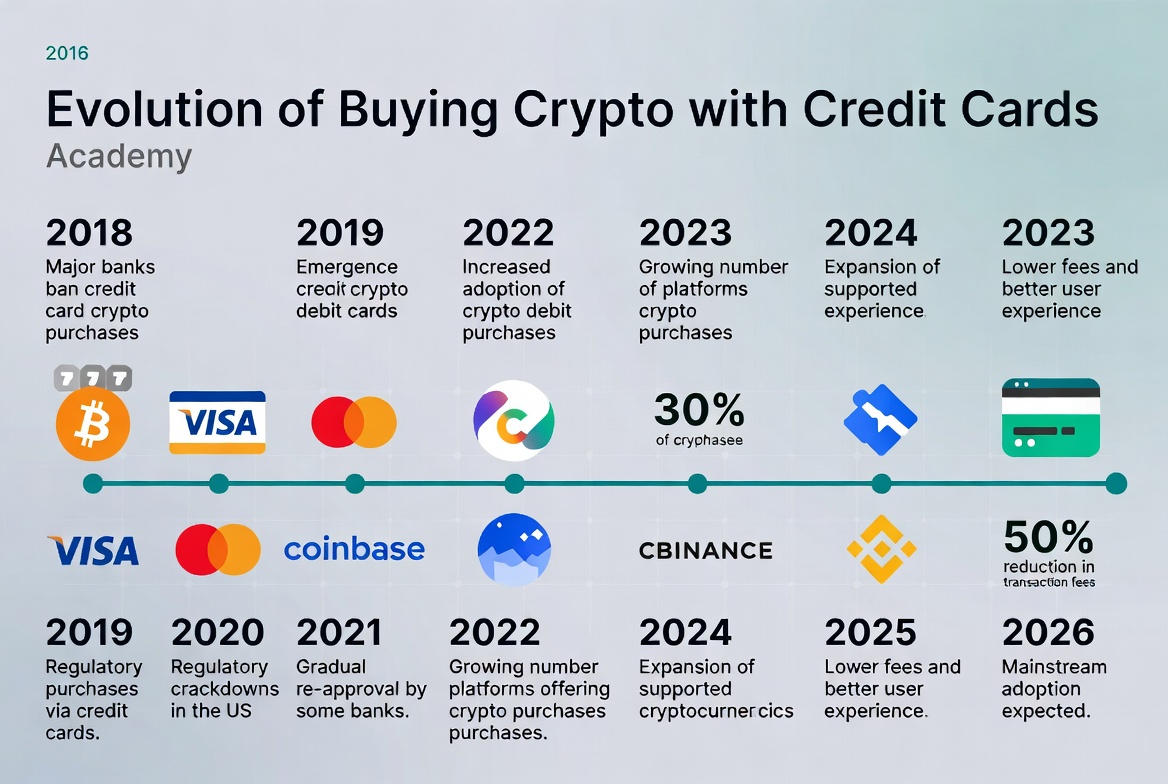
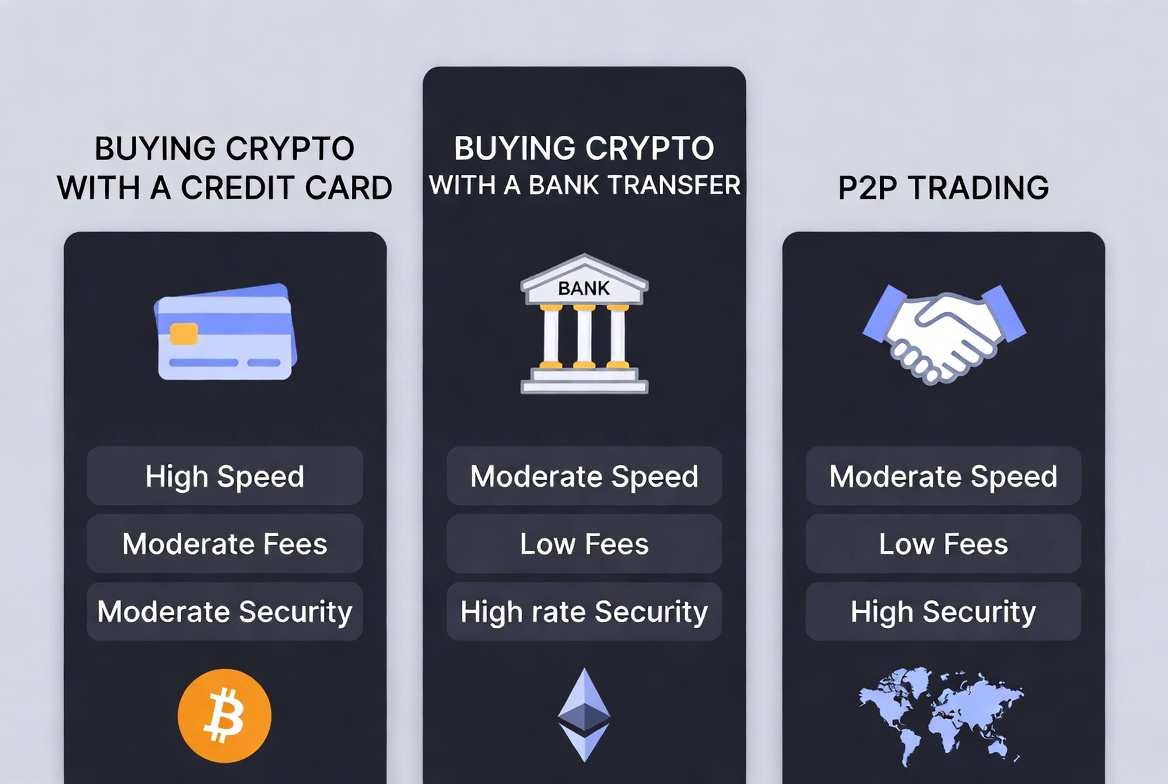
Credit cards outperform bank wires in speed but trail ACH in cost. Peer-to-peer options may offer lower premiums yet introduce counterparty risks. Debit cards provide a balanced middle ground without debt.
Which Cryptocurrencies Are Easiest to Buy This Way?
Bitcoin remains the most accessible, followed by Ethereum and major stablecoins. Platforms increasingly support SOL, BNB, and LINK directly. Fractional ownership makes high-priced assets approachable.
Is Buying Crypto with Credit Card Safe?
Regulated exchanges employ encryption, cold storage, and insurance. However, users must avoid unverified sites. Enable two-factor authentication and never share seed phrases. Historical bank restrictions have eased with better risk management.
What Regulatory Changes Support This Trend?
2025-2026 saw clearer frameworks in the US and EU, including stablecoin legislation and institutional-grade custody. GENIUS Act advancements and payment integrations from Visa/Mastercard normalize the practice.
How Is This Changing Global Crypto Adoption?
Ownership reached 28% in key markets by mid-2026, fueled by easy entry points. Emerging economies leverage cards where banking is sparse, accelerating DeFi and NFT participation.
Why Do Number-Based Trends Matter for Long-Term Strategy?
Questions like "how much does it cost to buy $1000 of Bitcoin with credit card" highlight real economics: At 2.5% average fees, expect $25 extra, but potential rewards offset part. Dedicated analysis shows this method suits tactical entries rather than large recurring buys where wires save money. Volatility data from 2025 rallies underscores timing's role alongside costs.
Original Element: The "Card-to-Chain Efficiency Score"
This new metric evaluates platforms on speed (seconds to wallet), total cost (all-in %), security layers, and supported assets. Top scorers in 2026 blend low-friction UX with institutional backing, helping users quickly identify optimal choices beyond marketing claims. For example, direct wallet delivery without custodial holding boosts scores significantly.
Additional Considerations for International Users
GEO factors play a big role—EU users benefit from MiCA clarity, while US residents navigate state variations. Always check local tax implications, as purchases may trigger reporting. Emerging markets see rapid growth due to mobile-first card adoption.
Future Outlook: Integration with Everyday Finance
By late 2026, expect deeper ties with crypto debit cards, stablecoin settlements rivaling traditional networks, and more corporate treasury use. This positions credit card on-ramps as gateways to broader blockchain economies.
Frequently Asked Questions
How to buy crypto with a credit card? Select a platform, verify identity, link your Visa or Mastercard, enter amount and wallet address, then confirm the 3D Secure transaction for instant delivery.
Can I buy Bitcoin with a credit card instantly? Yes, on supported exchanges after quick verification, though processing and any holds depend on your card issuer.
What are the fees for buying crypto with a credit card? Typically 1-4% including processing; always review platform breakdowns and issuer policies beforehand.
Is it safe to buy cryptocurrency with a credit card? Regulated platforms offer strong protections, but users should prioritize 2FA, verified sites, and awareness of volatility and debt risks.
Which platforms allow buying crypto with credit cards without high fees? Compare options like Paybis, MoonPay, or Kraken for competitive rates tailored to your volume and location.
This approach covers entities including Bitcoin, Ethereum, USDT, Visa, Mastercard, Coinbase, Binance, Kraken,
References
-
Silicon Valley Bank, “Future of Crypto: 5 Crypto Predictions for 2026,” SVB.com, December 23, 2025, https://www.svb.com/industry-insights/fintech/2026-crypto-outlook/.
-
Forbes Advisors, “Top 10 Cryptocurrencies of July 14, 2026,” Forbes.com, July 14, 2026, https://www.forbes.com/financial-services/top-10-cryptocurrencies-2/.
-
Paybis, “Buy Bitcoin with Credit Card or Debit Card Instantly,” Paybis.com, accessed July 15, 2026, https://paybis.com/.
-
TokenTax, “How to Buy Crypto With a Credit Card 2026,” TokenTax.co, July 2026, https://tokentax.co/blog/buy-crypto-with-a-credit-card.
-
American Banker, “Should Banks Let People Buy Bitcoin with Credit Cards?,” AmericanBanker.com, July 18, 2018 (updated context 2026), https://www.americanbanker.com/news/should-banks-let-people-buy-bitcoin-with-credit-cards.
-
U.S. Federal Trade Commission, “What To Know About Cryptocurrency and Scams,” Consumer.ftc.gov, accessed July 2026, https://consumer.ftc.gov/articles/what-know-about-cryptocurrency-scams.
-
NerdWallet, “The 8 Best Crypto Exchanges, Platforms & Apps for 2026,” NerdWallet.com, June 30, 2026, https://www.nerdwallet.com/investing/best/crypto-exchanges-platforms.
-
Finder, “How to Buy Bitcoin and Crypto with a Credit Card,” Finder.com.au, March 25, 2025 (updated), https://www.finder.com.au/bitcoin/buy-bitcoin-credit-card.
Inirerekumendang pagbabasa
Tingnan ang higit pa
What is a Blockchain Node?
Basic Concepts

What is CTO (Community Take Over)?
Basic Concepts
What is Blockchain Computing Power?
Basic Concepts

Mga contact sa serbisyo
Service@hotcoin.com
Feedback ng produkto
Product@hotcoin.com
Kooperasyon sa negosyo
Business@hotcoin.com
Legal na mga contact
Casecn@hotcoin.com
Tungkol sa atin
produkto
maglingkod
suporta
©2017-2026