
What is Crypto Trading Slippage?
Crypto trading slippage refers to the difference between the price at which a trader places an order and the actual price at which the trade is executed in the cryptocurrency market. This often occurs during times of high market volatility or insufficient liquidity. Slippage can be either positive (where the trade price is better than expected) or negative (where the trade price is worse than expected), but in most cases, slippage is negative, meaning the trader ends up paying more than anticipated.
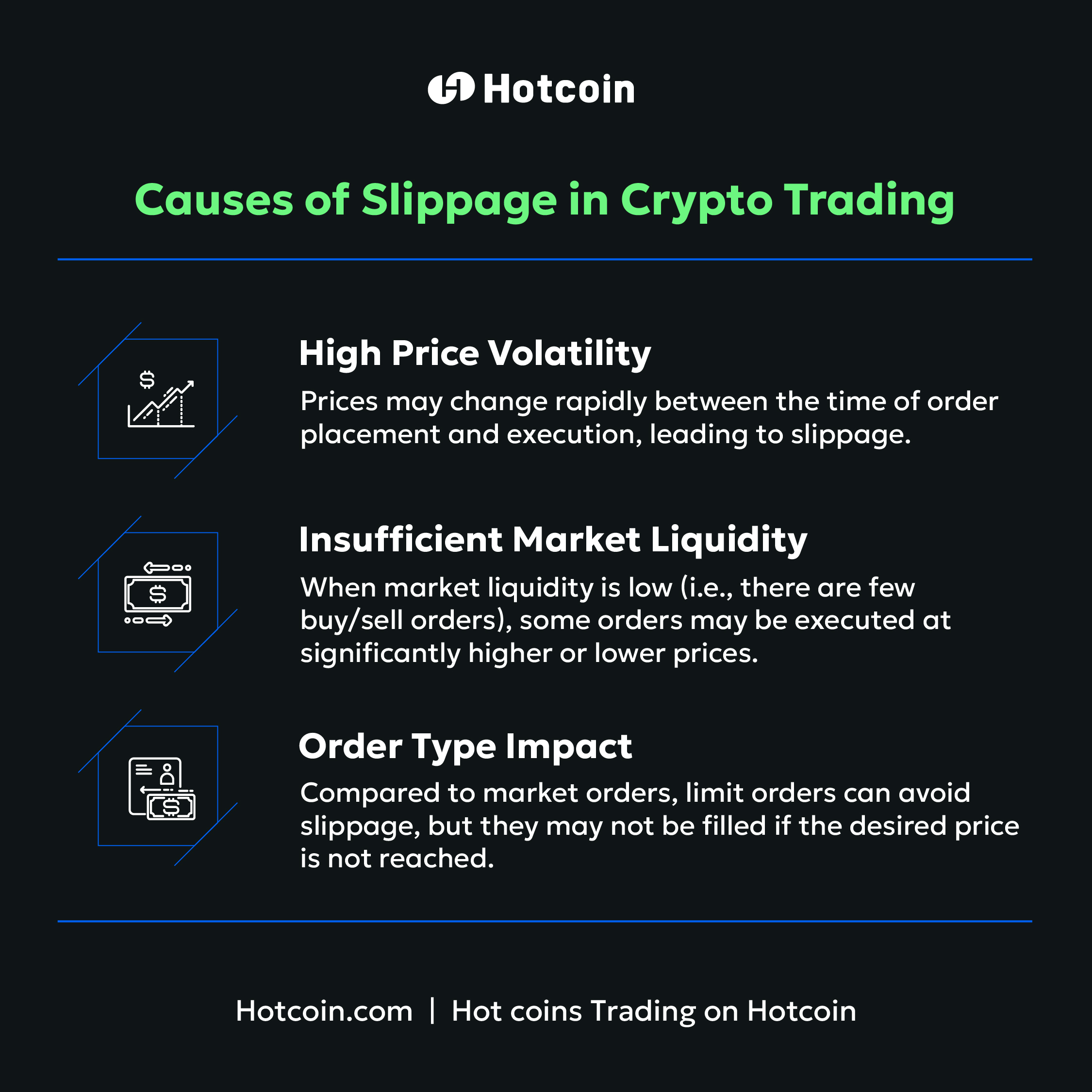
Specifically, the reasons for slippage include:
1. High Price Volatility: The cryptocurrency market is highly volatile, and prices may change rapidly between the time you place an order and when it is executed, leading to slippage.
2. Insufficient Market Liquidity: When there is low market liquidity (i.e., fewer buy and sell orders), large orders may not be fully filled at the expected price, causing parts of the order to be executed at higher or lower prices.
3. Order Type Impact: Market orders (which execute immediately at the current market price) are most susceptible to slippage, while limit orders (which set a maximum buy price or minimum sell price) can help avoid slippage. However, limit orders may not execute if the set price is not met.
Slippage is particularly impactful for high-frequency traders or those trading in highly volatile markets. Therefore, understanding and managing slippage risk is crucial for a successful trading strategy.
Inirerekumendang pagbabasa
Tingnan ang higit pa


Service@hotcoin.com
Product@hotcoin.com
Business@hotcoin.com
Casecn@hotcoin.com