
What Is DePIN? Decentralized Physical Infrastructure Networks
DePIN stands for Decentralized Physical Infrastructure Networks. It uses blockchains, tokens, and cryptographic tools to coordinate devices, resources, and services distributed across the physical world, such as wireless hotspots, GPUs, storage capacity, street-view cameras, sensors, charging stations, and energy equipment.
Traditional infrastructure is usually built through large upfront investments by a company, which then charges users. DePIN reverses that model: individuals or businesses buy, deploy, and operate equipment; the protocol verifies their contributions and issues rewards; and customers pay for coverage, compute, data, or storage. A network can aggregate distributed supply without owning all the hardware.
However, a large device count does not by itself make a network valuable. A DePIN project must complete five links in the chain: attract supply, verify contributions, deliver a usable service, win paying customers, and distribute revenue and rewards sensibly. If it relies indefinitely on token subsidies without external demand, it resembles hardware mining more than sustainable infrastructure.
DePIN was also a major part of the Web3 frontier narrative in 2025. By 2026, evaluation has increasingly shifted toward real usage, unit economics, and fraud resistance. For a broader view of its relationship with AI, oracles, cross-chain systems, and modular networks, read The Web3 Frontier Landscape in 2025.
What Is the Core Definition of DePIN?
DePIN is a network that coordinates real-world resources through open protocols. Participants can deploy equipment or contribute existing idle resources, the protocol rewards verifiable contributions, and developers and customers use the resulting services. The blockchain mainly handles accounts, assets, payments, governance, and public records; the physical work still happens off-chain.
Physical infrastructure does not only mean industrial machinery. Home Wi-Fi hotspots, vehicle-mounted cameras, data-center GPUs, hard drives, weather stations, and phone sensors can all serve as network nodes. They share one feature: real costs for hardware, electricity, connectivity, installation, maintenance, space, and depreciation.
Decentralization is not binary either. Devices may be owned by many people while firmware, front ends, customer contracts, data processing, or administrator privileges remain controlled by one company. An assessment should examine hardware ownership, node operations, data verification, on-chain contracts, customer access, and governance separately.
Why Did DePIN Emerge?
Wireless, mapping, compute, and storage networks require substantial upfront capital. A centralized company must forecast demand, buy equipment, select locations, and bear the risk of idle capacity. DePIN distributes part of that capital expenditure to participants and uses token rewards to compensate early deployment, with the aim of building coverage faster.
The physical world also contains large amounts of underused capacity. Personal GPUs can render during idle hours, vehicles can update maps during ordinary journeys, residential internet connections can provide local wireless coverage, and hard drives can store data. If a protocol can measure these contributions, it may turn idle resources into a service marketplace.
Blockchain gives unfamiliar participants a shared ledger and automated settlement, so each device operator does not need to contract separately with every customer. It cannot eliminate installation, quality, support, or legal issues in the physical world, so DePIN still requires genuine operational capability.
Who Participates in a DePIN Network?
The first group is suppliers: equipment owners, node operators, data contributors, and professional infrastructure companies. They bear hardware, power, connectivity, maintenance, and opportunity costs.
The second group is the protocol and its operating organizations. They develop software, define proofs of contribution, maintain the network, process data, acquire customers, and advance governance. A company, foundation, DAO, or combination of entities may perform these roles.
The third group is customers and developers. Customers buy wireless data, map data, GPU jobs, storage, or sensor data, while developers integrate services through APIs and SDKs. Sustained external customer spending is the key step from a subsidized network to a commercial one.
The fourth group is verifiers and governance participants. They check contributions, adjust parameters, identify fraud, or decide rewards. Some networks depend on oracles, trusted hardware, and multiple data sources; others use specialist nodes or centrally operated verification services.
How Does a DePIN Project Work?
First, participants deploy resources by buying approved hardware, installing software, or connecting existing GPUs, storage, and sensors. Second, they register an identity that links the device to a wallet, key, location, or hardware attestation.
Third, the resource performs work: a hotspot transfers data, a camera records imagery, a GPU renders a task, or a storage node retains a file. Fourth, the protocol verifies the contribution using location, uptime, output quality, customer usage, or cryptographic proofs to decide whether the work is valid.
Fifth comes settlement. Suppliers receive tokens, stablecoins, or other compensation, while customers pay service fees. Sixth, the network rebalances by changing geographic incentives, hardware thresholds, or prices in response to demand, reducing duplicated supply and encouraging scarce resources.
Verification and demand are usually the weakest parts of this loop. If rewards depend only on uptime, nodes may be installed where no one uses them. If customers do not pay, supplier income can only depend on newly issued tokens and later participants.
What Is Proof of Physical Work?
Proof of Physical Work describes methods for verifying that equipment contributed a real-world service. It is not a single consensus algorithm; every project designs a different proof for its business model.
A wireless network can measure coverage, signal quality, and actual traffic. A mapping network can verify location, time, freshness, image quality, and agreement between devices. Storage networks may require ongoing proof that data remains stored, while GPU networks check task results, completion time, and customer acceptance.
A good proof makes legitimate contribution easy to submit, makes fraud costlier than its reward, and directs incentives toward customer needs. A proof that is too simple can be attacked with GPS spoofing, replays, virtual devices, duplicate data, or self-generated traffic. One that is too complex raises hardware and operating barriers.
Why Are Oracles Important to DePIN?
A blockchain cannot directly know whether a hotspot is installed on a particular rooftop, whether a vehicle actually traveled along a road, or whether a GPU completed an assigned job. Devices, servers, and external data must be verified before they can become on-chain contribution records.
Oracles, signed hardware, cross-checking between sources, and off-chain computation can all fill this role. A location might be verified through satellite data, neighboring radios, and historical movement; a compute job through the customer, redundant nodes, or a result proof; and sensor data by comparison across independent devices.
Writing data on-chain only proves that a value was submitted, not that the sensor was working correctly. Projects should disclose data sources, verification rules, exception handling, administrator privileges, and dispute mechanisms. To understand how off-chain facts enter smart contracts, read Oracles: Chainlink and Bringing Off-Chain Data On-Chain.
What Are the Main Types of DePIN?
7.1 Wireless and Communications Networks
Participants deploy hotspots, antennas, or other equipment to provide IoT, Wi-Fi, or mobile coverage. Customers may pay by data volume, while the network rewards operators according to coverage quality and real usage. Helium's IoT and mobile networks are representative examples.
7.2 Compute and GPU Networks
Nodes supply GPUs or CPUs for rendering, AI inference, training, and general computing. Customers care about price, hardware model, job success rate, data security, and delivery speed. Render Network is an important distributed GPU rendering example. To see how compute networks can also serve models and agents, read AI + Crypto: Where Artificial Intelligence Meets Blockchain.
7.3 Storage and Content Delivery
Participants contribute disks and bandwidth, while the network creates storage deals, data proofs, and retrieval mechanisms. Filecoin uses Proof of Replication and Proof of Spacetime to verify that storage providers have created a copy of the data and continue to retain it.
7.4 Mapping, Location, and Sensors
Vehicles and devices collect street imagery, traffic, weather, noise, or environmental data. The network must address location spoofing, privacy, duplicate coverage, and data freshness. Hivemapper uses vehicle-mounted devices and mapping AI to build a dynamic map.
7.5 Energy and Mobility Infrastructure
Charging stations, distributed energy resources, vehicle data, and shared equipment can also be coordinated by protocols. These projects are more closely tied to local permits, grid rules, equipment safety, and liability insurance. Putting records on-chain does not bypass real-world regulation.
How Does Helium Demonstrate DePIN?
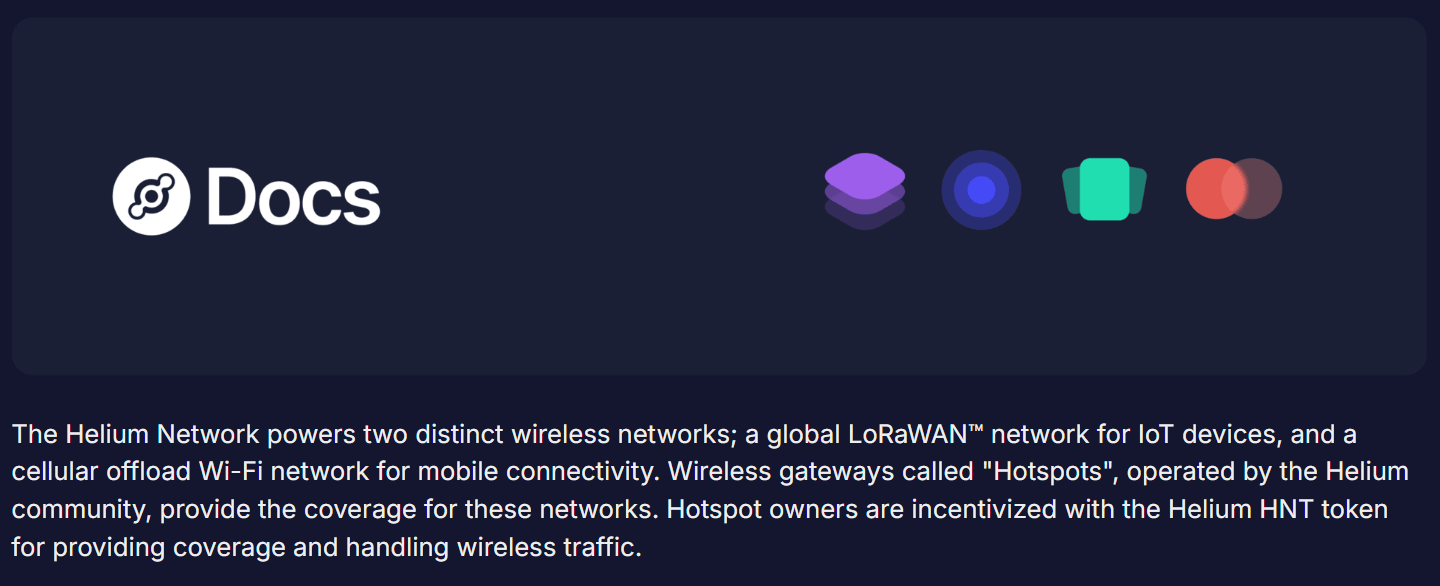
Helium uses community-operated Hotspots to build wireless networks. Its current official materials distinguish a global LoRaWAN network for IoT devices from a Wi-Fi offload network for mobile connectivity. End devices transmit through hotspots, routing and core services deliver traffic to customers, and on-chain systems participate in recordkeeping and rewards.
Helium's experience shows that coverage and usage must be measured separately. Early deployment rewards can attract hotspots rapidly, but multiple devices in the same area do not necessarily improve service value. Incentives need to shift gradually toward useful coverage, transferred data, and carrier demand.
Wireless DePIN also requires good installation locations, antenna performance, network backhaul, device certification, and telecommunications partnerships. Tokens can encourage deployment, but they cannot replace radio engineering, customer acquisition, or service levels.
How Does Hivemapper Build a Decentralized Map?
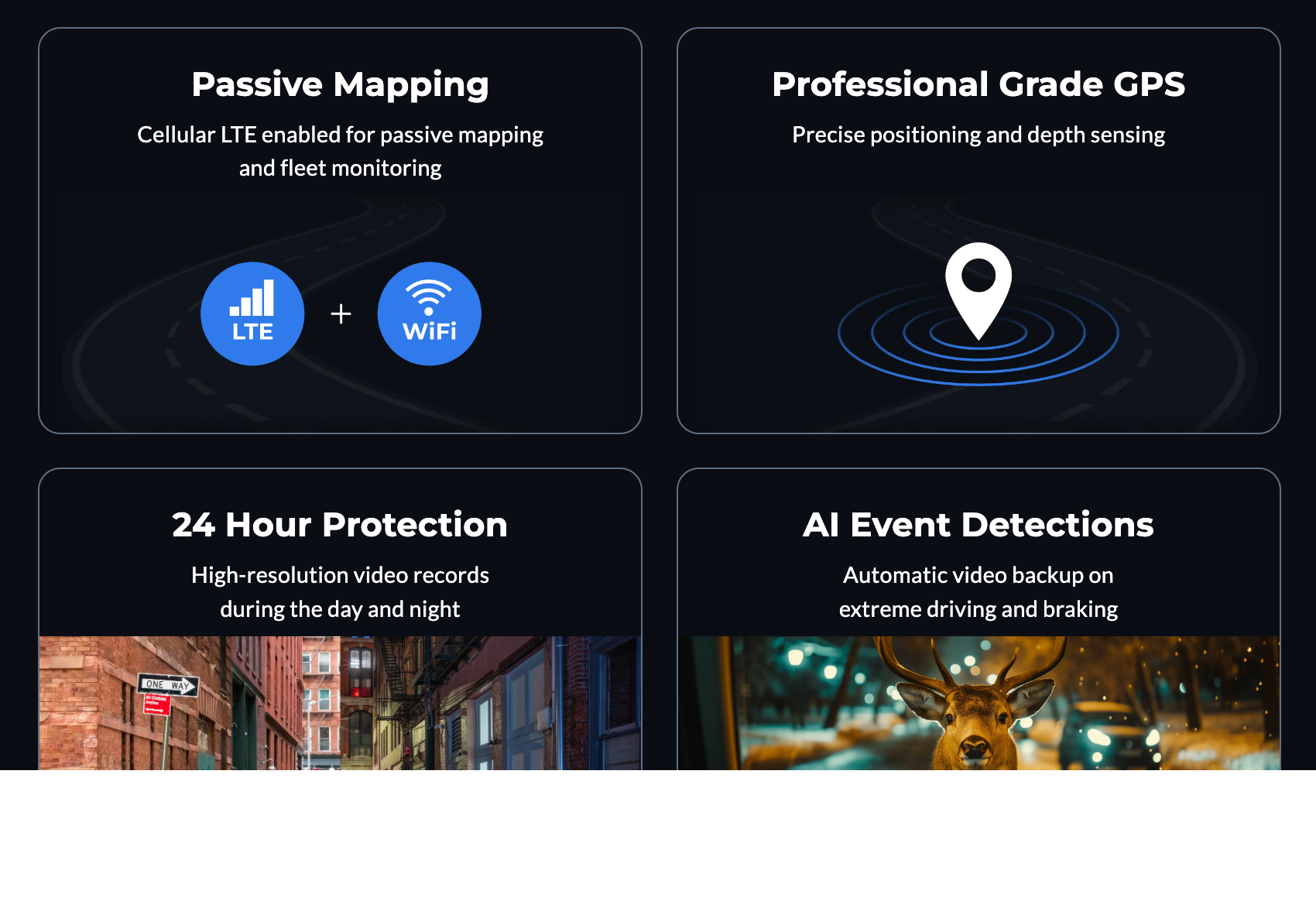
Hivemapper lets contributors collect street-view imagery with approved vehicle-mounted devices during normal driving. Map AI identifies traffic lights, speed-limit signs, road restrictions, and other features, and developers and businesses consume the resulting map data.
More imagery is not automatically better. Customers care about coverage, freshness, and quality, while another pass over an already well-mapped road has less value. Hivemapper's official mechanism divides the world into geographic cells and combines freshness, image usability, field of view, and validation by multiple devices when calculating contributions.
Hivemapper also demonstrates a demand loop: mapping customers buy usage credits, associated tokens are consumed, and part of the value can be redistributed to contributors according to protocol rules. Long-term growth in customer consumption still matters more than the amount of new rewards issued each week.
How Does Render Network Organize GPUs?
Render Network connects GPU node operators with creators who need rendering capacity. Customers submit jobs and select a service tier, distributed nodes complete the work, and the network uses tokens and credits for pricing and settlement. Its capabilities are also expanding toward generative AI and broader computing.
The key measure of a GPU marketplace is not theoretical aggregate compute, but capacity that is available on demand, meets hardware requirements, and completes jobs correctly. Offline nodes, insufficient memory, incompatible software, slow data transfer, or incorrect results all reduce effective supply.
Customers must also consider privacy and intellectual property. Film assets, model weights, and corporate data may be sensitive, so task encryption, node visibility, and result verification should be evaluated alongside price.

How Does Filecoin Verify Storage Contributions?
Filecoin creates a decentralized storage marketplace where customers make deals with storage providers. Data resides on provider hardware, while the on-chain network records commitments, proofs, and payments.
Proof of Replication shows that a storage provider created an independent physical copy of particular data. Proof of Spacetime continuously demonstrates that the data remains stored during the agreed period. These proofs address part of the question of whether the disk is genuinely doing work.
Storage proofs do not guarantee that data can always be downloaded immediately. Customers still need to consider the number of replicas, retrieval paths, bandwidth, retention periods, and provider reliability. Important data should not rely on one storage deal; backups and recovery tests remain necessary.
How Is DePIN Different from Traditional Cloud Services?
Traditional cloud providers control data centers, pricing, accounts, and service levels, and generally offer mature support and stable performance. DePIN distributes hardware ownership and supply among multiple participants, which can use idle resources, expand geographic coverage, and reduce single-point dependency.
The tradeoff is less consistent quality. Hardware models, networks, maintenance practices, and jurisdictions differ, so protocols must filter usable supply and handle failures. Enterprise customers also require contracts, privacy, compliance, and service guarantees that smart contracts cannot fully provide.
DePIN does not necessarily replace cloud computing. A more likely model is hybrid: centralized services handle scheduling, support, and critical workloads, while distributed nodes supply elastic capacity, edge coverage, or specialized data.
How Is DePIN Different from Proof-of-Work Mining?
Proof-of-work miners calculate hashes to secure blockchain consensus, so their output is network security. DePIN nodes should deliver wireless, mapping, compute, or storage services to external customers, with different types of work and quality standards for each project.
Both models use hardware and rewards, and both face power costs, equipment depreciation, and professionalization. In the long run, however, DePIN revenue should come more from customer consumption than new token issuance. If no one uses the service, the equipment's work may have no external value.
How Does a DePIN Token Economy Close the Loop?
Early networks often subsidize supply with token issuance to solve the cold-start problem: no customer comes without coverage, but no participant deploys without customers. As the network matures, rewards should become more closely tied to useful service, customer fees, and underserved locations.
Common designs include customers burning tokens for service credits, protocols using revenue to repurchase tokens or distribute rewards, nodes staking assets as a behavior guarantee, and governance adjusting parameters. Every design should be tested to see whether the token is truly necessary or merely a fundraising and subsidy mechanism.
A healthy loop works as follows: customers pay for services, fees support equipment operations and network security, more reliable supply improves the product, and a better product attracts more customers. A negative loop occurs when a rising token price attracts devices, additional devices dilute rewards, and insufficient customers cause nodes to leave.
How Can You Identify Real DePIN Demand?
Do not rely only on registered-device counts, coverage maps, or token market capitalization. More useful metrics include active online nodes, real traffic, paid jobs, customer retention, service revenue per unit, duplicate coverage, job success rates, and supplier utilization.
Each sector needs different metrics. Wireless networks should track data transfer and carrier partnerships; mapping networks, customer API calls and useful updates; GPU networks, paid workloads and successful delivery; and storage networks, active deals, verifiable capacity, and retrieval success.
Distinguish protocol revenue from internal circular activity. A project may subsidize its own service purchases, or nodes may use rewards to manufacture traffic. This can make the data appear to grow without external customers. Public on-chain transactions still need to be interpreted alongside payer identity and business context.
What Are the Main Risks of DePIN?
The first is hardware payback risk. Equipment prices, power, connectivity, repairs, and depreciation may exceed rewards, while token price declines or rule changes can lengthen the payback period. Historical earnings shown by a project do not predict future results.
The second is contribution fraud. GPS spoofing, virtual nodes, duplicate imagery, self-purchased traffic, and fake computation dilute honest suppliers. Stricter anti-fraud controls may also penalize legitimate devices and increase centralized review power.
The third is insufficient demand. Subsidies can drive widespread deployment, but enterprise customers and recurring revenue take time. An impressive node map does not prove that a service meets commercial standards.
The fourth is centralized control. Approved hardware, closed-source firmware, a single operator, administrator keys, centralized APIs, and foundation-controlled parameters can all become control points or single points of failure.
The fifth is privacy, legal, and security risk. Cameras may capture faces and license plates, sensors may reveal location, GPU nodes may access customer data, and wireless and energy equipment also involve local permits and product liability.
The sixth is liquidity and regulatory risk. Node-reward tokens can be highly volatile and have limited exit liquidity. Hardware sales, return claims, and personal-data processing may also be subject to local rules.
Hotcoin's Six-Dimension DEPINS Framework
The DEPINS checklist can help evaluate a specific project. It is not an investment rating.
17.1 D: Demand — Who Pays?
Confirm customers, use cases, orders, and retention. Separate external revenue from project subsidies and circular activity among participants.
17.2 E: Economics — Do the Device Economics Work?
Calculate hardware, electricity, connectivity, maintenance, depreciation, taxes, and exit costs. Do not treat variable token rewards as fixed returns.
17.3 P: Proof — How Is Contribution Verified?
Check how location, uptime, traffic, quality, and results are verified, including attack methods, penalties, appeals, and administrator privileges.
17.4 I: Infrastructure — Is the Service Usable?
Focus on effective capacity, coverage gaps, job success rates, latency, hardware standards, and failure recovery rather than the total number of registered nodes.
17.5 N: Network — Is Control Distributed?
Examine device owners, nodes, verification, firmware, APIs, contracts, and governance to identify genuine single-point dependencies.
17.6 S: Safety — Are the Risk Boundaries Clear?
Assess keys, devices, personal safety, data privacy, permits, tokens, smart contracts, and customer liability, and budget for the worst case.
How Can Ordinary Users Participate in DePIN?
First, verify local demand. Wireless coverage, mapping, and sensors are highly location-dependent, and areas with many existing devices may pay lower rewards. Second, calculate all costs, including imports, installation, connectivity, power, maintenance, depreciation, and taxes.
Third, read the current reward rules. Determine whether rewards depend on deployment, uptime, coverage, usage, or quality; who can change the parameters; and what happens if equipment is discontinued or the network migrates. Fourth, verify official hardware, firmware, contracts, and download channels, and beware of fake devices, malicious node software, and return promises.
Fifth, start small. Run one device or a small amount of capacity first, observe data reporting, payments, and exit procedures, and only then decide whether to expand. Do not borrow to buy large amounts of hardware or project historical high returns into the future.
Sixth, protect privacy and wallets. Isolate the device wallet from major holdings, back up keys, understand which location and imagery data are uploaded, and comply with local wireless, energy, photography, and data rules.
To compare the business models of wireless, mapping, and GPU networks, continue with Top DePIN Projects: Helium, Hivemapper, and Render Network.
Frequently Asked Questions
19.1 Is DePIN the Same as Hardware Mining?
No. Both may use equipment and token rewards, but DePIN should deliver external services such as wireless coverage, computing, maps, or storage. Device rewards without actual service demand are difficult to sustain.
19.2 Is a DePIN Device Guaranteed to Pay for Itself?
No. Earnings depend on location, quality, customer usage, reward rules, token prices, and operating costs, while hardware can depreciate or become obsolete. Any guaranteed payback claim deserves caution.
19.3 Can a Phone or Computer Become a DePIN Node?
It depends on the project. Some networks accept bandwidth, sensor data, or computing resources; others require certified cameras, hotspots, GPUs, or specialist equipment. Follow the project's official hardware and software requirements.
19.4 Is All DePIN Data Stored on a Blockchain?
Usually not. Imagery, models, wireless traffic, and large files are generally processed off-chain. The blockchain mainly holds accounts, proofs, payments, rewards, or data commitments.
19.5 Does More Nodes Always Mean a Better Network?
No. Duplicated coverage, low-quality devices, or offline nodes may add no value. Effective capacity, real usage, geographic distribution, service quality, and customer payments matter more than the total.
19.6 Is DePIN Cheaper Than Centralized Cloud Services?
It can be cheaper in some cases, especially when using idle resources or edge coverage. Scheduling, verification, data transfer, variable rewards, and quality control also add costs, so comparisons must be made for the actual workload.
19.7 Are DePIN Tokens Suitable for Long-Term Holding?
Useful technology does not guarantee token appreciation. Issuance, unlocks, value capture, customer revenue, ownership concentration, competition, regulation, and liquidity all need evaluation. This article makes no return judgment about any asset.
Conclusion: DePIN's Destination Is Service, Not Device Count
DePIN uses blockchains and tokens to organize distributed devices into infrastructure networks. It can reduce centralized capital requirements, use idle resources, and let suppliers share in network economics—but only when real work can be verified, services can be delivered, and customers are willing to pay.
Helium, Hivemapper, Render, and Filecoin demonstrate different proof models: wireless measures coverage and traffic, mapping measures freshness and quality, GPUs measure job delivery, and storage measures continued data retention. No single metric can represent every DePIN network.
Evaluate projects across demand, cost, proof, service, control, and safety. Token subsidies can help a network start, but they cannot permanently replace revenue; decentralized devices do not automatically remove dependencies on centralized software, legal systems, and operations.
Return to The Web3 Frontier Landscape in 2025 to place DePIN in the same framework as AI + Crypto, oracles, and multichain infrastructure.
To connect to Web3 applications with a standalone wallet, consider Hotcoin Web3 Wallet. For mobile market and trading tools, visit Hotcoin App. For more educational content, visit Hotcoin.
Risk warning: This article is for education and information only and does not constitute investment, hardware purchasing, node operation, legal, or tax advice. DePIN hardware, coverage, rewards, tokens, contracts, customer demand, data rules, and project status can change rapidly. Before participating, verify the latest official documentation, equipment requirements, on-chain addresses, wallet signatures, and local rules, and commit only funds you can afford to lose.
Lectura recomendada
Ver más



Service@hotcoin.com
Product@hotcoin.com
Business@hotcoin.com
Casecn@hotcoin.com