
What Is Cryptocurrency? Understanding Digital Money
Cryptocurrency is a class of digital assets that uses cryptography, distributed ledgers, and network protocols to record ownership and transfers. The balance shown in a wallet is a state calculated from addresses, transactions, and protocol rules on a blockchain. A wallet manages keys, creates signatures, and reads on-chain data; it does not store digital coins inside a phone.
Bitcoin was the first cryptocurrency to achieve widespread use. Ethereum later brought smart contracts to mainstream public blockchains, followed by stablecoins, utility tokens, governance tokens, NFTs, and many other asset types. Their purposes, issuance rules, permissions, liquidity, and risks can differ substantially.
For a broader learning map, read the Complete Cryptocurrency Beginner's Guide.
What Is the Precise Meaning of Cryptocurrency?
“Crypto” refers to cryptography, while “currency” suggests a medium of exchange. Today, however, cryptocurrency includes many digital assets that are not designed primarily for everyday payments, so “crypto asset” is often the more inclusive term.
In a narrow sense, cryptocurrency is a unit of digital value whose transactions are protected with cryptography, whose ledger is maintained by a distributed network, and which can move between addresses. In a broader sense, crypto assets also include stablecoins, exchange tokens, governance tokens, liquidity receipts, tokenized real-world assets, and NFTs issued through smart contracts.
A name alone does not prove that an asset behaves like cash, has a stable price, lacks an administrator, or can always be traded freely. Its network, contract, issuance rules, and ownership rights matter more.
Why Is Cryptocurrency Called “Crypto”?
Cryptocurrencies use hash functions, public-key cryptography, and digital signatures to protect data integrity and demonstrate authorization. A hash function converts data into a fixed-length digest. Even a small change to a transaction or block normally changes the digest, helping the network detect tampering.
A private key creates digital signatures, a public key verifies them, and an address is usually derived from a public key or related data. A signature proves that the holder of a private key authorized a transaction without exposing that private key to the network.
Using cryptography does not mean all data is hidden. On most public blockchains, addresses, amounts, contract calls, and transaction histories are visible; a real-world identity simply may not be written next to an address.
How Do Cryptocurrency, Electronic Money, and Digital Currency Differ?
Digital currency is a broad category that may include bank balances, electronic-wallet balances, central bank digital currencies, and cryptocurrencies. Conventional electronic money normally represents a claim denominated in fiat currency against an issuer or payment provider. A centralized database records balances, while the institution handles freezes, refunds, identity checks, and account recovery.
Cryptocurrency generally uses a blockchain or distributed ledger to record state, and a user may authorize transactions directly with a private key. A central bank digital currency is issued by a central bank, whereas a private stablecoin is maintained by a company, protocol, or collateral mechanism. All may be digital, but they should not be confused with native assets of open networks such as Bitcoin.
What Are the Core Components of Cryptocurrency?
A cryptocurrency system usually has six components: a ledger that records balances and state changes; keys and signatures that prove authority; nodes that receive and verify transactions and blocks; consensus rules that align the network on transaction order and current state; economic incentives and native assets that reward or constrain participants; and an application layer that includes wallets, exchanges, block explorers, smart contracts, and DApps.
These parts depend on one another. Reliable records require more than cryptography: client implementations, node distribution, consensus security, governance permissions, and user behavior all matter.
What Is a Blockchain?
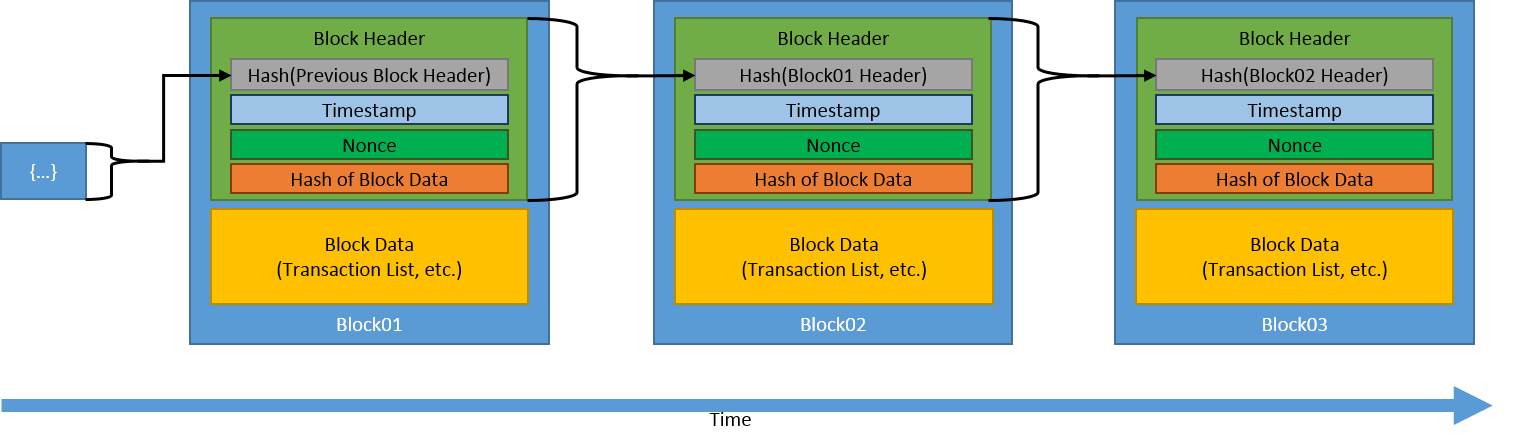
A blockchain is a distributed ledger that arranges transactions or state data in sequence. Data is grouped into blocks, and each block is normally linked cryptographically to the previous one, creating a history that can be verified.
“Tamper-resistant” does not mean absolutely impossible to change. Security still depends on consensus, node distribution, economic cost, software implementation, and governance. A blockchain is also not synonymous with cryptocurrency; it can record assets, identities, contracts, and business data as well.
How Does a Cryptocurrency Transaction Work?
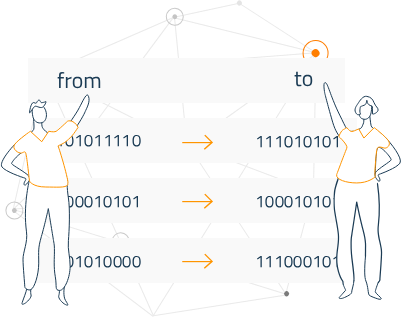
The sender first chooses a network, asset, and recipient address in a wallet, enters an amount, and reviews the estimated network fee. The wallet prepares data for signing, and after approval the private key creates a digital signature locally or in a hardware wallet.
The transaction is then broadcast to nodes. They check the signature, balance, nonce or UTXO, fee, and other protocol conditions. A block producer includes valid transactions in a block, and the network verifies the new block under its consensus rules before updating ledger state.
A page that says “submitted” does not prove that a transaction is already in a block. On-chain success also does not guarantee immediate credit by a centralized platform, which may require additional confirmations or a memo.
How Do Bitcoin Transactions and the UTXO Model Work?
Bitcoin primarily uses the UTXO model. Spendable funds consist of transaction outputs that have not yet been spent. A new transaction references old outputs as inputs and creates new outputs for the recipient and, when needed, a change address. Wallets aggregate multiple UTXOs to show a simple balance.
Bitcoin uses proof of work to compete for block production and rules such as accumulated work to select valid history. Its core achievement is preventing the same unit of digital value from being spent twice on an open network without a conventional central bookkeeper.
How Do Ethereum Accounts and Smart Contracts Work?
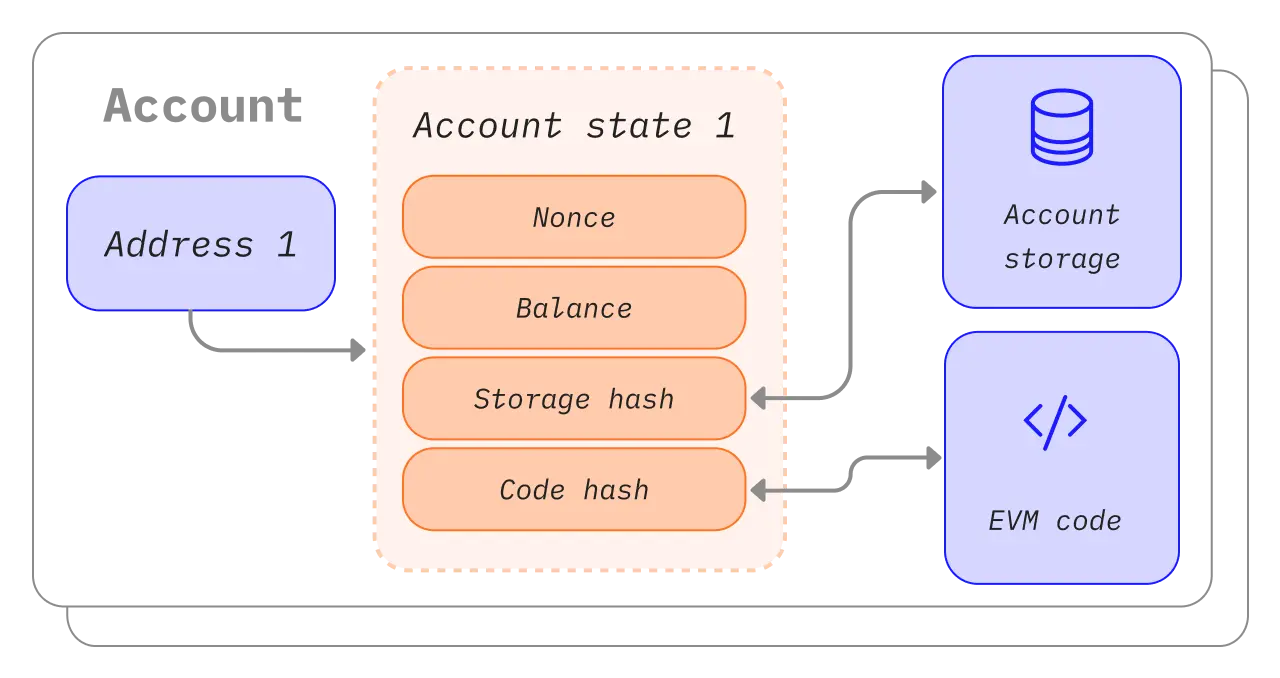
Ethereum uses an account and global-state model. Externally owned accounts are controlled by keys, while contract accounts are controlled by code deployed at a particular address. A transaction can send ETH or call a contract to trigger a token transfer, swap, loan, NFT mint, or governance action.
Smart contracts execute rules when conditions are met, but they cannot independently determine off-chain facts and often rely on oracles. Publicly verifiable code is not automatically free of bugs or upgrades. Proxy contracts, administrator keys, pause functions, minting rights, and blacklists all require review.
For a closer comparison, read Bitcoin vs. Ethereum: A Complete Guide.
What Are Public Keys, Private Keys, and Addresses?
A private key is secret data used to authorize actions. Controlling it generally means controlling the assets associated with its addresses. A public key is mathematically derived from the private key and verifies signatures. An address, often derived from a public key or script, is a public identifier used to receive assets.
An address cannot be used to reconstruct a private key, but it may reveal balances, transactions, and contract interactions on a public chain. A private key is also not an ordinary login password: a platform password can often be reset, while a self-custody private key has no central recovery desk. A seed phrase can restore a group of keys and must also be kept offline.
Does a Wallet Actually Store Cryptocurrency?
Usually not. Assets are recorded on the blockchain; a wallet manages the keys or signing capability needed to access an account, view state, and authorize transactions. Software wallets encrypt keys on a device. Hardware wallets try to keep private keys away from internet-connected computers, but they cannot prevent a user from approving a malicious contract or the wrong address.
A custodial wallet or exchange controls the on-chain private keys while the user holds an account claim against the provider. This may offer password recovery and customer support, but it also introduces platform security, solvency, withdrawal, and compliance risks.
How Does a Seed Phrase Differ from a Wallet Password?
A seed phrase is usually a high-privilege backup that generates or restores a group of private keys. Anyone with the complete phrase may recreate the wallet on another device and transfer its assets. A wallet password generally unlocks encrypted data on the current device; it may not restore an account after the device is lost or the app is deleted.
Never screenshot a seed phrase, upload it to cloud storage, or enter it on a supposed synchronization, verification, upgrade, compensation, or airdrop website. Verify backups safely, and consider fire, water, inheritance, and multi-person recovery plans for valuable holdings.
What Is a Consensus Mechanism?
A consensus mechanism is a set of rules that lets distributed nodes agree on valid state and transaction order. Proof of work requires block producers to commit computation and energy. Proof of stake requires validators to lock assets and may penalize malicious behavior or serious failures.
Other networks may use delegated proof of stake, proof of authority, Byzantine fault tolerance, or hybrid designs. Similar names do not guarantee identical decentralization or security assumptions. Consensus also does not decide whether an asset is fairly priced, a project is honest, or off-chain information is true; it processes valid data according to protocol rules.
What Is the Difference Between a Coin and a Token?
A coin is usually a blockchain's native asset, managed directly by its base protocol and commonly used for transaction fees, consensus security, and value transfer. A token is normally issued by a smart contract on an existing blockchain. Its issuer may retain minting, freezing, upgrade, blacklist, transfer-tax, or governance powers.
Moving a token usually still requires the chain's native coin for gas. Anyone can create a token with a familiar name, symbol, and logo, so users must verify the network and complete contract address. Wrapped and bridged assets also introduce contract, custody, and cross-chain mechanism risks.
Are Stablecoins Cryptocurrencies?
Stablecoins are generally crypto assets designed to track a fiat currency or another asset and are widely used for trading, payments, and DeFi settlement. Fiat-backed stablecoins depend on an issuer, reserves, banks, and redemption. Crypto-collateralized designs depend on collateral, liquidations, oracles, and governance, while algorithmic mechanisms depend on incentives and supply adjustments.
“Stable” describes a target, not a guarantee. A stablecoin can lose its peg, be frozen, become illiquid, or face issuer and regulatory problems. It is not necessarily a bank deposit and may not have deposit insurance or unconditional redemption at par.
Is Cryptocurrency Always Decentralized?
No. Decentralization spans several dimensions, including nodes, block production, development, governance, token ownership, infrastructure, and administrator permissions. A network may allow anyone to run a node while block production remains concentrated; a token may live on a public chain while a single company controls minting and freezing.
Centralization is not automatically malicious, and decentralization is not automatically safe. Review validator distribution, contract administrators, governance thresholds, upgrade delays, front-end dependencies, and exit options instead of relying on claims of being “fully decentralized.”
Is Cryptocurrency Anonymous?
Most public blockchains record transactions under addresses rather than names, so “pseudonymous” is more accurate. Addresses, amounts, timestamps, tokens, and contract interactions are generally public and persistent. Exchange KYC records, IP addresses, devices, social accounts, payment records, and address reuse can all connect an address with a real identity.
Privacy coins and protocols can conceal some information, but wallet implementation, network metadata, on- and off-ramps, and local rules still matter. Privacy is an operational discipline, not an automatic promise of public blockchains.
What Are the Main Uses of Cryptocurrency?
Common uses include transferring value, paying network fees, interacting with smart-contract applications such as trading and lending, using stable units for pricing and cross-border settlement, and rewarding miners, validators, or other participants who help maintain a network.
Having a use case does not guarantee price appreciation. A token may not be necessary for its application, and apparent demand may be inflated by subsidies, automated activity, or short-term speculation.
Why Does Cryptocurrency Have a Price?
Prices emerge from buy and sell orders in specific markets. They are influenced by supply rules, demand, network effects, utility, security, liquidity, macroeconomic conditions, regulation, and market narratives. Fixed or limited supply describes scarcity rules but does not prove that demand exists.
Market capitalization is usually current price multiplied by circulating supply; it does not mean an equal amount of cash is present in the market. Analysis should separate whether a network is useful, whether a token captures that value, and whether its current price is reasonable.
How Is Cryptocurrency Different from Fiat Currency?
Fiat currency is normally issued by a monetary authority and functions within a legal system for pricing, payment, and settlement. Banks and payment providers handle accounts, identity, refunds, and compliance. Most cryptocurrencies are issued by protocols or smart contracts, are not central bank liabilities, and are usually not legal tender.
Institutions may recover traditional accounts, freeze funds, or reverse some payments. Self-custodied assets depend mainly on private keys, and confirmed on-chain transfers are generally difficult to reverse. Crypto networks may operate around the clock, but congestion, gas, address errors, network compatibility, and platform confirmation policies still apply.
For a full comparison, read Cryptocurrency vs. Traditional Money.
How Did Cryptocurrency Develop?
Before Bitcoin, researchers explored digital cash, cryptographic timestamps, proof of work, and peer-to-peer networks. Satoshi Nakamoto published the Bitcoin white paper in 2008, and the network launched in 2009, combining these technologies with economic incentives in an open ledger.
Ethereum launched in 2015 and made general-purpose smart contracts widely available, accelerating stablecoins, DeFi, NFTs, cross-chain systems, and scaling technology. The industry has also experienced exchange failures, contract exploits, stablecoin depegs, regulatory change, and recurring price cycles.
Read The History of Cryptocurrency: From Satoshi to a Trillion-Dollar Market for the full timeline.
How Can Beginners Obtain and Use Cryptocurrency?
Users may buy cryptocurrency through a platform that complies with local requirements or receive it through payments, mining, staking, or protocol activities. On a centralized platform, check eligibility, account security, trading pairs, order types, fees, and withdrawal rules. Do not install an app from a private message or search advertisement.
Before withdrawing to a wallet, verify the asset, network, address, memo, contract, and platform support. Test a new address or network with a small amount first, and retain order details, deposit and withdrawal records, and transaction hashes.
What Is the Difference Between Self-Custody and Platform Custody?
With self-custody, users control their own private keys and do not need one platform to approve every on-chain transfer, but they bear the main responsibility for backups, devices, signatures, and recovery. With platform custody, a provider controls the keys and may offer password recovery, matching, and customer support, but users face hacking, withdrawal suspension, insolvency, and compliance risks.
No single model is safest for everyone. Separating trading funds, a daily-use wallet, a high-risk interaction wallet, and long-term reserves can reduce the impact of any one failure.
What Are the Main Risks of Using Cryptocurrency?
Major risks include severe price volatility and poor liquidity; seed-phrase exposure, device damage, or lost backups; selecting the wrong network, entering a wrong address, omitting a memo, signing a malicious transaction, or granting unlimited approval; exchange hacks, withdrawal limits, or insolvency; and contract bugs, administrator upgrades, oracle failures, bridge exploits, and stablecoin depegs.
Users must also watch for fake support agents, fake apps, fraudulent airdrops, Ponzi schemes, rug pulls, and social-media impersonation, while staying informed about changing local rules for ownership, trading, payments, derivatives, and taxes.
Why Are On-Chain Transactions Usually Difficult to Reverse?
A blockchain judges a transaction by its signature and protocol rules; it does not know whether the sender mistyped an address, was deceived, or intended to pay. Once a transaction enters a finalized block, changing history generally requires reorganizing later blocks and satisfying consensus again, with the cost increasing as confirmations accumulate.
Some platforms, protocols, or stablecoin issuers can freeze assets, upgrade contracts, or reverse internal records, but these are specific permissions rather than a universal recovery mechanism. Verify the full address, network, and asset before sending, and test unfamiliar routes with a small amount.
The Hotcoin CRYPTO Six-Dimension Framework
This framework helps identify what a crypto asset actually represents. It is not an investment recommendation for any project or token.
25.1 C: Chain — Where Does the Asset Exist?
Confirm the network, native coin, token standard, complete contract address, and block explorer rather than relying on a name or logo.
25.2 R: Rules — What Governs Issuance and Transfers?
Check maximum and circulating supply, minting, burning, freezing, blacklists, upgrades, and transfer restrictions, and determine who can change those rules.
25.3 Y: Your Keys — Who Controls the Keys?
Distinguish self-custody, platform custody, multisignature wallets, and smart accounts, and define device, backup, recovery, and inheritance plans.
25.4 P: Purpose — What Is the Asset For?
Determine whether it is used for network fees, payments, collateral, governance, stable pricing, or application access, and whether that purpose truly requires the token.
25.5 T: Trust — Which Participants Must Be Trusted?
List validators, issuers, administrators, bridges, oracles, custodians, and front-end dependencies. Being “on-chain” does not remove every trust assumption.
25.6 O: Outcome — How Can the Result Be Verified?
Save the transaction hash and use a block explorer to verify status, events, fees, and asset destinations. Do not treat a website animation or chat screenshot as final proof.
Cryptocurrency Safety Checklist for Beginners
- Enter platforms, wallets, and project sites through official sources; avoid search ads, direct-message links, and look-alike domains.
- Never give anyone a seed phrase, private key, verification code, or complete backup, and do not screenshot or upload them to the cloud.
- Verify the network, authentic contract, complete address, and required memo; make a small test transaction first.
- Distinguish a connection request, login signature, token approval, and asset transaction. Do not approve what you do not understand.
- Use only funds you can afford to lose. Do not borrow, use essential living funds, or enter unfamiliar contracts or leverage because of promised returns.
- Keep orders, fees, transaction hashes, and fiat reference values, and understand local identity, platform, and tax requirements.
Frequently Asked Questions
27.1 Does Cryptocurrency Really Exist?
It exists as verifiable records on a blockchain ledger rather than as paper or coins. Protocol rules determine which addresses can control the corresponding assets.
27.2 Does a Wallet Store Digital Coins?
Usually not. Assets are recorded on-chain. A wallet stores or invokes keys so users can view balances and sign transactions.
27.3 Is Cryptocurrency Completely Anonymous?
Most public blockchains are open pseudonymous systems. Names are not written directly on addresses, but transactions can be traced and may be linked to identities through platform accounts and money flows.
27.4 Is a Blockchain Absolutely Immutable?
No. Cryptographic links and consensus make historical changes easier to detect and more expensive, but security still depends on network size, nodes, consensus, and governance.
27.5 Are Coins and Tokens the Same?
Not exactly. A coin is generally native to a base network, while a token is usually issued by a smart contract on that network.
27.6 Can Assets Be Recovered If a Wallet Password Is Forgotten?
A local password may not restore a wallet. If the correct seed phrase, private key, or configured recovery method remains available, recovery on a new device is often possible. Losing the highest-authority backup may make recovery impossible.
27.7 Will Cryptocurrency Always Increase in Value?
No. Prices are affected by supply and demand, liquidity, technology, competition, regulation, and speculation. Any asset can fall sharply or lose its value entirely.
Conclusion: Cryptocurrency Combines Ledgers, Keys, and Consensus
Understanding cryptocurrency starts with five questions: where the asset is recorded, who can sign transactions, what nodes verify, how the network reaches consensus, and which issuers or administrators the project still depends on.
The blockchain records and verifies state, wallets manage keys and signatures, consensus aligns nodes on valid history, and coins and tokens serve different purposes above those rules. Cryptocurrency can reduce dependence on a single bookkeeper in some settings, but it does not eliminate trust or the risks created by issuance powers, contracts, custody providers, oracles, bridges, and law.
To continue learning about asset categories, value, regulation, terminology, and risk, return to the Complete Cryptocurrency Beginner's Guide. For mobile market data and trading tools, visit the Hotcoin App. To connect an independent wallet to Web3 applications, use Hotcoin Web3 Wallet. Explore more educational content at Hotcoin.
Risk warning: This article is for education and information only and does not constitute investment, trading, legal, tax, or cybersecurity advice. Cryptocurrency may involve severe price volatility, private-key exposure, lost seed phrases, phishing, malicious signatures, platform failure or withdrawal suspension, smart-contract vulnerabilities, stablecoin depegs, bridge attacks, poor liquidity, market manipulation, and regulatory change. Verify current local rules, official access points, networks, contracts, addresses, fees, and custody arrangements, and use only funds you can afford to lose completely.
Lectura recomendada
Ver más


Service@hotcoin.com
Product@hotcoin.com
Business@hotcoin.com
Casecn@hotcoin.com