
Social Tokens: Bringing the Fan Economy On-Chain
Traditional fan economies depend on platform accounts, membership tiers, gift leaderboards, and subscription records. Fans can pay to support creators, but they rarely can carry their membership, contribution history, or community reputation into another app. Creators may own their work while still being unable to move their fan relationships and settlement channels.
Social tokens try to turn those relationships into on-chain credentials. Individuals, creators, communities, and media projects can issue tokens for member access, event eligibility, governance, contribution rewards, content discovery, or digital collectibles. Different sites and community tools can verify wallet holdings, while smart contracts can execute transfers and distribution rules.
Bringing the fan economy on-chain does not mean securitizing a person. Holding a social token usually gives no equity, copyright, personality rights, or claim on a creator's future income, and it does not guarantee appreciation. If a token is freely tradable, membership is also exposed to liquidity risk, speculation, manipulation, and regulation. Reading SocialFi: The Present and Future of Decentralized Social Networks helps distinguish community tools from high-risk trading assets.
What Is a Social Token?
A social token is a crypto asset issued around personal influence, a creator brand, a community relationship, or a content project. Its defining feature is not its ticker but its use of on-chain records to express who participates in a relationship and what benefits that participation unlocks.
A musician might give holders early access to concert tickets; a researcher might identify long-term readers; a gaming guild might reward contributors; and an open-source community might use tokens in budget votes. Any client capable of reading the same network and contract can potentially verify those qualifications.
Social tokens commonly use fungible-token standards. Every unit in an issuance is interchangeable, making the token suitable for quantities, voting power, or membership thresholds. NFTs have unique identifiers and are better suited to limited identities, one-of-one works, and non-interchangeable records. Both can support fan economies, but they serve different purposes.
Why Did Social Tokens Emerge?
2.1 Creators Need More Direct Revenue
Advertising, sponsorships, and platform revenue sharing generate income but also expose creators to commissions, settlement cycles, and algorithm changes. Social tokens provide another route: creators can issue access rights, rewards, or collectibles directly and earn from initial distribution, services, or transaction fees.
2.2 Fans Want to Prove Early Support
Likes and follows are usually locked inside one platform. On-chain records can show when a fan joined, collected, or contributed, though they can also reveal wallet balances and social relationships.
2.3 Communities Need Programmable Coordination
Tokens can reward contributors, control access to channels, archives, and events, and support proposals, voting, and community treasuries. Multiple tools can read the same rules, but a contract cannot automatically judge contribution quality or resolve real-world disputes.
2.4 Open Networks Need Cross-App Identity
Web2 memberships normally work only on the issuing platform. On-chain tokens can be recognized by websites, clients, and event systems, improving portability while increasing the danger of malicious approvals.
What Are the Main Types of Social Tokens?
3.1 Personal Tokens
Personal tokens are issued around an individual and may grant consultations, private groups, time-based services, or a way to show support. They depend heavily on that person fulfilling promises; utility can collapse if the issuer stops publishing, suffers reputational damage, or leaves.
3.2 Creator Coins
Creator coins revolve around a long-running content brand, including writers, artists, streamers, and studios. They may offer priority access to new releases, exclusive events, or community rewards. Zora Creator Coins and Paragraph Writer Coins are current examples.
3.3 Community Tokens
Community tokens represent participation in a group or shared objective. They may be used for governance, task rewards, events, channels, and shared budgets. They need not depend on one celebrity, but issuance and voting rules must be clear.
3.4 Content Tokens
Content tokens correspond to an article, post, song, or video and provide a tradable record of support. A content token can coexist with a creator coin: one supports an individual work, while the other supports the creator's longer journey.
3.5 Access and Membership Credentials
Keys, passes, and membership NFTs also fall within a broad definition of social tokens when their main purpose is to unlock chats, courses, or events. If a benefit is strongly tied to identity, a non-transferable or expiring credential may be more appropriate than a freely traded token.
How Do Social Tokens Differ from Fan Points?
Platform points live in a platform database. The platform can issue more, freeze accounts, change their purpose, or delete them when a service ends. Social-token balances and transfers are recorded on-chain; users can generally hold them in self-custody and authorize third-party apps to verify them.
Putting a token on-chain does not automatically remove centralization. The issuing team may still control minting, upgrades, metadata, frontends, and the interpretation of benefits. A token may exist forever even though concerts, chats, courses, and offline services still depend on real operators.
Five questions help expose the difference: Can the token be transferred freely? Can the issuer mint or freeze it? Can third parties read it? Are benefits stated in clear terms? What remains if the official service stops? A token symbol in a wallet is not proof of durable rights.
How Are Social Tokens Issued and Distributed?
5.1 Fixed Supply and Predefined Allocation
An issuer can set a maximum supply and allocate tokens to the creator, community, liquidity, and future incentives. Even with a fixed supply, excessive team ownership or rapid unlocks can create selling pressure.
5.2 Gradual Vesting
Team allocations can unlock over time to reduce immediate selling after launch. Vesting can extend incentive alignment but cannot guarantee continued service or stop whales from influencing the market.
5.3 Contribution Rewards and Retroactive Distribution
Tokens can reward early subscribers, collectors, moderators, and referrers. Retroactive distribution recognizes past contributions, but metrics based only on trading or invitations invite bots and artificial activity.
5.4 Public Sales and Automated Market Making
Liquidity pools or bonding curves enable continuous trading and ease cold starts, but they also attach a live price to a social relationship. In thin markets, small trades can cause large price swings.
5.5 Contribution Credentials That Cannot Be Bought
Volunteer work, moderation qualifications, and community reputation can use non-transferable credentials to reduce the ability to buy status. Such systems also need appeals, revocation, and privacy safeguards.
What Value Can a Social Token Provide?
First is access: holders may enter groups, livestreams, research archives, events, or product tests.
Second is participation: tokens can enable proposals, content-topic votes, community-budget allocation, and collaborative creation. Governance scope must be clear; one vote should not be presented as control over every business decision.
Third is rewards: creators can distribute tokens to commenters, translators, referrers, curators, and developers, sharing some community growth with contributors.
Fourth is identity: long-term holding, early claims, and completed tasks can express belonging and reputation. Identity often supports community culture more reliably than short-term prices.
Fifth is trading: a market gives holders an exit and may let creators earn a portion of transaction fees. Liquidity is a tool, not a source of value. Without content, service, and culture, trading alone is difficult to sustain.
What Model Do Zora Creator Coins Demonstrate?
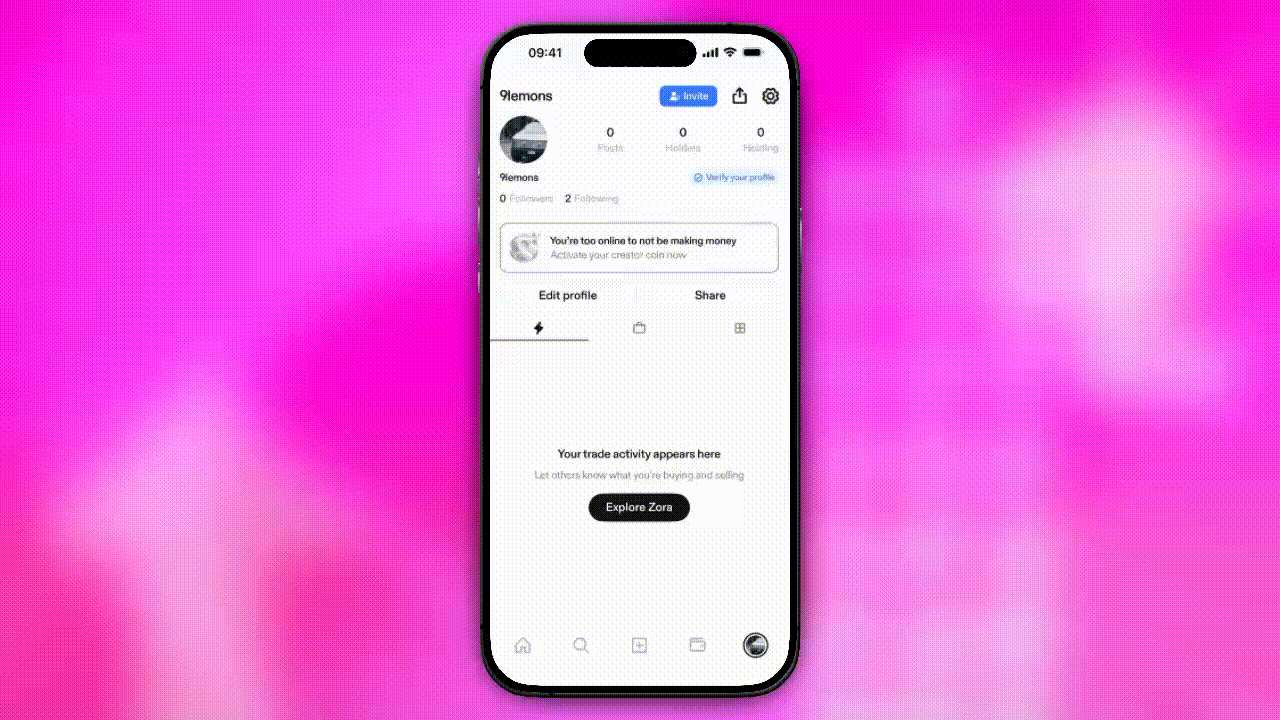
Zora combines creator profiles, posts, and tradable tokens in one social product. According to its documentation, each Creator Coin corresponds to one account and uses its username as the ticker. Total supply is one billion tokens: half enters the public market and half is allocated to the creator with five-year linear vesting. Creator Coins run on Base and cannot be disabled after activation.
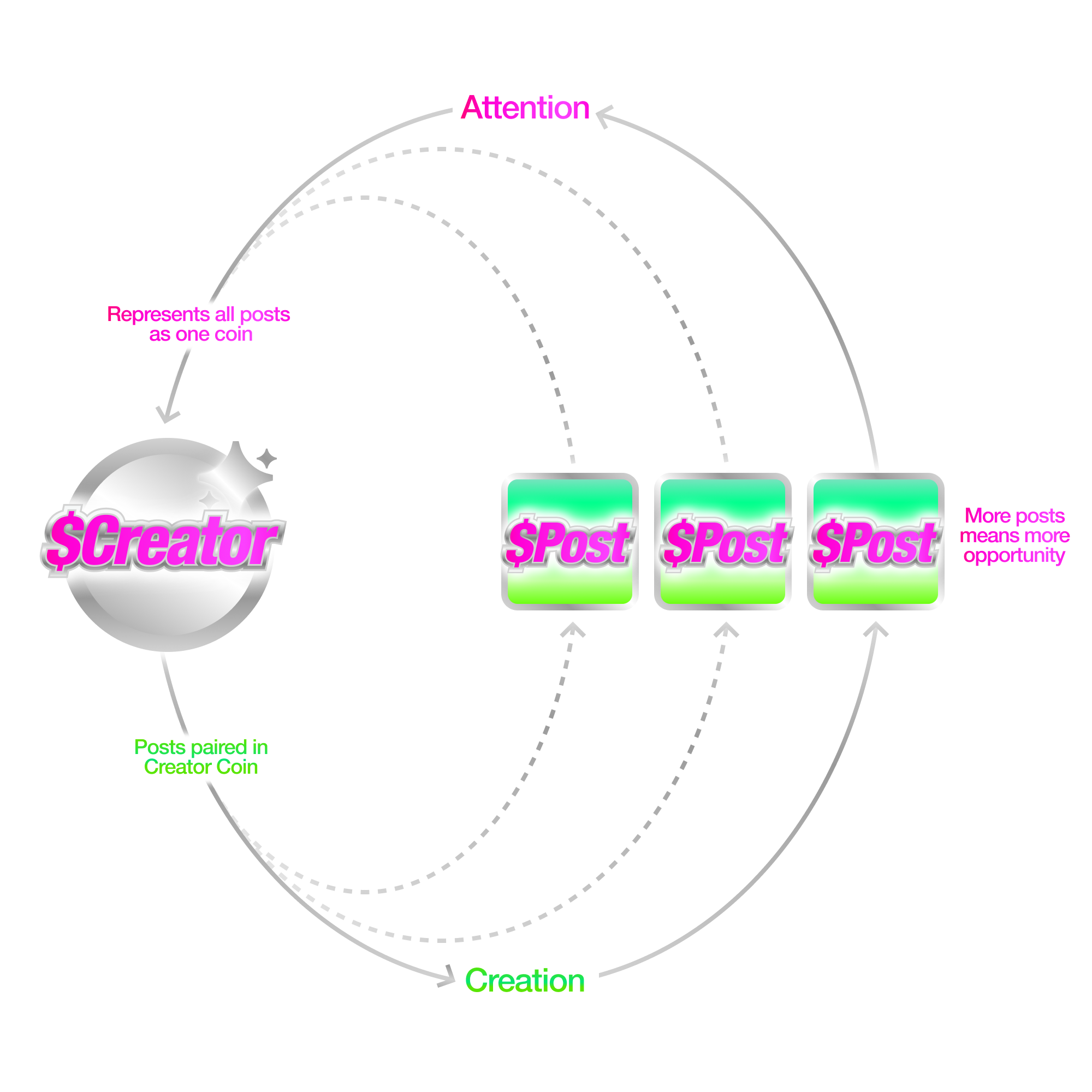
This design extends support from a single work to the creator as a whole. Users can buy a post-level content coin or hold the profile-level Creator Coin, while creators earn fees from related market activity. It lowers issuance friction and brings posting closer to creating a tradable asset.
Zora's help center describes these coins as ERC-20 representations for entertainment and social participation. Holders should not infer equity in Zora, the creator's business, or the copyright to a work. Vesting may improve incentives but cannot guarantee demand, liquidity, or long-term prices.
How Do Paragraph Writer Coins Connect Writers and Readers?
Paragraph Writer Coins represent a writer or publication as a whole rather than one article. Writers can reward existing subscribers, article collectors, Farcaster followers, and previous supporters, turning historical relationships into verifiable on-chain distributions.
Current documentation specifies one billion tokens per Writer Coin. By default, 50% goes to the writer or publication, 5% to reader rewards, and 45% to the market. Writers can also pair the token with a Zora Creator Coin or another ERC-20, giving readers a direct support entry inside reading and subscription flows.
The benefit is that early readers receive portable records of support instead of remaining passive subscribers. The risk is that supporting a writer and trading a writer become blurred. If discovery depends too heavily on purchase size, well-funded users can displace genuinely valuable commenting, sharing, and editing work.
How Does Token Gating Turn Holdings into Membership?
Token gating is the most direct non-trading use of a social token. A community tool reads a wallet and opens a channel, page, task, or event after confirming conditions such as holding a token, meeting a balance threshold, owning a specified NFT, or completing an on-chain action.
Guild's documentation, for example, supports token- and NFT-based access conditions. The same credential can connect several community entry points without screenshots or manual review, while creators can define public, regular-member, and core-contributor tiers.
Gating does not mean the content is decentralized. Discord, Telegram, websites, and file storage may remain platform controlled, and a wallet thief may inherit access. A practical system needs expiration, revocation, recovery, manual appeal, and multi-wallet binding rules.
Why Is friend.tech an Important Cautionary Tale?
friend.tech made each account's access right a tradable Key and used a bonding curve to set prices from supply. Popular creators attracted new buyers; Key prices and trading fees produced more discussion, helping the product grow rapidly in 2023.
Access, relationships, and speculation were compressed into one asset. Buyers might want a private chat or merely expect a later buyer to pay more. Creators earned trading fees without necessarily promising a fixed amount of content. When the market cooled, chat demand, prices, and activity could fall together.
In 2024, the team set key contract-management parameters to the zero address, so the old contracts could no longer be upgraded. A contract continuing to exist, a frontend remaining reachable, and a project being actively developed are three separate facts. Read The friend.tech Phenomenon: Social Tokens and the Key Economy for the detailed history. The enduring lesson is to define a sustainable service before deciding whether access should trade freely.
How Do Social Tokens Differ from Subscriptions and NFTs?
A subscription means recurring payment for continuing service. Price and term are generally fixed, making expectations clearer. A social token can be held once and verified across apps, but its market price is unstable and the service period can be ambiguous.
NFTs suit unique works, numbered memberships, and collectibles; fungible social tokens better suit quantity thresholds, rewards, and voting. Neither automatically transfers copyright, so holders must read the issuing terms and license.
Ordinary points are simple and can hide blockchain complexity, but the platform controls them completely. On-chain tokens are more open but add wallets, gas, scams, and tax costs. Designers should choose the tool that fits the benefit instead of issuing a token merely to claim a Web3 identity.
For most creators, subscriptions, tips, and digital goods provide steadier cash flow. Social tokens are better used as a complement for identity, membership, and contribution incentives. See The Creator Economy: How Web3 Changes Content Monetization for ways to combine them.
How Can a Healthy Social-Token Economy Be Designed?
12.1 Define Utility Before Supply
Before launch, state whether the token is for access, rewards, governance, or collecting. If every use depends on future appreciation, the community lacks a reason to exist outside the market.
12.2 Match Distribution to Contribution
Creator, team, community, and liquidity allocations should be public, along with vesting and unlock schedules. Rewards should cover creation, moderation, development, translation, and curation rather than only capital and referrals.
12.3 Create Sensible Use and Circulation
Membership upgrades, event registration, content redemption, and community proposals can create demand for use. Burning is not the key issue; people must want the real service instead of merely waiting for someone else to buy.
12.4 Separate Reputation, Governance, and Payment
Using one tradable token to represent wealth, reputation, and voting power lets wealthy participants buy influence. A community can use stablecoins for payments, a social token for access, and non-transferable credentials for reputation, while adding time locks and permission boundaries to major governance actions.
12.5 Plan an Exit for the Project
Issuers should explain what happens if creation stops, the community closes, the contract migrates, or a security incident occurs. An on-chain token cannot undo failed service promises. Refunds, substitute benefits, and communication channels should be defined before permanence is advertised.
What Are the Main Risks of Social Tokens?
First is price volatility. Creator popularity, market sentiment, and trades by a few addresses can cause sharp moves. Displayed market capitalization does not mean every holder can exit at the same price.
Second is liquidity risk. Large orders can move a shallow pool significantly, and a token may remain in a wallet but become difficult to sell after liquidity providers withdraw.
Third is performance risk. People provide chats, courses, meetings, and content. Smart contracts cannot force them to continue, and a permanent token does not imply permanent benefits.
Fourth is permission risk. A team may be able to mint, pause, upgrade, freeze, or change fees; permanently giving up control can also make bugs impossible to fix. Users should inspect actual controls instead of relying on decentralized branding.
Fifth is manipulation and conflicts of interest. Creators know publishing plans and may own large token allocations. Undisclosed promotion, related-wallet trades, and fake engagement can mislead fans.
Sixth is privacy and security. Public wallets expose holdings and social relationships, while malicious airdrops, fake groups, and signature phishing can lead directly to asset losses.
Seventh is the financialization of reputation. Turning a person's influence into a live price can amplify comparison, harassment, and sensational short-term content, while encouraging communities to mistake token balances for contribution quality.
Is Every Social Token a Security?
The name Social Token does not determine legal status. Classification depends on the issue method, purchaser expectations, promised rights, marketing language, managerial role, and jurisdiction. A token used only for access to an existing service has a different risk profile from one promoted as profit sharing that relies on a team to appreciate.
The EU Markets in Crypto-Assets Regulation defines a utility token as a crypto-asset intended solely to provide access to goods or services supplied by its issuer and sets rules for issuance, disclosure, and service providers. If a token is a financial instrument, other frameworks may apply. The U.S. SEC statement on tokenized securities similarly explains that tokenization alone does not determine whether holders possess underlying ownership or contractual rights.
Issuers should avoid unsupported claims of principal protection, fixed returns, or appreciation. They should disclose allocations, permissions, utility, fees, and conflicts and obtain legal and tax advice for applicable regions. Users should not assume that community utility eliminates regulation or investment risk.
Hotcoin's Six-Dimension SOCIAL Framework
The SOCIAL framework helps prevent fan enthusiasm or token prices from dominating an evaluation. It is a pre-participation checklist, not an investment rating.
15.1 S: Service
Identify the content, event, tool, or qualification the token unlocks, including its term, quantity, and service provider. If the service is unclear, price can become the only narrative.
15.2 O: Ownership
Separate on-chain control, membership access, governance, copyright, and equity. Owning a token does not mean owning the creator, brand, or future income.
15.3 C: Control
Review minting, upgrades, freezing, fees, treasury, and frontend permissions. Administrator rights are not automatically bad, but they and the emergency process must be transparent.
15.4 I: Incentive
Ask whether rewards encourage genuine creation and contribution or mainly promote wash trading, recruitment, and short-lived attention.
15.5 A: Access
Check how many clients and community tools can verify the token, whether alternative frontends exist if the official entry closes, and whether access can be restored after wallet loss.
15.6 L: Liquidity
Review pools, holder concentration, fees, price impact, and unlock schedules. Market capitalization, last-traded price, and paper gains cannot replace real exit depth.
How Can Ordinary Users Participate More Safely?
First, use free content and public communities before buying a membership or token. Confirm that the creator actually operates consistently.
Second, read the benefit terms. Check what the token does and does not provide, whether it is transferable, when it expires, whether refunds exist, and what happens when service stops.
Third, verify the contract address, network, holder concentration, liquidity, and team permissions. Do not connect a wallet through unfamiliar links in direct messages, comments, or search ads.
Fourth, use a separate low-value wallet for social apps. Review the counterparty, amount, and duration before signing, and revoke obsolete approvals regularly.
Fifth, do not treat creator reputation as a price guarantee. Excellent content does not guarantee token appreciation, and a falling token does not mean a creator has no value.
Sixth, retain records of purchases, claims, and benefit redemptions, and understand local crypto-asset, income, and tax rules.
Frequently Asked Questions
17.1 Is a Social Token the Same as a Fan Token?
A fan token is a common type of social token, usually issued around a celebrity, club, or creator. Social tokens are broader and may also support community governance, contribution rewards, and content projects.
17.2 Does Holding a Creator Coin Mean Owning Shares in the Creator?
Usually not. Unless legally valid documents explicitly grant such rights, holding the token does not represent equity, profit sharing, copyright, or control over the creator.
17.3 What Is the Difference Between a Social Token and an NFT?
Social tokens are generally fungible and suit quantity thresholds, rewards, and voting. Each NFT has a distinct identifier, making it better for limited memberships, works, and commemorative credentials. Actual rights still come from the issuing terms.
17.4 What Determines a Social Token's Price?
Pool supply and demand, a bonding curve, market sentiment, creator activity, and holder structure can all affect price. It generally is not calculated from a creator's income or a business valuation.
17.5 Is a Token-Gated Community Fully Decentralized?
Not necessarily. Eligibility can be verified on-chain while chat platforms, websites, content storage, moderator review, and account recovery remain centralized.
17.6 Can Holders Get a Refund If the Creator Stops Publishing?
That depends on the issuing terms and service agreement. Smart contracts usually do not guarantee refunds. If the only exit is selling in a market, users also face falling prices, fees, and liquidity risk.
17.7 Are Social Tokens Suitable for Long-Term Investment?
There is no universal answer. Most social tokens depend heavily on an individual's reputation, a small community, and limited liquidity, so their risk can exceed that of mature assets. Evaluate utility and affordable loss rather than fan counts.
Conclusion: Build the Relationship Before Designing the Token
Social tokens turn fan identity, community access, contribution rewards, and content support into verifiable and programmable on-chain relationships. They can help creators bypass some platform limits and let fans carry membership and support records between apps. Zora and Paragraph show new combinations of creator coins and content distribution, while token gating proves that on-chain assets can work as community tools.
They also introduce speculation into relationships built on trust. Free trading is not right for every membership or reputation system, and liquidity cannot replace real work, reliable service, and community culture. The proper order is to understand why users gather, define benefits and exit mechanisms, and only then decide whether a token or a market is needed.
Open social protocols should not be confused with social tokens. Farcaster can host tokenized apps, but accounts, follows, and ordinary content do not need market prices. Read Farcaster: Silicon Valley's Most-Watched Decentralized Social Protocol to understand the distinction between protocol and financial-application layers.
After this article, return to SocialFi: The Present and Future of Decentralized Social Networks for a broader framework covering open social graphs, creator economies, Mini Apps, and community ownership.
To manage assets on Base and other networks, use Hotcoin Web3 Wallet. For mobile market and trading tools, download the Hotcoin App. Visit Hotcoin for more educational content.
Risk warning: This article is for education and information only and does not constitute investment, legal, or tax advice. Social-token utility, prices, contract permissions, liquidity, platform functions, and regulatory requirements can change. Verify current official sources, contract addresses, issuing terms, wallet approvals, and local rules before participating.
Lectura recomendada
Ver más

service hotcoin.com
producthotcoin.com
businesshotcoin.com
casecnhotcoin.com