
NFT Royalties and the Creator Economy: How Artists Can Earn a Living with NFTs
How Can Artists Earn Income Through NFTs?
Artists can earn from initial NFT sales, secondary-market royalties, membership benefits, commissioned services, and intellectual property licensing. Royalties, however, are not guaranteed on every resale. A stable NFT creator economy cannot rely only on rising collectible prices. It needs several layers of income built around the work, community relationships, and ongoing services, with platform fees, gas, taxes, and collaborator shares accounted for in advance.
NFTs do not change creation itself; they change how works are issued, attributed, sold, and supported by a community. Creators can use standards such as ERC-721 and ERC-1155 to issue limited digital works. An NFT can also serve as an event ticket, membership credential, or redemption certificate for a physical work, extending a one-time sale into a long-term collector relationship.
If you first need an introduction to NFTs, smart contracts, and digital ownership, read the Complete Beginner's Guide to Non-Fungible Tokens.
What Are the Main Sources of Income for NFT Creators?
NFT creator income usually comes from primary issuance, secondary-market proceeds, and services beyond the work itself. Primary issuance can recover initial creative and production costs. Secondary-market proceeds let creators potentially share in later transaction value. Memberships, licensing, events, and physical goods provide income that does not depend on resale frequency. Each model has different payment conditions and risks.
2.1 How Do Primary-Market Sales Generate Income?
A primary-market sale is the income a creator receives when an NFT is first minted and sold. Common formats include one-of-one works, limited editions, open editions, and series. Creators must set supply, price, sale period, and per-wallet purchase limits while budgeting for smart-contract deployment, minting, platform services, marketing, production, and collaborator shares.
- One-of-one work: One NFT represents one work, emphasizing uniqueness, provenance, and collectible value.
- Limited edition: A fixed number of copies of the same work are issued, often at a lower unit price to reach more collectors.
- Open edition: Users may mint during a defined period, and actual demand determines the final supply.
- Series release: Multiple works share one theme, with traits, numbering, and narrative forming a collectible system.
2.2 How Do Secondary-Market Royalties Generate Income?
A secondary-market royalty is a share of the sale price paid to the creator or a designated address when a holder resells an NFT. It may let artists participate in later appreciation, but actual payment depends on the NFT contract, marketplace, order protocol, and seller's choices. A configured royalty rate must not be treated as guaranteed income.
2.3 What Other Income Can NFTs Produce?
- Membership benefits: Holders may enter a private community, attend online events, receive priority access to new works, or claim digital content.
- Commissioned services: Creators can offer commissioned works, customized characters, signed versions, or private sessions.
- Intellectual property licensing: A work may be licensed within a defined scope for merchandise, games, film, or brand collaborations.
- Physical redemption: An NFT can prove the right to redeem and authenticate a print, sculpture, garment, or another physical work.
- Events and performances: Musicians, directors, and performers can use NFTs as tickets, backstage passes, or limited memorabilia.
How Do NFT Royalties Work?
An NFT contract or marketplace generally records the recipient address and royalty calculation. When a qualifying sale occurs, the marketplace reads that information and allocates part of the proceeds to the creator or rights holder. The crucial distinction is that a contract can express royalty information, but that does not mean every trading venue will enforce payment.
3.1 What Problem Does ERC-2981 Solve?
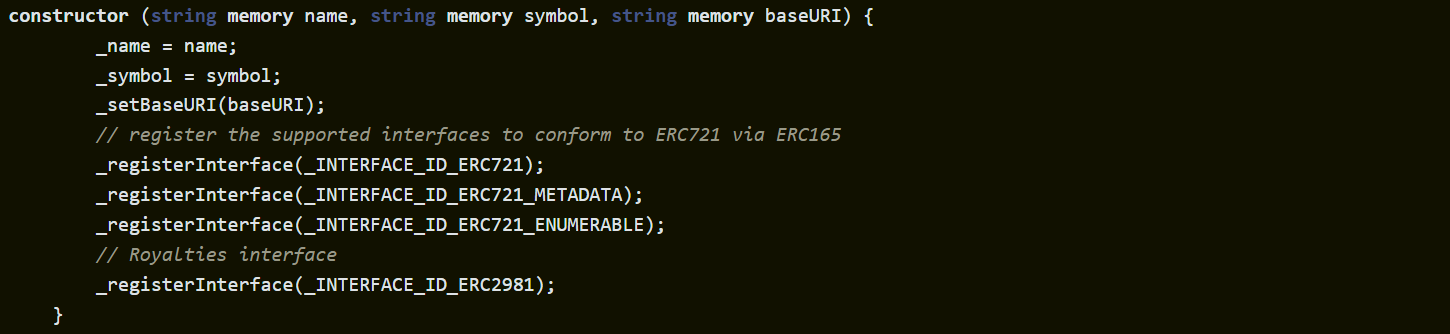
ERC-2981 gives NFTs a standard way to expose royalty information, allowing a marketplace to obtain the recipient address and amount due for a given sale price. It works alongside NFT standards such as ERC-721 and ERC-1155, but only communicates royalty information; it does not force a funds transfer. If a marketplace does not support or enforce the standard, a creator may not receive secondary-sale income.
The official ERC-2981 specification states that the standard provides a way to query the royalty recipient and amount, while the marketplace or transaction participants must execute the payment. Writing a royalty on-chain therefore does not automatically create permanent, cross-platform royalty enforcement.
Why Might NFT Royalties Not Be Paid?
NFTs can be transferred directly between wallets or traded through different marketplaces, aggregators, and order protocols. A contract cannot reliably determine from a transfer alone whether it represents a sale, gift, or movement between a user's addresses. Traditional ERC-2981 therefore cannot automatically deduct payment from every transfer. Some marketplaces enforce creator earnings, while others let sellers adjust or remove them, so the outcome depends on the transaction route.
4.1 What Is the Difference Between Optional and Enforced Royalties?
- Optional royalty: The creator suggests a rate, but the seller or marketplace decides whether and how much to pay.
- Marketplace enforcement: A marketplace distributes creator earnings under its settlement rules, but only for transactions it supports.
- Contract-level restrictions: An NFT contract limits eligible trading protocols and permits transfers only when creator-earning conditions are met.
- Cross-market differences: The same collection may face different royalty rules on different marketplaces, so creators must check compatibility individually.
As of 2026, OpenSea classifies creator earnings as optional or enforceable. Its documentation says compatible ERC721-C or ERC1155-C contracts can enforce creator earnings through supported mechanisms. Incompatible contracts can still specify a suggested rate, but the seller may decide whether to pay it. Source: OpenSea creator earnings documentation
What NFT Royalty Rate Should a Creator Set?
There is no universal NFT royalty rate. A rate that is too low may not cover continued creation and community operations. A rate that is too high adds trading friction, reduces the seller's proceeds, and may weaken secondary-market liquidity. Creators should model the rate around the type of work, holder benefits, update frequency, marketplace rules, and collaborator shares instead of copying a popular project.
Suppose an NFT sells for 2 ETH and the creator-earning rate is 5%. The theoretical royalty is 0.1 ETH, but that income exists only when the transaction route enforces the rule. Creators must also verify the recipient address, platform settlement method, collaborator split, and tax cost, and avoid treating theoretical volume as disposable income.
Before setting a rate, answer three questions: Will the creator keep delivering new content? What exactly will the royalty fund? Could a higher rate reduce collectors' willingness to exit? If a project mainly sells one-time works, a lower and transparent rate may be easier for the market to accept. If holders continue receiving services, the creator should publicly explain how funds will be used and what will be delivered.
How Should Multiple Creators Split NFT Income?
Music, animation, games, and generative art often involve several creators. Income allocation should be written into a collaboration agreement before launch. The agreement should define how much primary-sale income, secondary-market earnings, and commercial licensing income go to visual artists, musicians, developers, curators, and brand partners. It should also cover refunds, taxes, contract upgrades, and lost private keys.
- Fixed split: Every payment is divided by predetermined percentages, suitable for a team with relatively stable contributions.
- Phased split: Sales first recover production costs, then the remaining proceeds are divided under the agreed percentages.
- Separate licensing: NFT sales, copyright licensing, and physical merchandise are calculated separately instead of entering one income pool.
- On-chain split: An audited payment-splitting contract pays several addresses automatically, although upgrade permissions and security risks still need review.
Automatic on-chain splitting can improve transparency, but it cannot replace a written agreement. Wallet addresses show where money goes; they do not fully express attribution, copyright ownership, exit procedures, or dispute resolution. For collaborations involving several people or material sums, retain signed records and seek professional advice under the applicable law.
Does Selling an NFT Mean Selling the Copyright?
Selling an NFT usually transfers only the on-chain token. It does not automatically transfer copyright, trademark rights, adaptation rights, or commercial-use rights. Creators should use clear license terms to explain whether and to what extent a buyer may display, reproduce, commercialize, or adapt a work. They should also state whether the license follows the token after resale so collectors do not mistake token ownership for complete intellectual property ownership.
A joint report by the U.S. Copyright Office and the U.S. Patent and Trademark Office identifies consumer uncertainty over which intellectual property rights apply when NFTs are created, marketed, and transferred. The technology itself also cannot stop someone from associating an NFT with a work they have no right to use. Source: U.S. Copyright Office NFT study
7.1 What Should Creators Put in the License Terms?
- Personal use: Whether a buyer may use the work as an avatar, display it personally, make noncommercial prints, or post it on social media.
- Commercial use: Whether merchandise, advertising, games, or derivative content are allowed and whether revenue is capped.
- Adaptation rights: Whether a buyer may alter a character, create derivative works, or authorize a third party to use it.
- Treatment on resale: Whether the previous holder's license ends and passes to the new holder when the NFT is resold.
- Reserved rights: Whether the creator retains copyright, attribution rights, portfolio display rights, and the right to issue related works.
How Can Artists Build a Sustainable NFT Creator Economy?
A sustainable NFT creator economy asks collectors to pay for works, services, or community relationships rather than merely expecting another buyer to pay a higher price. Creators need a consistent production rhythm, transparent use of funds, and benefits they can deliver. Income should be spread across primary sales, commissions, licensing collaborations, physical goods, and events instead of depending entirely on secondary trading.
8.1 Put the Value of the Work First
Visual art, music, photography, and animation NFTs first need independent artistic value. A blockchain can prove a token's provenance and transfer history, but it cannot automatically improve creative quality. Creators should explain the work's theme, production process, edition size, and long-term storage so that the reason to collect remains valid without a short-term price narrative.
8.2 Benefits Must Be Deliverable
Member communities, offline events, priority minting, and physical redemption can enrich the collecting experience, but every benefit creates continuing costs. Creators should define duration, eligibility, geographic restrictions, and remedies for non-delivery. They should not exchange unsustainable promises for short-term sales, and must distinguish live features from a future roadmap.
8.3 A Community Should Discuss More Than Price
A healthy collector community discusses the work, creative process, cultural themes, and experience, not only floor price and the next airdrop. Creators can build trust through work logs, online exhibitions, holder votes, and transparent disclosures of fund usage. They should not imply fixed returns or encourage perpetual recruitment to support prices.
How Do You Calculate an NFT Creator's Real Income?
Creators should measure income by funds actually received, not gross transaction volume or theoretical royalties. Real net income equals primary-sale receipts, secondary-market earnings actually paid, and other service income, less contract deployment, gas, platform fees, payment splits, production, marketing, refunds, and taxes. Suggested royalties that have not been paid do not belong in cash flow.
9.1 How Is Primary-Issuance Income Calculated?
Gross primary-issuance income is the number actually sold multiplied by the actual sale price; it should not use maximum supply. If 1,000 items are planned but only 300 sell, revenue is based on 300. Unsold inventory, free mints, team allocations, failed payments, and refunds must then be reflected in the amount actually received.
9.2 How Is Secondary-Market Income Calculated?
Secondary-market earnings should be calculated from actual transaction value on sales that support royalties. Creators can compare marketplace settlement records with blockchain explorers such as Etherscan to verify recipient addresses, transaction hashes, and amounts received. OpenSea says some transaction records display platform fees and creator earnings, which can be reconciled against marketplace reports and on-chain flows. Source: OpenSea sales records documentation
9.3 Why Must Creators Account for ETH Price Risk?
When an NFT is priced in ETH, the creator's fiat income is also exposed to ETH market prices. Receiving 1 ETH at the time of sale does not mean it will have the same fiat value when converted later. Creators should separately record the on-chain amount, price when received, conversion time, and tax cost, and use ETH market information to understand the related volatility.
What Is the Hotcoin Four-Layer Income Model for NFT Creators?
The Hotcoin Learn four-layer model divides NFT creator income into work sales, secondary earnings, continuing services, and intellectual property operations. It helps identify excessive reliance on short-term trading. The more diversified the income layers, the less likely a creator is to lose all cash flow when market volume falls, but every layer must rest on a deliverable product and clearly defined rights.
- Layer one—work sales: Earn primary-market income through one-of-one works, limited editions, open editions, or series.
- Layer two—secondary earnings: Receive royalties from resales that enforce creator earnings without treating a suggested rate as guaranteed income.
- Layer three—continuing services: Build repeat relationships through memberships, events, commissions, courses, exhibitions, and physical redemption.
- Layer four—intellectual property: Extend the value of a work through brand collaborations, merchandise, games, film, music, and other licensing.
The four layers do not need to be launched together. An independent artist can begin with work sales and small-scale membership relationships, then expand into licensing and partnerships after validating collector demand. The key is to track the cost, delivery time, and actual profit of each layer rather than keep adding undeliverable benefits to support a high royalty rate.
What Should Creators Check When Choosing an NFT Contract and Platform?
Before choosing a contract and launch platform, confirm asset control, royalty compatibility, metadata storage, and migration options. Low-cost one-click issuance can help beginners test demand, but creators need to know who controls the contract, whether the recipient address can be changed, whether works remain accessible if the platform shuts down, and whether other marketplaces and wallets can recognize the collection.
- Contract ownership: Confirm whether the creator controls the contract and whether a multisignature wallet can protect administrative permissions.
- Royalty compatibility: Review ERC-2981, ERC721-C, ERC1155-C, and the enforcement rules of target marketplaces.
- Metadata storage: Determine whether images, audio, and JSON metadata use IPFS, Arweave, or on-chain storage.
- Payments and splits: Test recipient addresses, collaborator splits, royalty updates, and withdrawals, and avoid using the wrong network.
- Platform dependence: Check whether the NFT remains accessible through other tools if the platform closes, changes its API, or loses its front end.
Before launching, consult How to Mint Your First NFT for the basics of wallet preparation, network selection, metadata uploads, and contract interaction.
What Business Mistakes Do NFT Creators Commonly Make?
A common mistake is treating high royalties, large supply, and short-term volume as a long-term business model. A sold-out work does not guarantee sustainable community growth, and writing a royalty into a contract does not guarantee cross-platform payment. Creators should first validate real collecting demand, delivery capacity, and cash flow before expanding supply, adding benefits, or increasing marketing expenditure.
- Depending only on royalties: Income can fall quickly when market volume declines or trading moves to venues that do not enforce royalties.
- Oversupplying: Issuing too many NFTs to maximize gross sales can leave excess inventory and weaken scarcity.
- Overpromising: Events, airdrops, and physical redemptions beyond the team's capacity drain cash flow and community trust.
- Unclear copyright: Using unlicensed material or failing to define the buyer's license may create infringement and commercial disputes.
- Neglecting wallet security: A stolen creator wallet or malicious approval can compromise contract control and royalty income.
- Mixing funds: Keeping project income, personal assets, and partner funds in one wallet complicates accounting and audits.
What Is the Complete Process for an Artist Issuing an NFT?
An artist should first confirm the rights to the work and define the target collector, then choose the blockchain, contract, supply, and sale format. After a test mint, verify metadata, recipient addresses, royalty rules, and collaborator splits. Following the public launch, continue recording income, costs, holder feedback, and benefit delivery instead of treating the sale as the end of the work.
- Confirm rights to the work: Review copyright or usage licenses for images, fonts, music, models, and collaborative material.
- Define the launch objective: Decide whether the goal is to sell works, build membership, fund production, or test collecting demand.
- Design the supply: Choose one-of-one, limited edition, open edition, or series, with transparent team-allocation rules.
- Choose the network and contract: Compare gas, wallet compatibility, marketplace coverage, and royalty enforcement.
- Write the license terms: Explain personal use, commercial use, adaptation, resale, and rights reserved by the creator.
- Test the minting process: Use a test environment or small release to check metadata, image rendering, and recipient addresses.
- Disclose costs and use of funds: Explain which creative or community work will be funded by sales, royalties, and project funds.
- Record actual income: Separate primary sales, secondary earnings, licensing income, platform fees, and tax costs.
- Keep delivering benefits: Provide memberships, events, physical works, and later creative content on schedule.
- Review market feedback: Adjust the next release around real holder needs and do not fabricate volume with wash trading.
Frequently Asked Questions About NFT Royalties and the Creator Economy
14.1 Do Artists Receive a Royalty from Every NFT Resale?
Not necessarily. ERC-2981 can provide a marketplace with a royalty recipient and amount due, but it does not automatically force payment on every transfer. Whether a creator receives income depends on the NFT contract, marketplace, order protocol, and seller's choices. Income analysis may count only on-chain payments already received, not theoretical royalties.
14.2 What Is an Appropriate NFT Royalty Rate?
There is no single best rate. Creators must model the type of work, ongoing delivery costs, collector benefits, market liquidity, and collaborator shares. A higher rate increases potential income per transaction but may also add trading friction. Creators should disclose how funds will be used and regularly check whether each marketplace actually enforces the rate.
14.3 Does Buying an NFT Automatically Grant Copyright in the Work?
Usually not. Buying an NFT primarily gives the buyer control of an on-chain token. Whether copyright, trademarks, reproduction rights, or commercial-use rights transfer must be stated in a license or separate contract. Buyers should check the scope before using a work in merchandise, advertising, or derivative content, and creators should retain provenance and collaboration records.
14.4 Can an Artist Make a Living Only from NFT Royalties?
Income based solely on NFT royalties is unstable because it depends on popularity, secondary-market volume, marketplace rules, and cryptoasset prices. A more sustainable approach combines primary sales, commissions, memberships, physical works, events, and intellectual property licensing, while retaining enough cash to cover creative, technical, and tax costs.
14.5 Can a Free Mint Make Money for a Creator?
A free mint charges collectors no issuance price, but the creator may later earn from royalties, paid benefits, physical goods, or brand partnerships. Because secondary earnings are not guaranteed, a free mint should be treated as an acquisition or community experiment, not a zero-cost business model. Contract deployment, content production, operations, and security still cost money.
How Should Creators Manage NFT Income Safely?
Creators should separate contract administration, daily interaction, and long-term fund storage where appropriate, and protect important permissions with a multisignature or hardware wallet. Before connecting to an issuance platform, verify the domain, network, signature contents, and approval scope. Test a royalty-address or split-contract update with a small transaction first to avoid irreversible loss from a wrong address, network, or malicious approval.
You can use Hotcoin Web3 Wallet to manage multichain assets and interact with DApps, or download the Hotcoin App to explore related Web3 services.
Conclusion
NFTs give artists new tools to issue works directly, connect with collectors, and design long-term benefits, but they are not machines that automatically create passive income. Primary sales depend on real collecting demand, secondary royalties depend on contract and marketplace enforcement, and membership or licensing income depends on continued delivery. Every model must deduct costs and accept market volatility.
A more resilient creator economy starts with quality work and clear rights, uses primary sales to recover production costs, builds collector relationships through verifiable services, and treats royalties actually received as supplementary income. Clearly defining licenses, splits, and benefits before launch—and transparently recording income and delivery afterward—is more important than merely raising the royalty rate.
For a collector's perspective on demand, liquidity, and transaction risks, continue with NFT Market Analysis: How to Evaluate an NFT's Investment Value.
Visit the Hotcoin website for more blockchain and Web3 educational content.
Risk warning: This article is for education and information only and does not constitute investment, legal, copyright, or tax advice. Creating and trading NFTs involves smart contracts, wallet security, intellectual property, price volatility, and jurisdiction-specific compliance requirements. Independently verify the facts and consult qualified professionals before issuing or purchasing an NFT.
Lectura recomendada
Ver más

service hotcoin.com
producthotcoin.com
businesshotcoin.com
casecnhotcoin.com