
The Creator Economy: How Web3 Transforms Content Monetization
Over the past decade, video platforms, podcasts, live streaming, serialized fiction and social media have let individuals reach a global audience directly, building an enormous creator economy along the way. Yet traffic, recommendations, follower data and payout authority mostly sit with the platforms. When the rules change, reach and revenue can fall together; once an account is restricted, a creator can rarely carry the whole relationship over to another product.
What Web3 tries to change is not "putting all content on-chain," but the identity, membership, payment, collecting, licensing and revenue-splitting layers behind the content. Creators can accept payments worldwide through a wallet, express support and access rights through on-chain credentials, distribute collaborative income through smart contracts, and make part of their social graph readable across applications. Fans stop being rows in a platform database and can become verifiable members, collectors and co-builders.
But Web3 does not generate revenue by itself, and issuing an NFT or a social token does not create demand. Token prices, copyright, user experience, compliance and private-key security all introduce new costs. Once you understand SocialFi: The Present and Future of Decentralized Social Networks, it becomes far easier to tell open infrastructure apart from short-term speculation when looking at how creators design sustainable monetization.
What is the creator economy?
The creator economy is the commercial system in which individuals or small teams earn income directly from content, knowledge, influence and community. A creator might be a video blogger, illustrator, musician, independent journalist, game streamer, course instructor, open-source developer, or simply someone who maintains a niche community.
It normally involves four steps: producing content, gaining distribution, building audience relationships, and converting attention into income. Web2 platforms bundle all four into a single account, offering low-friction tools and mature traffic. Web3 tries to break some of them into open components so that identity, assets and payments are no longer fully tied to one platform.
Web3's creator economy is therefore not a specific app, nor is it the same thing as the NFT market. It is a set of composable technologies and operating practices: wallet login, open social graphs, on-chain payments, digital collectibles, membership credentials, smart-contract revenue splits and decentralized storage.
What bottlenecks does Web2 content monetization hit?
2.1 The platform owns the distribution switch
A creator may hold the copyright to a work without owning the channel that reaches the audience. Recommendation algorithms, ad eligibility, search ranking and content moderation determine actual exposure. After a platform adjusts its rules, views and ad revenue can swing sharply even when follower counts have not changed at all.
2.2 Fan relationships are hard to move
Follow lists, comment histories and audience profiles usually live in the platform's database. When a creator moves to a new product, all they can do is post an announcement and hope followers come along; the existing relationships cannot be carried over directly. An email list is more controllable than platform follows, but it still depends on service providers, payment tools and regional settlement.
2.3 The revenue chain is long and opaque
Advertisers pay the platform first, and the platform then shares revenue with creators according to internal rules. Creators rarely see the full pricing process behind a single impression, and they still face payout minimums, settlement cycles, refunds, channel fees and cross-border limits. It is reasonable for a platform to absorb acquisition and risk-control costs, but creators have little control over the revenue rules.
2.4 A small head captures most of the earnings
Attention markets have a pronounced head effect. Popular accounts more easily attract recommendations, brand deals and commercial resources, while many small and mid-sized creators never reach the ad-revenue threshold even with a loyal audience. Trading free content for traffic and relying on platform ads to monetize produces a very fragile income structure.
Five core mechanisms Web3 brings to content monetization
3.1 Identity and relationships become more portable
Wallet addresses, on-chain domains or protocol identities can be recognized by different applications. With user authorization, a new client can read public follows, collects or membership records, so creators do not have to rebuild every relationship from zero on each platform. Portable does not mean fully owned: protocol indexing, front-end presentation, privacy settings and anti-spam rules still shape the experience.
3.2 Payment moves from a platform balance to on-chain settlement
Stablecoins and on-chain assets let users anywhere pay directly, and put subscriptions, tips, collects and revenue splits on the same transaction path. Smart contracts can publish receiving addresses and allocation ratios, reducing manual reconciliation in multi-party collaborations. At the same time, gas, asset volatility, fiat on- and off-ramps and tax handling do not disappear.
3.3 Content can become a verifiable digital object
An article, song, image, video or commemorative moment can map to an NFT or another on-chain credential. It can serve as proof of collection and also unlock downloads, events, groups or future works. The real value is not "minting a file into a token" but what rights the creator explicitly promises, and why a holder would want to keep it long term.
3.4 Revenue rules can be programmed
A single sale can be split automatically among the author, editor, designer, community treasury and referrer; a content action can also carry a price, deadline, supply cap and participation conditions. Transparent rules help collaboration, but they do not replace legal contracts and do not guarantee that every marketplace will honor the same royalty standard.
3.5 Membership shifts from an account label to a verifiable credential
Creators can issue non-transferable membership credentials to paying users, or transferable passes. Websites, community bots and offline events can all read the same credential, cutting down on repeated sign-ups. Transferability, however, invites resale and speculation; when membership benefits are tied to personal identity, a non-transferable or time-limited design is usually the better fit.
What content and rights can be tokenized?
What can be tokenized is not abstract "influence" but rights or records that can be clearly described and delivered: limited-edition digital works, a collect of a particular article, an annual membership, course access, event tickets, votes on the creative process, proof of credited support, software licenses or community contribution badges.
Four things should be kept separate in the design: which on-chain asset the token holder controls; which services they can access; whether it can be transferred or refunded; and whether it conveys copyright, commercial-use rights or a revenue share. Most NFTs only prove that a given address controls a token — they do not automatically transfer the copyright of the underlying work. Commercial reproduction, adaptation, display and sublicensing still need to be spelled out in a license or contract.
If a token promises fixed returns, profit distribution or appreciation driven by the team's efforts, it may also touch securities or consumer-protection rules. Creators should define the product first and choose the technology second.
Seven ways Web3 creators monetize
5.1 Subscriptions and memberships
Users pay monthly, annually or per piece of content in exchange for columns, research, community and events. On-chain membership is easy to verify across applications, but auto-renewal, refunds and key recovery still need work. For most creators, steady small subscriptions are more sustainable than relying on token appreciation.
5.2 Tips and micropayments
Readers can tip a single post, a live stream or an open-source contribution directly. Low-cost networks make micropayments viable, and referrers and communities can share in the split too. Creators should display the actual payment token, network and estimated fees so that users do not send a similarly named asset on the wrong chain.
5.3 Paid collects and limited-edition NFTs
A collect can serve as a keepsake, a show of support and an access key at the same time. Limited supply creates scarcity, but scarcity should not be equated with investment value. Edition size, media storage, whether metadata is mutable, how long unlocked content is retained and refund terms should all be stated up front.
5.4 Creator coins and social tokens
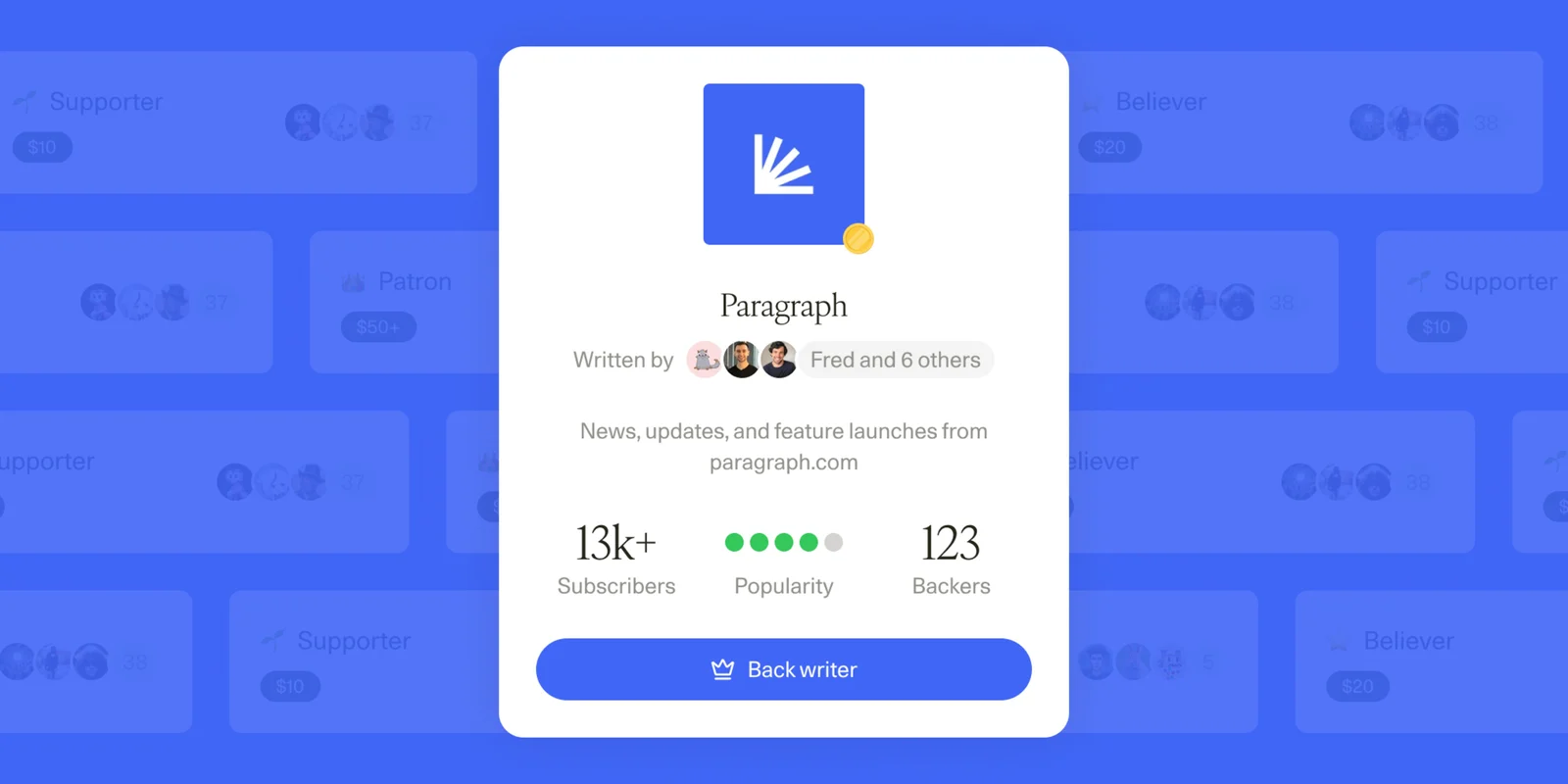
Tokens can drive membership tiers, community governance, contribution rewards and content discovery. Paragraph's Writer Coins, for example, connect an author with existing subscribers and early supporters. If such a token mainly attracts buyers through rising prices, the creative relationship easily turns into a trading relationship; a healthy design keeps the non-speculative use cases standing after the market cools.
5.5 Secondary-sale royalties
Creators can express a share of secondary-sale proceeds through an NFT standard or marketplace setting. But the standard usually just tells the marketplace who should be paid and how much — it does not necessarily force every trading venue to comply. Royalties should be treated as possible income, not a permanent guarantee.
5.6 Token-gated products and services
Holders of a specific credential can enter courses, archives, live sessions, consultations or offline events. Gating is good for verifying eligibility, not for storing the only copy of the content; creators still need plans for access recovery, stolen credentials, resale and service termination.
5.7 Digital goods and machine buyers
Templates, datasets, research, APIs, plugins and prompts can be sold through programmatic payments. Paragraph's publish.new explores letting humans buy with a bank card or crypto while also letting AI agents discover and purchase digital goods through machine payment protocols. Machine buyers widen the market, but they also demand clear licensing, verifiable provenance and standardized delivery interfaces.
How does Lens turn content actions into revenue?
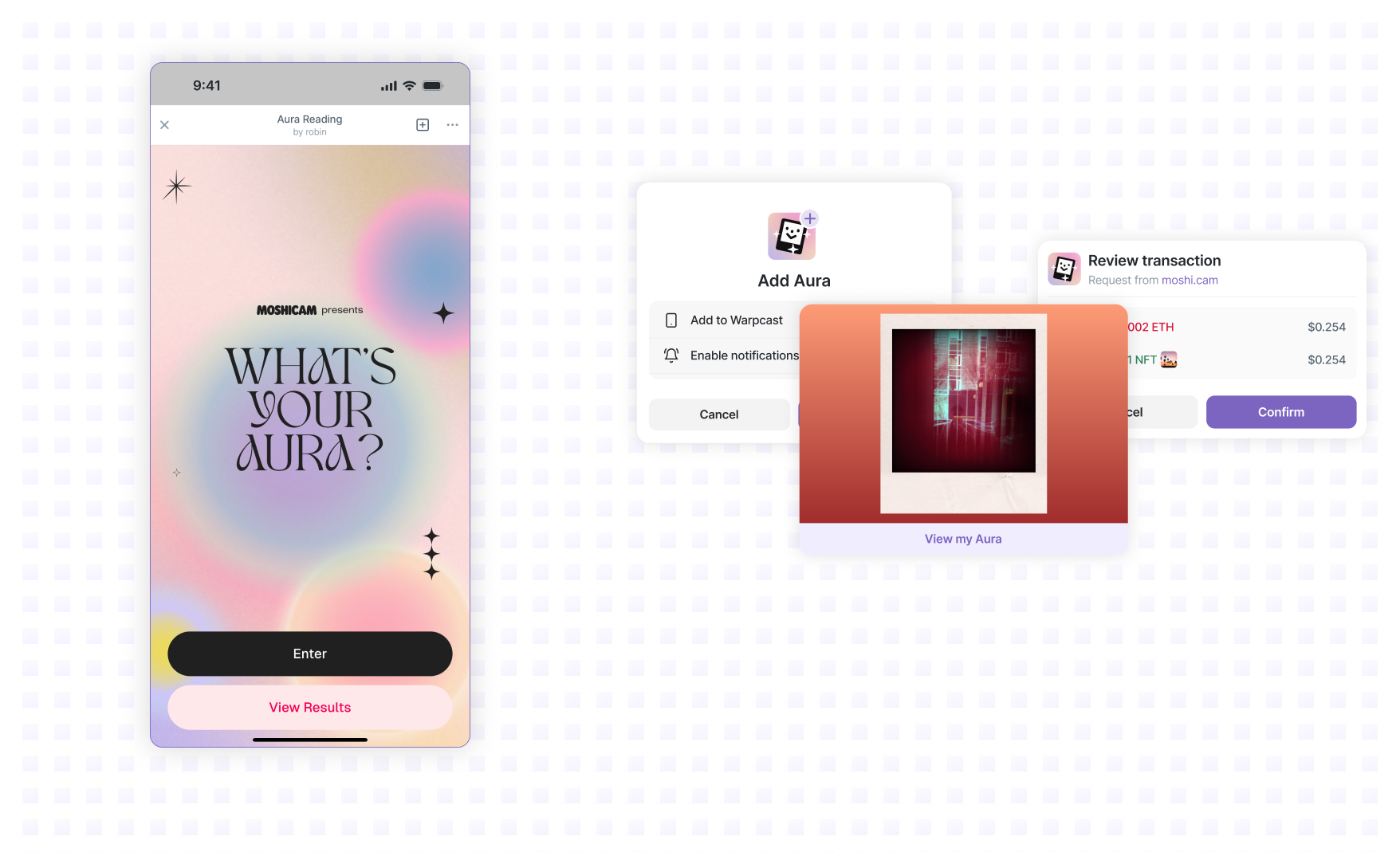
Lens Protocol organizes posts, accounts and social relationships as open protocol objects, and lets developers attach Post Actions to a post. A creator can enable a paid Collect that mints a piece of content as an ERC-721 collectible, or turn on Tipping so readers can pay directly in support. Edition size, end time, currency, follow requirements, referral splits and multiple payees can all be defined through parameters.
That means the "like it, then jump to an external store" flow can shrink into a single on-chain action next to the content itself. Referrers can also receive a predefined share, writing distribution and revenue into the same rule. According to current official documentation, some paid actions involve a protocol fee; the actual rate and supported assets should be re-checked at publication time.
Lens matters not because it sells NFTs but because different clients can reuse the same content object and action logic. To dig further into how accounts, social graphs, feeds and apps relate to one another, read Lens Protocol: Infrastructure for the Web3 Social Graph.
How do Farcaster Mini Apps connect distribution and transactions?
Farcaster's Mini Apps are web applications that run inside a social client. Users can open tools, games, mints, shops or donation pages straight from the feed, sign in with Farcaster and complete payment through the integrated wallet. Creators can therefore keep the whole "see the content, enter the product, finish the payment" path inside a single social environment.
Mini Apps can also request notification permissions and use a user's public social relationships to personalize the experience. For creators, this is closer to a sustainable business component than simply launching a token: a course can embed quizzes and certificates, a musician can offer previews and collects, and a community can run quests, ticket sales and member verification.
That said, a Mini App still depends on the client entry point, web hosting, wallet permissions and contract security. Users should not assume an app has been fully audited just because it appears in a social feed. For how the protocol, clients, FIDs and Mini Apps divide responsibilities, read Farcaster: Silicon Valley's Most Hyped Decentralized Social Protocol.
What does the evolution of Paragraph and Mirror tell us?
Mirror was once the flagship Web3 writing platform, letting authors publish with a wallet, crowdfund and issue collectibles. In 2025, Mirror wound down its product operations, and articles and subscribers migrated to Paragraph. The shift is a reminder: even when content or credentials are on-chain, the front end, editor, email delivery, indexing and community operations can still move or shut down.
Paragraph today puts more emphasis on channels the creator owns, bringing the blog, newsletter, subscribers and social distribution together, and adding features such as Post Coins, Remixing, Writer Coins and digital goods sales. It reflects a pragmatic path: on-chain mechanisms are not a replacement for email and the web, but an added layer of collecting, payment, identity and collaboration on top of mature publishing tools.
Creators should export articles, media and subscriber records regularly, and verify that domains, RSS, email and wallet credentials can actually be migrated. Real "ownership" means that after leaving the current front end, you can still recover the content, reach the audience that opted in, and verify the rights you sold.
Do NFTs really make a work belong to creators and fans?
NFTs publicly record the issuer, the holder and the transfer history, which is useful for digital scarcity, provenance and membership verification. But they do not guarantee that the uploader is the copyright owner, do not stop anyone from copying the image file, and do not automatically hand copyright to the buyer.
On the sales page or in the license file, creators should make it explicit: whether the buyer gets personal display rights, commercial-use rights or only the right to collect; whether the license travels with the NFT; where the underlying file is stored; and how to access it if the platform shuts down. When third-party music, fonts, characters or AI-generated assets are involved, the rights boundaries around training data, input material and output also need to be confirmed.
Why can't secondary royalties be the only income?
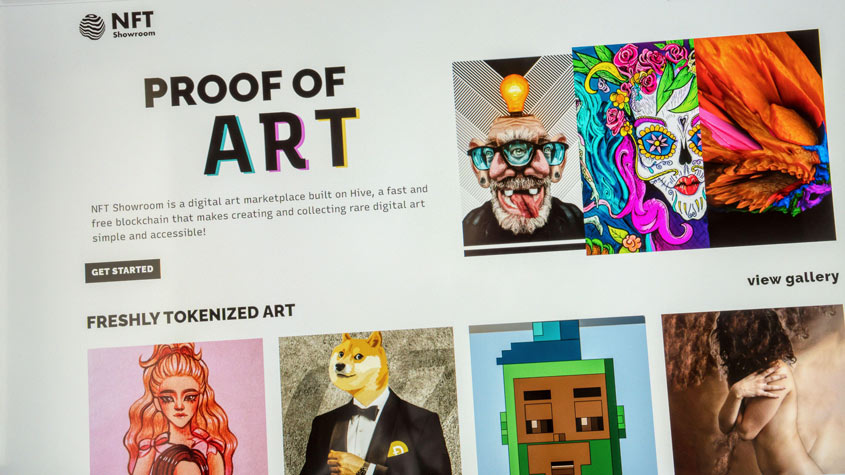
Secondary royalties give artists a chance to share in the later trading value of a work, which looks fairer than the traditional art market. Whether they actually get paid, however, depends on contract design, the marketplace, the order routing and how buyer and seller execute. Even if a contract can return a suggested rate, it cannot force payment from every over-the-counter transfer or from marketplaces that do not honor royalties.
A sturdier revenue mix looks like this: the primary sale covers the current cost of creation, subscriptions and services fund ongoing operations, licensing corresponds to clearly defined uses, and secondary royalties are treated as extra income only. Creators should also assess whether a high royalty rate hurts liquidity, and how the team, collaborators and community treasury share it. For the mechanics in detail, see NFT Royalties and the Creator Economy: How Artists Make a Living from NFTs.
What risks do creators and users need to guard against?
11.1 Token speculation displacing content value
When income mostly comes from new buyers pushing the price up, creators are forced to manage market sentiment and fans may turn consumption into a bet. The first test should be: setting resale aside, would users still pay for the content and the service?
11.2 Unclear copyright and licensing
An on-chain timestamp can help evidence a publication record, but it cannot by itself settle originality or ownership. Before using someone else's work, brand or AI-generated material, obtain permission and keep evidence of the creative process and the contracts.
11.3 Contract, front-end and storage failures
A contract bug can freeze funds, a shuttered front end can make access difficult for ordinary users, and centralized media links can break. High-value drops should go through testing and audits, with an independent domain, source files, metadata backups and alternative access methods prepared in advance.
11.4 Private keys, phishing and malicious approvals
A creator's wallet often controls revenue, domains and community permissions at once, so a single malicious signature can affect the entire business. Keep the operating wallet, the treasury and the day-to-day interaction wallet separate, hold large balances in a hardware or multisig wallet, and review and revoke approvals you no longer need.
11.5 Privacy, compliance and tax
A public address exposes transaction relationships, and token gating can reveal what members hold. Subscription income, token issuance, rewards and cross-border sales may involve tax, consumer-protection, anti-money-laundering or securities rules, so seek professional advice for your own jurisdiction and those of your users.
The Hotcoin CREATE framework
To judge whether a Web3 creator project is sustainable, use the six-dimension CREATE framework. It is not a return forecast but a product and risk checklist.
12.1 C: Content — does the work have standalone value?
Set the token price aside for a moment and check whether the work solves a problem, offers aesthetic value or sustains steady interaction. If nobody consumes it once free incentives stop, financial mechanisms cannot make up the content gap for long.
12.2 R: Revenue — where does the money come from?
Distinguish real purchases, membership renewals, brand deals, trading fees and token appreciation. Track recurring income separately from one-off issuance income, and never read trading volume as the creator's net revenue.
12.3 E: Entitlements — are the rights clear?
Spell out what a holder can do, how long it lasts, whether it can be transferred, how refunds work, and whether copyright or a revenue share is included. Marketing pages, contract fields and legal terms should all say the same thing.
12.4 A: Audience — can you reach them?
Check whether you can export subscribers, use your own domain and recognize members across clients, and confirm you have consent to contact users. Public wallet records are not a substitute for compliant email permission.
12.5 T: Token — is a token genuinely necessary?
If an ordinary database membership card would meet the need, there is no reason to add price volatility and a wallet barrier just for the Web3 label. A token only makes sense when verifiable ownership, cross-application use or open composability delivers a real advantage.
12.6 E: Execution — can delivery and security last?
Assess the team's update cadence, treasury management, contract permissions, media storage and exit plan. A creator who promises a year of service needs a year of operating budget, rather than making future delivery entirely dependent on the primary sale.
How should an ordinary creator start?
First, pick a paid product that already has demand — an in-depth article, a course, an asset pack, consulting or an event. Write down the price, the deliverables and the refund terms before thinking about on-chain credentials.
Second, test in a low-risk way. Start with a free collect, a low-priced support credential or a small membership; do not rush to launch a tradable token, and do not promise prices or returns.
Third, build assets you own. Keep the original files, use your own domain, get consent to contact subscribers, and export data regularly. On-chain records, email and traditional backups should complement one another.
Fourth, separate wallet permissions. Use a small wallet for everyday interactions and a hardware or multisig wallet for the revenue treasury; before signing, check the domain, network, amount, contract and approval scope.
Fifth, keep reviewing revenue quality. Watch membership renewals, content completion rates, active members and non-speculative purchases rather than just mint counts, trading volume or floor price.
Frequently asked questions
14.1 Is the Web3 creator economy the same as issuing NFTs?
No. NFTs are just one tool for digital collectibles and membership credentials. The Web3 creator economy also covers wallet payments, open social graphs, subscriptions, tips, social tokens, automatic revenue splits, digital goods and cross-application identity. Whether to use an NFT should be decided by product needs.
14.2 Does buying a content NFT mean owning the copyright?
Usually not. The buyer generally only controls the corresponding token, while copyright in the underlying work stays with the creator or another rights holder. Only when the sales terms or license explicitly grant reproduction, adaptation or commercial use does the buyer obtain those rights.
14.3 What is the difference between a creator coin and platform membership?
Platform membership is normally recorded by a single service provider, and the benefits are confined to that platform. A creator coin can be held in a wallet, read by multiple applications and possibly traded. Tradability adds composability, but it also brings volatility, speculation, compliance issues and mismatched entitlements.
14.4 Does on-chain income mean no platform takes a cut?
Not necessarily. An on-chain transaction may include protocol fees, app fees, marketplace fees, referral splits, gas and fiat on-/off-ramp costs. Direct settlement improves transparency; it does not make costs zero. Calculate the total along the user's actual payment path before launching.
14.5 Do NFT secondary royalties guarantee permanent income?
No. Whether royalties arrive depends on the standard, the contract, the marketplace and the transaction path. Some marketplaces choose to enforce them; some trades bypass the logic entirely. Creators should not treat future royalties as certain cash flow.
14.6 Once fan data is on-chain, does it fully belong to the creator?
Public on-chain relationships are easier for different applications to read, but front ends, indexers, privacy settings and protocol rules still affect usability. Creators still need an email address or another contact channel the user has authorized, and must comply with privacy and communications regulations.
14.7 Which model suits beginners best?
Start with something clear, low-priced and deliverable — a single content collect, a short-term membership, a digital asset pack or tipping. Validate real demand and your delivery capacity first, then gradually add token gating, cross-application entitlements and automatic splits. Do not design complex financial mechanisms on day one.
Conclusion
Web3's most valuable change to the creator economy is opening up the relationship layer and the settlement layer that sit around the content. Identity can be recognized across applications, acts of support can be verified, income can be distributed programmatically, and memberships and digital goods can be composed into different products. Together these give creators a chance to depend less on any single traffic platform.
But technology does not replace the work, the service or the trust. A token without ongoing demand only amplifies volatility, blurred copyright and entitlements amplify disputes, and a bad wallet approval turns business risk into asset loss. A sustainable Web3 creator business still starts with good content, clear promises, controlled costs and long-term audience relationships.
For a broader view of how decentralized social, content ownership, community governance and financialized interaction fit together, return to SocialFi: The Present and Future of Decentralized Social Networks.
Before using the Hotcoin Web3 Wallet, verify the network, contract address and approval scope; to trade or manage your account, download the Hotcoin App or visit the Hotcoin website.
Risk disclaimer: This article is intended solely as general education about Web3 and the creator economy and does not constitute investment, legal, tax or copyright advice. Crypto assets and social tokens are highly volatile, and smart contracts, wallet approvals, platform operations, intellectual property and regulation all carry risk. Independently verify projects, contracts, fees and entitlement terms before participating, use only funds you can afford to lose, and consult a qualified professional in your jurisdiction when needed.
Lectura recomendada
Ver más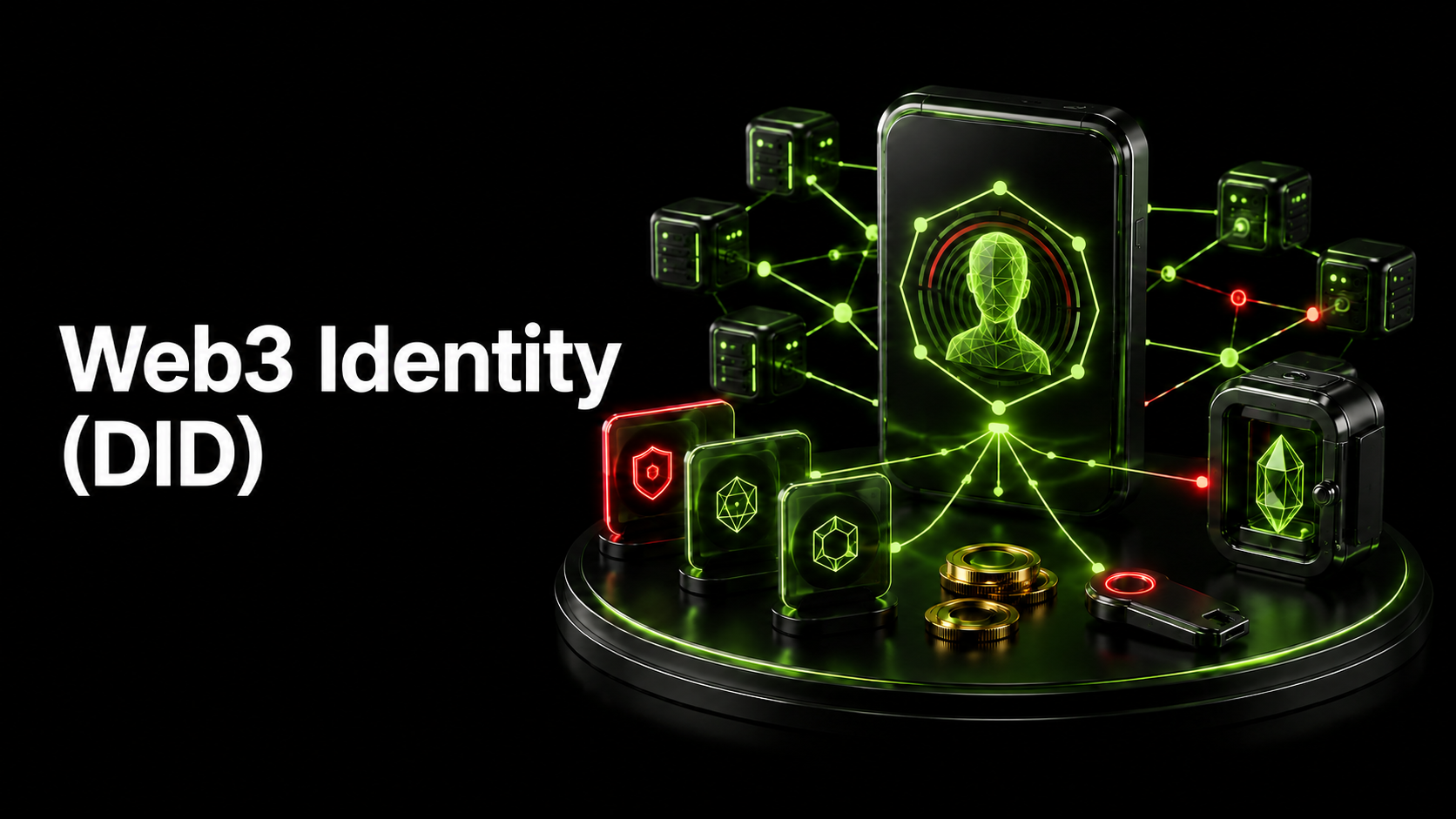

service hotcoin.com
producthotcoin.com
businesshotcoin.com
casecnhotcoin.com