
What is a Staking Node Operator?
A Staking Node Operator is an individual or entity responsible for running and maintaining nodes within a blockchain network to participate in its consensus mechanism. Staking nodes are a critical component of blockchain networks, often associated with Proof of Stake (PoS) or its variants as the consensus mechanism.
Operators must possess technical expertise to ensure high-performance node operation and data security. In some blockchains, node operators may face penalties (slashing) if their nodes experience downtime, exhibit improper behavior, or attempt to attack the network.
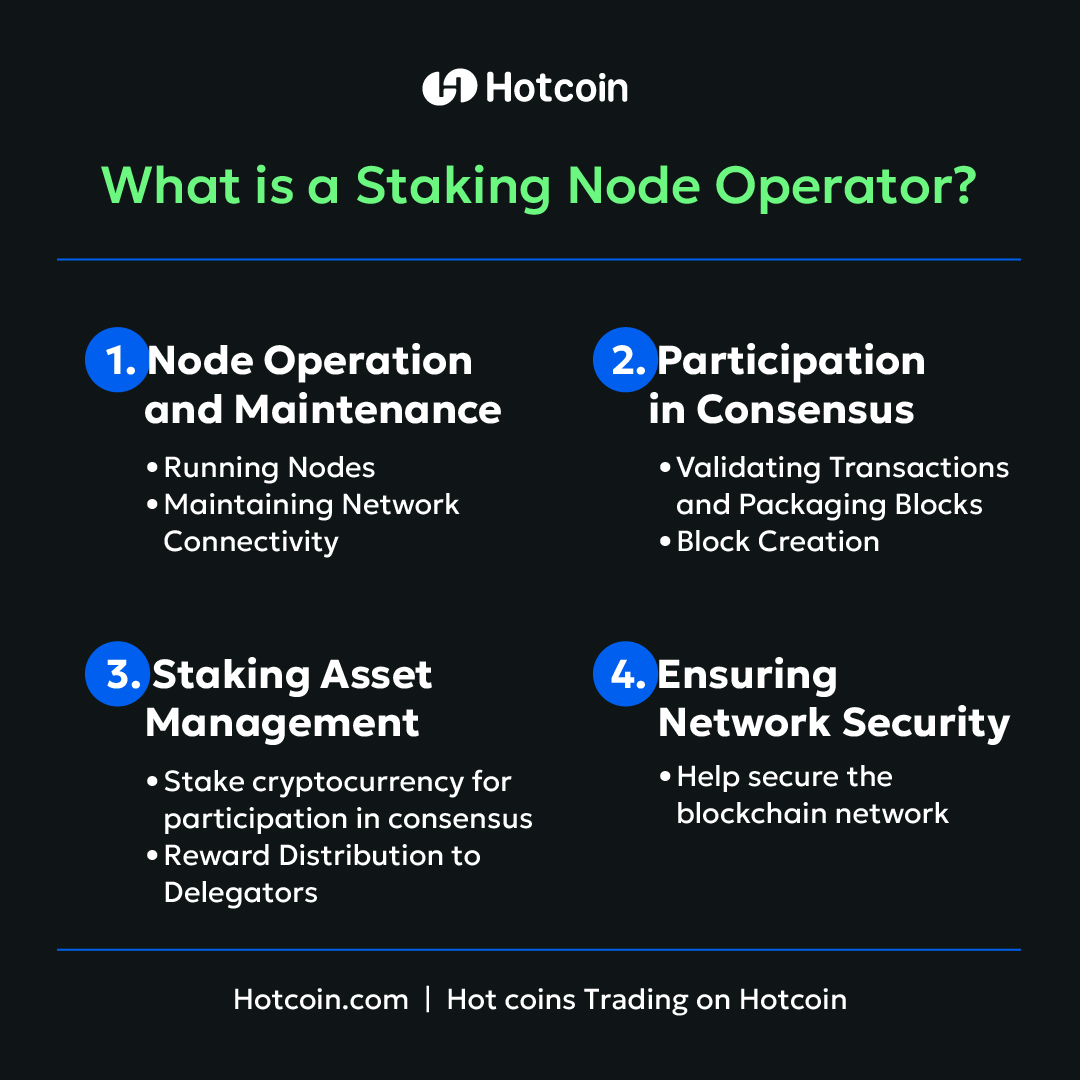
Core Responsibilities and Roles of Staking Node Operators:
Node Operation and Maintenance
Running Nodes: Staking node operators need to run and maintain one or more servers (physical or cloud-based) to ensure the node remains online and can participate in consensus.
Maintaining Network Connectivity: Ensure the node stays connected with other nodes in the blockchain network, receiving and broadcasting transactions and blocks.
Participation in Consensus
Validating Transactions and Packaging Blocks: Verify the legitimacy of transactions and package them into blocks based on network protocols.
Block Creation: Generate new blocks and broadcast them to the network when selected as a block proposer.
Staking Asset Management
Operators typically stake their own cryptocurrency or provide staking services (custodial or non-custodial) for other users to qualify for participation in consensus.
Reward Distribution to Delegators: Many blockchain networks allow users to delegate assets to node operators. Operators are responsible for distributing staking rewards to delegators according to protocol rules or mutual agreements.
Ensuring Network Security
Through staking and efficient node operation, staking node operators help secure the blockchain network, preventing malicious attacks and double-spending issues.
Staking node operators play a vital role in blockchain networks, not only maintaining network security and stability but also providing services and rewards to staking participants. Becoming a successful staking node operator requires strong technical skills, ongoing operational commitment, and a deep understanding of blockchain economic models.
Lectura recomendada
Ver más


Service@hotcoin.com
Product@hotcoin.com
Business@hotcoin.com
Casecn@hotcoin.com