
Quick Overview of Main Project Types in DeFi
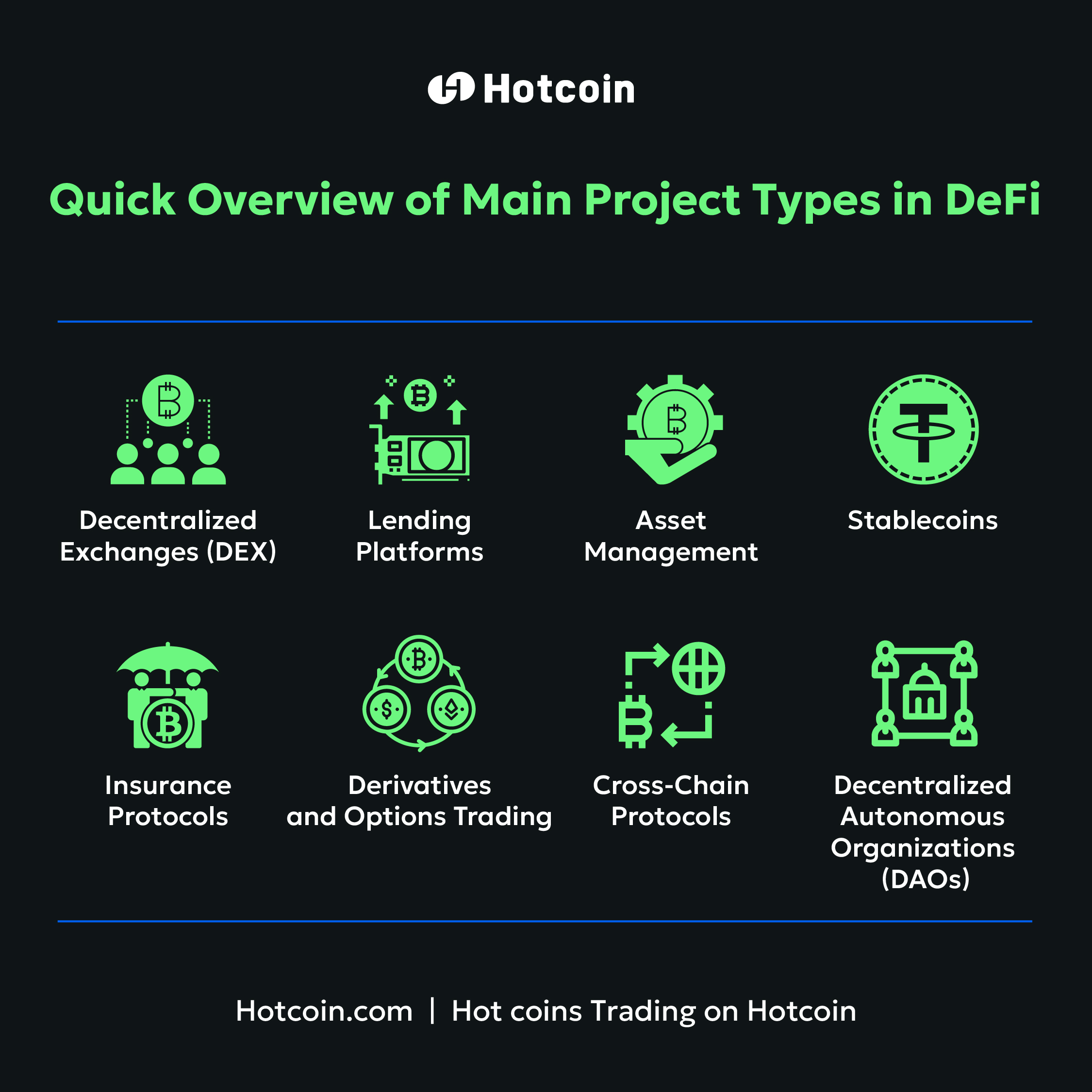
DeFi (Decentralized Finance) includes various types of projects, which can be primarily categorized into the following types:
1. Decentralized Exchanges (DEX)
Definition: Allow users to trade directly on the blockchain without intermediaries or central authorities.
Examples: Uniswap, SushiSwap, PancakeSwap.
2. Lending Platforms
Definition: Users can borrow or lend crypto assets, typically managed through smart contracts.
Examples: Aave, Compound, MakerDAO.
3. Asset Management
Definition: Provide automated investment and asset management services, often using algorithmic strategies.
Examples: Yearn.finance, Set Protocol.
4. Stablecoins
Definition: Digital currencies pegged to fiat currencies or other assets to reduce price volatility.
Examples: DAI, USDC, USDT.
5. Insurance Protocols
Definition: Provide decentralized insurance services to protect users' assets from specific risks.
Examples: Nexus Mutual, Cover Protocol.
6. Derivatives and Options Trading
Definition: Allow users to trade derivatives based on crypto assets, such as futures and options.
Examples: dYdX, Synthetix.
7. Cross-Chain Protocols
Definition: Support asset transfers and interactions between different blockchains.
Examples: Polkadot, Cosmos.
8. Decentralized Autonomous Organizations (DAOs)
Definition: Self-governing organizations implemented through smart contracts that allow community members to make decisions collectively.
Examples: MakerDAO, Aragon.
These project types demonstrate the diversity and innovation within the DeFi ecosystem, driving a transformation in traditional financial models and providing users with more efficient and transparent financial services.
Lectura recomendada
Ver más



Service@hotcoin.com
Product@hotcoin.com
Business@hotcoin.com
Casecn@hotcoin.com