
Euler (EUL) Project Report
Abstract
Euler (EUL) is a modular DeFi lending protocol that allows users to borrow and lend crypto assets freely across Ethereum and other compatible chains. Built around risk isolation, permissionless market creation, and efficient capital use, Euler introduces a unique Vault architecture to enhance flexibility and security.
Since launching in 2021, Euler has undergone major upgrades — including a v2 rebuild designed to boost scalability and safeguard user assets. As of October 2025, the protocol’s total value locked (TVL) continues to grow, expanding into multi-chain deployments and integrating advanced liquidity solutions such as EulerSwap.
The EUL token powers governance and incentives across the ecosystem, reinforcing Euler’s community-driven development model and long-term sustainability.
1. What is Euler?
Euler is a modular lending platform built to give DeFi users unrestricted borrowing and building opportunities. Developed on Ethereum and extended to EVM-compatible chains, including Arbitrum, Base, and BNB Chain, it stands out by allowing anyone to create custom lending markets without central approval.
Unlike traditional lending protocols that pool assets together — often amplifying systemic risks — Euler isolates each market through independent Vault systems. Every asset operates within its own Vault, ensuring that volatility in one market does not impact the broader ecosystem.
At its core, Euler features two key innovations:
-
Euler Vault Kit (EVK): an open-source toolkit enabling developers to build and customize lending Vaults.
-
Ethereum Vault Connector (EVC): a framework that simplifies cross-Vault operations, such as batch transactions and sub-account management.
After a security incident in 2023, Euler underwent a full-scale rebuild. The v2 upgrade introduced stronger audits and reinforced security, establishing Euler as one of DeFi’s most trusted platforms for managing high-risk assets.
2. Key Features
Euler’s strength lies in its modular architecture and developer-friendly design, giving users and builders the flexibility to innovate across DeFi.
-
Permissionless Lending Markets: Anyone can create a lending Vault for any ERC-20 token without protocol approval. This approach boosts liquidity for long-tail assets and supports borrowing for emerging tokens.
-
Risk Isolation and Dynamic Management: Each Vault operates with independent interest rate models, oracles (e.g., Chainlink, Pyth, Redstone), and risk parameters. The EVC enables cross-Vault collateralization, minimizing systemic risks.
-
EulerSwap Integration: A built-in DEX that powers lending-enhanced liquidity pools, allowing users to swap while borrowing for leveraged trading and liquidity provision.
-
Hooks and Custom Logic: Developers can integrate custom functions and automated controls, improving vault flexibility and security.
-
Rewards and Fee Flows: Active users earn rEUL rewards, while protocol fees are distributed through EUL-denominated auctions, creating a closed value-capture loop.
-
Multi-Chain Expansion: In 2025, Euler launched on the Monad mainnet and continues expanding across chains to enhance cross-chain lending efficiency.
Together, these features position Euler as a go-to platform for DeFi builders, supporting projects from simple lending products to complex, composable strategies.
3. Tokenomics
EUL is the native governance token of the Euler protocol, with a fixed total supply of 27,182,818 tokens — a tribute to the mathematician Leonhard Euler. As of October 2025, the circulating supply stands at around 20.69 million tokens, giving EUL a market cap of approximately $150 million and a price near $8.19.
Allocation Breakdown:
-
Euler DAO — 34% (≈9.24M EUL): For community governance and user incentives
-
Euler Foundation — 3.7% (≈1M EUL): To support ecosystem growth and partnerships
-
Strategic Partners — 39.5% (≈10.74M EUL): Allocated to early contributors and collaborators
-
Euler Labs (Team) — 26.5% (≈7.2M EUL): For long-term core development and research
Token Utilities:
-
Governance: EUL holders can propose and vote on protocol upgrades, fee structures, and risk parameters.
-
Incentives: Through the rEUL rewards system, users earn EUL by providing liquidity or participating in community programs.
-
Fee Capture: Protocol revenues are distributed via Fee Flow auctions, which can only be purchased using EUL, reinforcing value capture within the ecosystem.
-
Staking and Vesting: Token releases follow gradual vesting schedules to maintain stability and reduce inflationary pressure.
With its fixed supply, active governance, and built-in utility, EUL is positioned as a long-term value asset in DeFi — particularly during periods of TVL growth and ecosystem expansion.
4. Governance
Euler operates under a DAO governance model, empowering EUL holders to make key decisions through Snapshot and on-chain voting. Governance priorities include risk management, fee distribution, and ecosystem growth, ensuring that protocol evolution remains transparent and community-driven.
The Euler DAO oversees the protocol’s treasury and votes on major initiatives — from new Vault integrations to liquidity incentives and product expansions. Through the rEUL mechanism, users are rewarded for lending and providing liquidity, with earned rEUL redeemable for EUL over time, aligning user activity with long-term governance engagement.
Governance remains community-led yet strategically balanced, with token allocations across partners, contributors, and the core team helping maintain stability and direction. In 2025, the DAO has successfully approved multi-chain deployments and institutional DeFi products, showcasing Euler’s adaptability and forward-thinking approach to decentralized governance.
5. Roadmap
Euler’s roadmap highlights a clear focus on expansion, innovation, and ecosystem maturity, with each milestone shaped by community-driven governance proposals.
-
Early 2024–2025: Launch of Euler v2, addressing past security concerns and completing multi-chain deployments across Arbitrum and Base.
-
Mid-2025: Rollout of EulerSwap DEX, along with institutional-grade products such as credit delegation and synthetic USD. The protocol aims for over 1,000% TVL growth through expanded rEUL incentive programs.
-
Late 2025: Deployment on the Monad mainnet, introduction of Euler Earn (structured yield products), and multi-chain API integrations. Plans also include JPYC stablecoin markets and deep collaboration with Uniswap v4 for advanced liquidity routing.
-
Future Vision: Transform Euler into a DeFi super app — connecting global liquidity, enabling AI-powered risk analysis, and offering an integrated experience for borrowing, trading, and yield generation.
Every step in Euler’s roadmap reinforces its mission to evolve with market trends, ensuring continuous innovation and sustainable ecosystem growth.
6. Team and Investors
Euler was founded in 2021 by Michael Bentley (CEO), Jack Prior, and Doug Hoyte — a team with deep expertise in DeFi, financial engineering, and blockchain infrastructure. Their combined experience across multiple Web3 and software projects has been key to shaping Euler’s modular and security-first design philosophy.
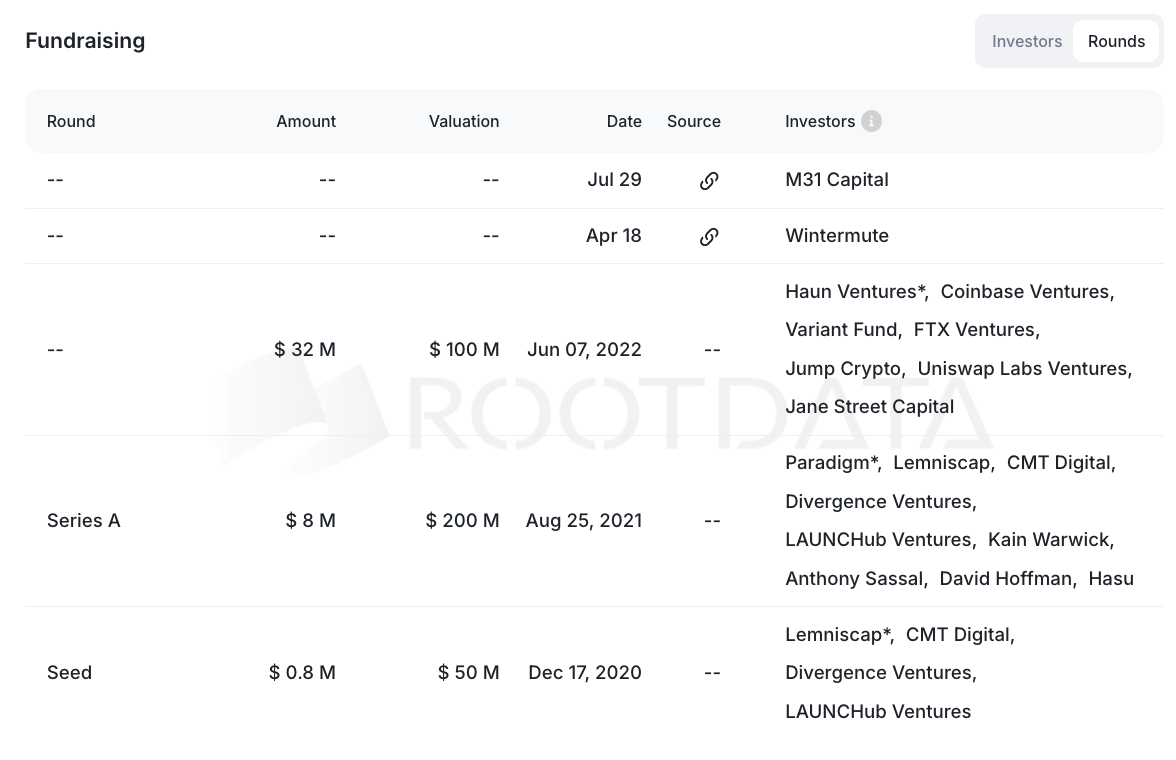
The project is backed by top-tier investors, reflecting strong institutional confidence in its long-term potential. Major backers include Haun Ventures (which led a $32 million Series B round), Jane Street Capital, Paradigm, Coinbase Ventures, Wintermute, Lemniscap, and Uniswap Labs Ventures.
With total funding exceeding $40 million, Euler stands among the most well-capitalized and research-driven DeFi protocols, positioning it for continued innovation and global adoption.
7. Conclusion
Euler marks the next evolution of decentralized lending, solving the key limitations of traditional DeFi platforms through its modular structure and risk-isolated Vault design. With multi-chain deployments and incentive-driven growth accelerating through 2025, the protocol is positioned for strong ecosystem expansion.
The EUL token’s fixed supply and multifunctional utility provide a robust foundation for sustainable value capture. However, continued vigilance toward market volatility and competitive dynamics remains essential.
Overall, Euler delivers powerful tools for developers, lenders, and institutions alike, establishing itself as a cornerstone of the next generation of DeFi infrastructure.
About Us
Hotcoin Research, the core research and investment arm of Hotcoin Exchange, is dedicated to turning professional crypto analysis into actionable strategies. Our three-pillar framework—trend analysis, value discovery, and real-time tracking—combines deep research, multi-angle project evaluation, and continuous market monitoring.
Through our Weekly Insights and In-depth Research Reports, we break down market dynamics and spotlight emerging opportunities. With Hotcoin Selects—our exclusive dual-screening process powered by both AI and human expertise—we help identify high-potential assets while minimizing trial-and-error costs.
We also engage with the community through weekly livestreams, decoding market hot topics, and forecasting key trends. Our goal is to empower investors of all levels to navigate cycles with confidence and capture long-term value in Web3.
Risk Disclaimer
The cryptocurrency market is highly volatile, and all investments carry inherent risks. We strongly encourage investors to stay informed, assess risks thoroughly, and follow strict risk management practices to protect their assets.
Connect with Us
Website: https://lite.hotcoingex.cc/r/Hotcoinresearch
X: x.com/HotcoinAcademy
Email: labs@hotcoin.com
Lectura recomendada
Ver más

Service@hotcoin.com
Product@hotcoin.com
Business@hotcoin.com
Casecn@hotcoin.com