
The friend.tech Phenomenon: Social Tokens and the Key Economy
friend.tech was one of the defining SocialFi experiments of 2023. It packaged access to a creator or social account into a tradable Key: buy someone's Key and you gain entry to their private chat room. Prices are set automatically by a Bonding Curve inside the smart contract, and every trade generates both a protocol fee and income for the Key's subject.
The mechanism turned "following someone" into "holding a position in someone," paying creators when fans arrive and again when they leave, while giving early buyers a chance to profit from everyone who came later. That design pulled in crypto creators, traders and bots almost overnight — and exposed SocialFi's sharpest question: once access itself is tradable, are users buying content, buying a relationship, or buying a bet on the next buyer?
In September 2024, the team set the admin and ownership parameters of the main contracts to the zero address, freezing existing fees and functionality in place. From that point on, the project should no longer be read as a fast-iterating new platform. That said, as of this review the friend.tech site still serves its Keys, Clubs, FRIEND swap and liquidity pages, and describes itself as a unified front end for several Base contracts. "The contracts still run," "the website still exists" and "the product is still actively developed" therefore have to be judged separately.
If you want the background on why SocialFi puts identity, content and income on-chain in the first place, start with SocialFi: The Present and Future of Decentralized Social Networks, then use friend.tech's rise and decline to understand what financializing social relationships costs and what it makes possible.
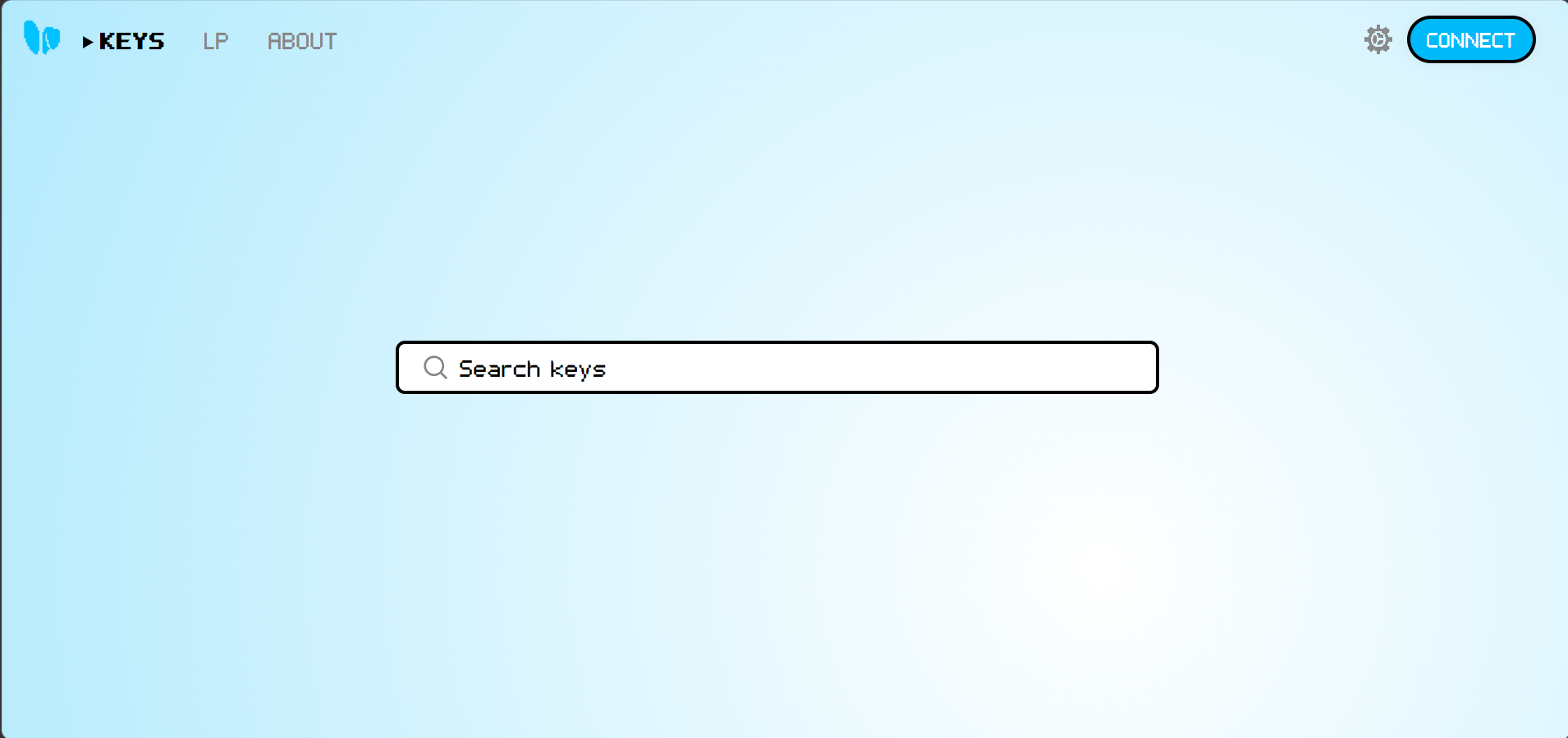
What is friend.tech?
friend.tech is a social finance application deployed on the Base network. Early users joined via invite code, linked an X account to the app, and minted a set of tradable social credentials for themselves. Those credentials were originally called Shares and later renamed Keys, to blunt the misleading connotation of "equity."
The point of a Key is not to acquire stock, copyright or future profits in a creator's business. It unlocks a specific chat room and whatever social benefits the subject has promised. Creators may offer commentary, interaction, Q&A or a membership experience, but those promises typically live in product rules and community norms — they do not automatically become obligations a smart contract can enforce.
friend.tech therefore has three layers at once: the Key and fee contracts on Base, the web front end used for login and chat, and the content and community services the creator decides to provide. Only prices and trades are verifiable on-chain. That says nothing about chat quality, reply frequency, or whether membership promises are honored.
How does the Key economy work?
2.1 Every account has its own Key market
On friend.tech, each subject has an independent Key supply and price. Buying someone's Key is not buying a shared FRIEND token — you are stepping onto that person's own price curve. Keys from different accounts are not interchangeable, and their liquidity, prices and social uses all differ.
Keys are not conventional ERC-20 assets, and they are not shares on a traditional order book. Trades run through the protocol contract, and changes in holder count and supply feed directly into the quoted price.
2.2 The Bonding Curve sets the price automatically
The early Key contract used a Bonding Curve tied to the square of supply. Intuitively: the higher the supply, the more expensive the next Key; when someone sells, supply falls and subsequent prices fall with it. Neither side waits for an order book match — the contract quotes a price from the formula immediately.
This gives a brand-new social market continuous quotes, but it also magnifies the difference between arriving early and arriving late. Early buyers pay little; later buyers pay much more for identical access. When holders exit together, the price slides back down the curve quickly. Nothing here is priced off content quality, revenue or a valuation model — only off changes in contract supply.
2.3 Trading fees are the creator's income
Early friend.tech Key trades typically carried a combined fee of roughly 10%, split between the protocol and the Key's subject. Creators earn not only when users buy in, but potentially when users sell out as well.
That lets creators charge directly against social demand, but it creates a tension: high fees are good for the subject and the platform, and bad for the holder's break-even point. Even if the price never moves after you buy, the fees on both legs can leave you at a loss. Always check the current contract and interface for actual fee rates and recipient addresses.
Why did friend.tech explode so suddenly?
3.1 Social presence and price on the same screen
On traditional social platforms, influence is expressed indirectly through follower counts, likes and ad rates. friend.tech gave every account a live price outright. Whose Key was climbing and who was accumulating holders became a public leaderboard and a running conversation.
3.2 Invite-only access manufactured scarcity
Invite codes and a closed beta produced acute fear of missing out. When a popular creator joined, fans and traders rushed to buy the low-supply Keys, the rising price drew more discussion, and the loop of user growth, price appreciation and social spread reinforced itself.
3.3 Base made on-chain interaction cheap
friend.tech launched close to the Base mainnet launch, and low fees made it viable to trade social assets frequently. Embedded wallets and a mobile web experience lowered the barrier further — users did not have to configure a wallet before they could start.
3.4 Points and a possible airdrop amplified trading
The early points program set expectations of a future reward. Even when the chats themselves held limited appeal, users traded repeatedly for points, rankings and a potential airdrop. That produced impressive numbers while making genuine social demand almost impossible to separate from incentive-chasing behavior.
3.5 Crypto creators formed a cold-start network
Traders, founders and crypto KOLs arrived in a tight window, which made buying a Key feel like part membership subscription and part industry networking. A highly concentrated user base generates network effects fast, but it also capped how far the product could expand into ordinary social use cases.
What are users actually buying when they buy a Key?
First, access. Holders can enter the corresponding chat room; whether they get exclusive information, replies or event eligibility depends entirely on how the subject runs it.
Second, an identity signal. Holding someone's Key can mark support, community membership or early participation, and anyone can verify that relationship from on-chain records.
Third, a tradable position. Keys can be bought and sold along the Bonding Curve, with the price moving with supply. This is what attracts traders — and what easily pushes the social use case into second place.
Fourth, a fee relationship. The Key's subject earns from trading fees, but holders generally do not automatically receive a share of creator revenue, corporate equity or governance rights.
So before buying, answer these: what rights does the Key unlock, who is responsible for delivering them, and if the subject goes silent, does the contract offer a refund? In most cases a smart contract can only guarantee that trades execute along the stated curve. It cannot compel a creator to keep producing.
Why do Bonding Curves so easily create a wealth effect?
In a model where price rises with supply, whoever arrives earliest pays least. When a popular account attracts new buyers, existing holders see a higher sell quote, and paper gains prompt even more people to front-run the next wave. Social influence gets converted into visible financial momentum.
But the curve does not create outside revenue. Without new buyers or ongoing consumption from holders, price appreciation depends on later money. Early profits come out of later buyers' costs, and the subject and the protocol take a fee from every trade in between.
When sentiment turns, selling reduces supply and the quoted price. The later you bought, the more likely you are to be hurt by the decline and the fees at once. Unlike an order book, a Bonding Curve always displays a theoretical price — but a large exit fills continuously down the curve, so users cannot multiply the "current displayed price" by their full position and call it realizable value.
How did the Key model change the creator economy?
friend.tech's meaningful innovation was letting creators earn on-chain income from access and trading activity without waiting for a platform ad-revenue split. Someone with real expertise or a loyal community could bundle group chat, consulting, content and identity verification into a membership product.
It also made the creator-fan relationship more complicated. Holders are both audience and price participants; they may want the creator to keep posting mainly to support Key demand, while the creator may start caring more about trading activity than content quality. Bad news, a departure or a slower posting cadence all hit community trust and asset price simultaneously.
A healthier creator model ties fees to clearly defined services — fixed-term memberships, verifiable events, content subscriptions or community tools — rather than relying on Key appreciation alone. For more on subscriptions, tipping, digital collectibles and on-chain revenue splits, continue with The Creator Economy: How Web3 Is Changing Content Monetization.
What structural risks did friend.tech expose?
7.1 Social demand and speculative demand get mixed together
A user may not care about the chat at all, and simply expect the next buyer to pay more. Once the airdrop ends or trading cools, buy-side interest, content and community activity can all disappear together.
7.2 Price does not measure a person's worth
A Key price reflects only curve supply and trading behavior, not anyone's ability, credibility or content quality. Publicly pricing human relationships also invites status competition, harassment and reputational damage.
7.3 The subject can simply stop delivering
Holding a Key does not force a subject to reply. Even if the chat room stays open, a creator can post less, change the benefits, or leave the platform entirely — and Key buyers bear the risk that the content never materializes.
7.4 Exit liquidity depends on other holders
A curve quoting a price does not mean everyone can sell at the screen price at once. Large sells reduce supply and subsequent prices, and even a popular Key can lose depth quickly.
7.5 High fees erode returns
Fees apply on every buy and every sell. Frequent turnover keeps paying the subject, the protocol or the liquidity mechanism, and the price has to rise far enough to cover all of it.
7.6 Front end, contracts and community are separate risk layers
Contracts continuing to run does not mean the website, chat service and indexers stay available forever; a live website does not mean contract bugs can be fixed. Subjects may also migrate their community to Telegram, Discord or elsewhere, decoupling the on-chain Key from the actual service.
What were V2, Clubs and the FRIEND token trying to solve?
V2, launched in 2024, added Clubs and the FRIEND token in an attempt to extend the individual Key market into groups, governance and liquidity. Clubs let people build chat spaces around a theme, with Club Keys managing entry and economics, while FRIEND was intended for ecosystem trading, liquidity and rewards.
The upgrade tried to reduce the product's dependence on any single creator, letting value accrue around communities themselves. But a new token, an airdrop claim flow and more intricate rules also raised the cost of understanding the product. Many users cared more about whether rewards could be sold than about whether a Club produced lasting content, and V2 never restored the sustained heat of 2023.
The site still hosts FRIEND-to-ETH swap and liquidity pages today, noting that liquidity providers can share in a portion of FRIEND-ETH and Club Key trading fees. Liquidity incentives are not risk-free yield: LPs can face impermanent loss, token price declines, thin volume and contract risk.
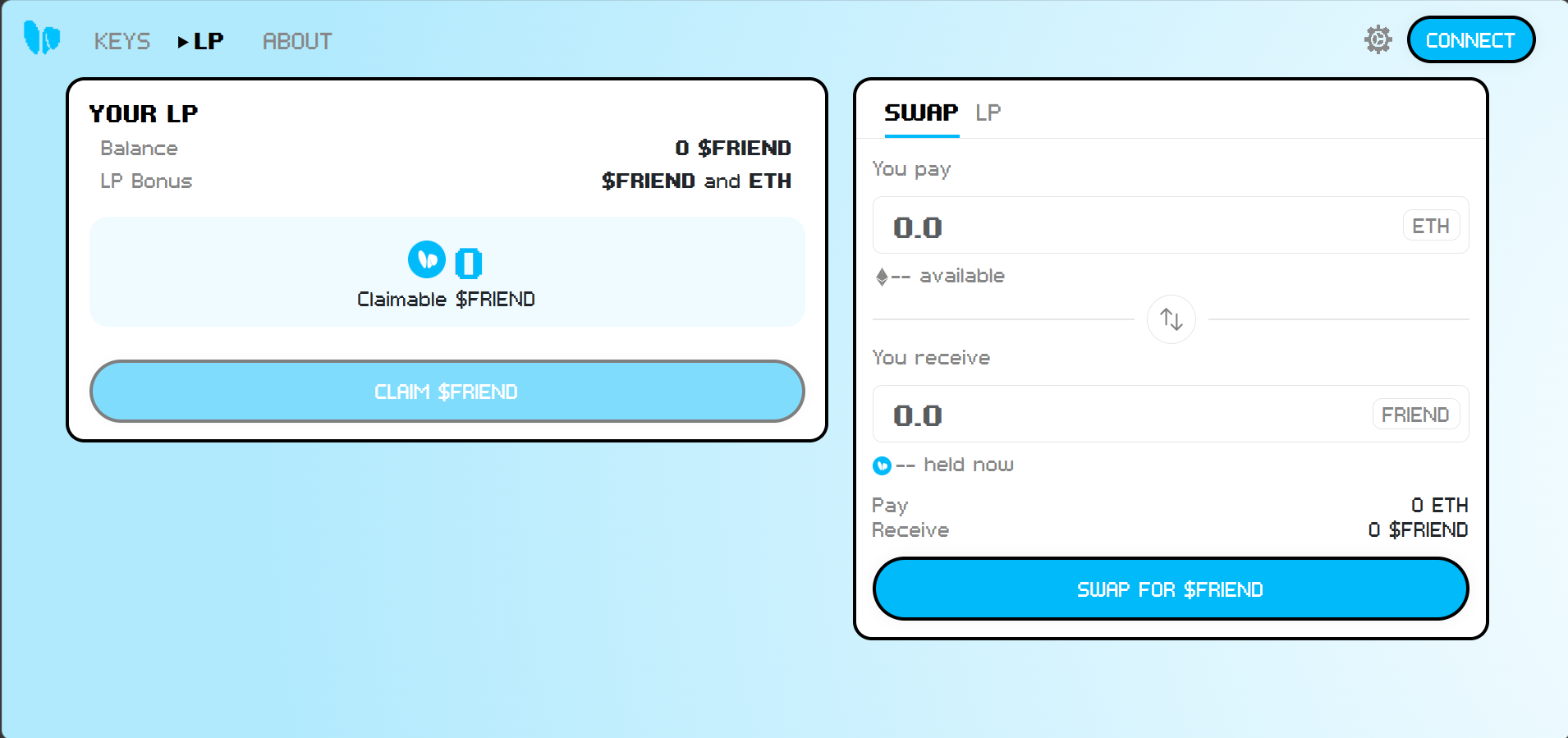
What did giving up contract control in 2024 actually mean?
In September 2024, friend.tech announced it had set the Admin and Ownership parameters of its contracts to the zero address, preventing any future changes to fees or functionality. The team also said the standalone web front end would keep running, and that contract and web fees would no longer flow to the developers' multisig.
This raised the certainty that existing rules cannot be arbitrarily changed, at the cost of the ability to upgrade, patch or add features. If a logic flaw surfaces, the original contract can no longer be addressed through admin privileges; shipping a new version means deploying new contracts and persuading users to migrate.
So this is not simply "fully decentralized." A genuinely durable protocol still needs developers, a front end, indexers, liquidity and a community. Burning admin rights only answers the question of who can change the old contracts. It does not guarantee the product will be maintained.
Is friend.tech still running today?
That depends on what "running" means. As of this review, the site is reachable and lists Base contracts including Keys, Clubs, FRIEND, BunnySwap, RabbitRouter, BestFriend and on-chain Metadata. The About page states plainly that data is stored on Base and that the contract developers cannot modify or delete it.
But reachable is not the same as active. Legacy contracts still accepting trades does not mean the original team is still building; a website that connects a wallet does not mean chat, community and liquidity have returned to their peak. Calling it "shut down" is too absolute, and calling it a fast-moving project is equally inaccurate.
The better description: friend.tech has shifted from a fast-growing SocialFi product into an on-chain system built mostly on existing contracts and a limited front end. Treat it as a high-risk legacy protocol, not something whose safety and demand today can be inferred from 2023's hype.
How is friend.tech different from Farcaster?
friend.tech is an application designed around tradable access, with social and financial mechanics tightly bound together. Its user growth was driven in large part by Key prices, fees, points and anticipated rewards.
Farcaster is first and foremost an open social protocol, using FIDs, signed messages and multiple clients to make identity and relationships portable. It can host Mini Apps, tokens and tipping too, but ordinary Casts and follows are not wrapped into tradable assets.
The two represent two SocialFi routes: friend.tech turns relationships into a market first and uses the market to draw interaction; Farcaster builds the public social network first and lets developers decide whether to add financial features. For the layering of protocol, client and on-chain application, read Farcaster: Silicon Valley's Favorite Decentralized Social Protocol.
What lessons did friend.tech leave for social tokens?
First, access can become an on-chain asset, but the term, the service, the refund policy and the migration conditions have to be spelled out. Vague rights push all user expectations onto price.
Second, a Bonding Curve can bootstrap a market fast, but it is no substitute for real demand. It handles automated issuance and quoting; it does not automatically create content, trust or sustainable revenue.
Third, creator fees improve monetization and also reward trading over service. If income comes mainly from fans churning in and out, creator and holder incentives are not necessarily aligned.
Fourth, public prices change social behavior. Users may approach only the popular accounts, and creators may manufacture stimulation continuously to defend a price, letting speculative rankings reshape human relationships.
Fifth, token ownership must be kept separate from legal rights. Keys, FRIEND or Club credentials do not automatically represent equity, copyright, profit sharing or regulated investor protections. For the differences between personal tokens, community tokens and fan benefits, read Social Tokens: Putting the Fan Economy On-Chain.
The Hotcoin FRIEND six-dimension framework
To assess SocialFi projects resembling friend.tech, use the FRIEND six-dimension method. It is not an investment rating — it is a checklist to run before participating.
13.1 F: Function — what does the token unlock?
Confirm whether buying gets you chat, content, events or governance rights, and whether those rights have a term, a cap and an accountable party behind them.
13.2 R: Revenue — where does the income come from?
Distinguish genuine subscriptions and content consumption from trading fees. If creator income comes mainly from later buyers, the model is highly sensitive to new capital inflows.
13.3 I: Incentive — do the incentives distort behavior?
Check whether points, airdrops and rankings encourage wash trading, frequent turnover or fake interaction. Only if people still talk once the rewards are removed is there genuine social value.
13.4 E: Exit — are exit costs transparent?
Calculate trading fees, gas, price impact and realizable liquidity. Never treat the last traded price as the value of an entire position.
13.5 N: Network — will the community stay?
Watch creator updates, holder activity and non-financial interaction. A lot of wallets and volume is not the same as a healthy community.
13.6 D: Decentralization — which parts are genuinely sustainable?
Check contract permissions, the front end, chat, indexers, metadata and community entry points separately. Immutable contracts constrain admins and block fixes in equal measure.
How can ordinary users reduce their risk?
First, look at the rights before the price. Confirm what a Key or Club actually provides and whether the subject has been active recently. Do not buy simply because the price is rising or a celebrity joined.
Second, use a separate small wallet. friend.tech touches Base, FRIEND, Key and LP contracts — do not connect the wallet holding your main assets to a legacy SocialFi app.
Third, calculate the full cost of exiting. Include the buy fee, the sell fee, gas and price impact, and do not treat a paper gain as a realized one.
Fourth, verify the contracts and the front end. Confirm contract addresses via the official About page, and be wary of counterfeit Keys, fake airdrops, "migration" websites and phishing links claiming they can restore old points.
Fifth, be cautious about providing liquidity. LP fees cannot offset every loss; thin volume, FRIEND price swings and contract risk can each exceed what you earn in fees.
Sixth, never commit money you cannot afford to lose in pursuit of "inside information." Paid chats can contain opinions, promotions or conflicts of interest, and none of it is investment advice.
Frequently asked questions
15.1 Has friend.tech shut down?
Not a simple yes. The site and contracts remain accessible, but the team relinquished control of the main contracts in 2024 and the product no longer sustains its early growth. Check the contracts, the front end and community activity separately before using it.
15.2 Is a Key a share in the creator?
No. A Key generally provides access to a chat or community. It does not automatically confer corporate equity, copyright, profit sharing or legal securities rights.
15.3 Why does a Key price rise or fall?
Price is determined mainly by the Bonding Curve and current supply. Buying increases supply and pushes subsequent prices up; selling reduces supply and lowers the quote. None of it is valued off creator revenue.
15.4 Does a Bonding Curve guarantee I can sell?
The contract will usually quote a curve price, but many holders exiting — or one large exit — pushes the price down along the curve, and selling still incurs fees and gas. The screen price is not what an entire position converts to.
15.5 Are FRIEND and individual Keys the same asset?
No. FRIEND is the V2 ecosystem token, an individual Key corresponds to one account's access and trading market, and a Club Key corresponds to a specific community. All three differ in purpose and risk.
15.6 Does setting contract permissions to the zero address make it fully decentralized?
Not necessarily. The old contracts can no longer be modified by an admin, but the website, chat, indexers, liquidity and community may still depend on a handful of operators — and vulnerabilities become harder to fix.
15.7 Can creators reliably earn through Keys?
There is no guarantee. Income depends on trading, user demand and fee rates, and can fall away quickly once attention fades. Durable income still requires consistent content, defined services and a reliable community.
Conclusion: friend.tech is a mirror for SocialFi
friend.tech proved that social influence can be financialized rapidly by smart contracts. Keys, the Bonding Curve and creator fees put access, identity and trading into one product, gathering users and capital in an extraordinarily short time and opening a new experiment in direct creator monetization.
Its decline matters just as much. When airdrops and price become the main reason to participate, content quality and real relationships are easily buried under trading volume; when creators stop delivering, users exit en masse or the team abandons upgrades, the on-chain contracts remain, but the social value may not.
The next generation of SocialFi should not simply copy "give everyone a price curve." It should define stable content, membership and community services first, then decide whether a tradable asset is needed at all. For users, the correct order is: judge the rights and the community first, understand fees and exit mechanics second, and consider price last.
Having finished this article, you can return to SocialFi: The Present and Future of Decentralized Social Networks to continue building the full picture of open social graphs, the creator economy and social tokens.
To manage assets on Base and other chains, use the Hotcoin Web3 Wallet; for mobile market data and trading tools, head to the Hotcoin App; for more educational content, visit Hotcoin.
Risk disclaimer: This article is for education and information sharing only and does not constitute investment, legal or tax advice. The status of friend.tech's contracts, front end, FRIEND, Keys, Clubs, liquidity and community may change. Before participating, verify the current official site, contract addresses, actual functionality, wallet approvals and the rules in your jurisdiction.
Recommended
View more


service hotcoin.com
producthotcoin.com
businesshotcoin.com
casecnhotcoin.com