
What is Token Unlock in Cryptocurrency?
In the world of blockchain and cryptocurrency, Token Unlock is a significant concept. Simply put, it refers to the process where locked tokens are released and made available for circulation in the market after a specific time or upon meeting certain conditions.
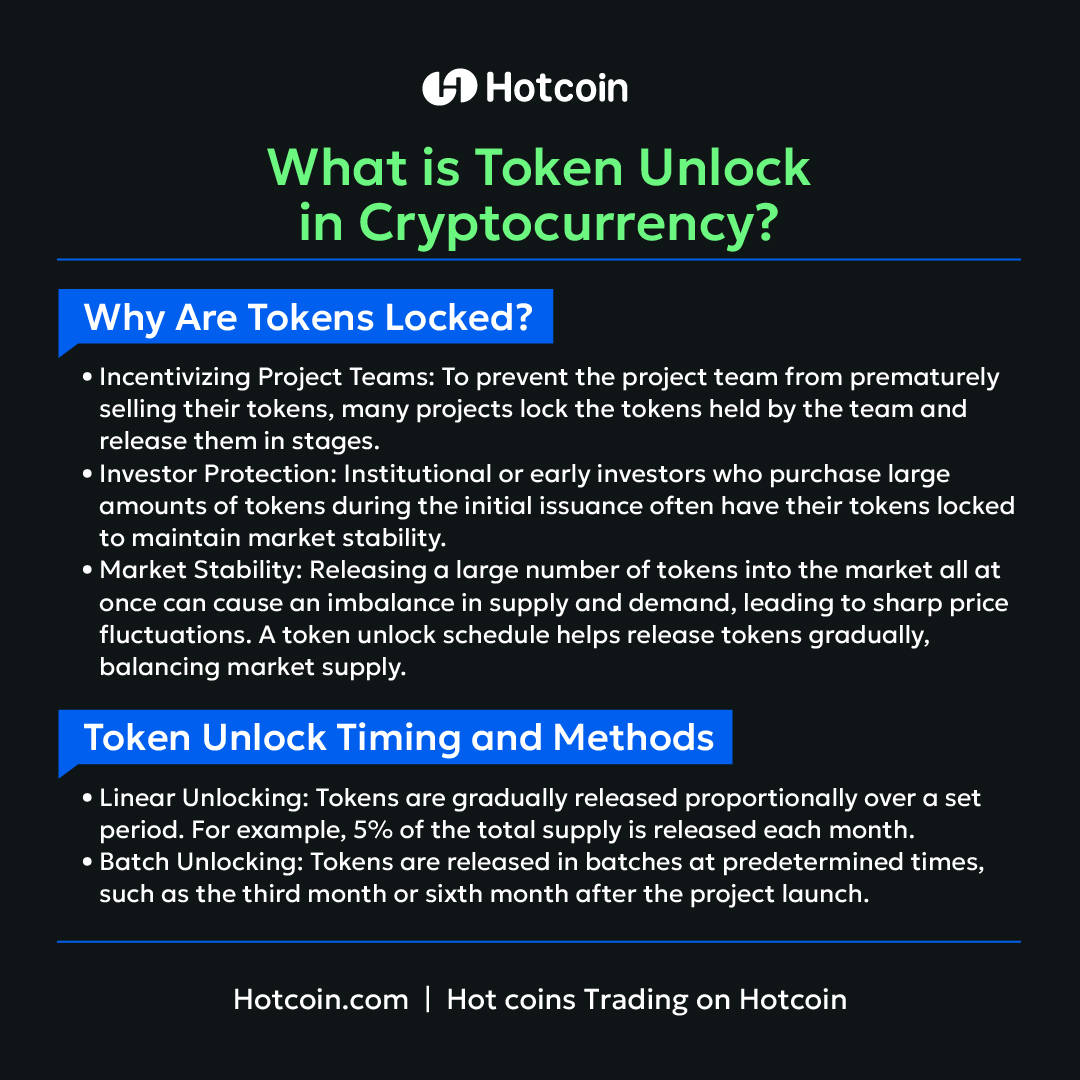
Why Are Tokens Locked?
Incentivizing Project Teams: To prevent the project team from prematurely selling their tokens, many projects lock the tokens held by the team and release them in stages.
Investor Protection: Institutional or early investors who purchase large amounts of tokens during the initial issuance often have their tokens locked to maintain market stability.
Market Stability: Releasing a large number of tokens into the market all at once can cause an imbalance in supply and demand, leading to sharp price fluctuations. A token unlock schedule helps release tokens gradually, balancing market supply.
Token Unlock Timing and Methods
Token unlocks are typically carried out using linear unlocking or batch unlocking methods:
Linear Unlocking: Tokens are gradually released proportionally over a set period. For example, 5% of the total supply is released each month.
Batch Unlocking: Tokens are released in batches at predetermined times, such as the third month or sixth month after the project launch.
Impact of Token Unlock on the Market
Token unlocks can have varying impacts on the market, especially in the case of large-scale unlock events:
Increased Selling Pressure: Unlocked tokens may be sold, causing a short-term price drop.
Market Expectations: Investors often analyze unlock schedules in advance and adjust their investment strategies accordingly.
Project Credibility: A transparent and well-structured unlocking mechanism helps build investor confidence in the project.
In summary, token unlocks are an essential part of the cryptocurrency ecosystem. A reasonable unlocking mechanism not only helps maintain market stability but also balances project development with investor interests, fostering healthy and sustainable growth for blockchain projects.
Recommended
View more


Service@hotcoin.com
Product@hotcoin.com
Business@hotcoin.com
Casecn@hotcoin.com