
What is Distributed Validator Technology (DVT)?
Distributed Validator Technology (DVT) is an emerging architectural innovation in blockchain designed to enhance the security, reliability, and decentralization of validator nodes. It achieves this by distributing the responsibilities of a validator across multiple independent nodes or entities, which collaboratively perform block validation and participate in the network.
Core Concepts of DVT
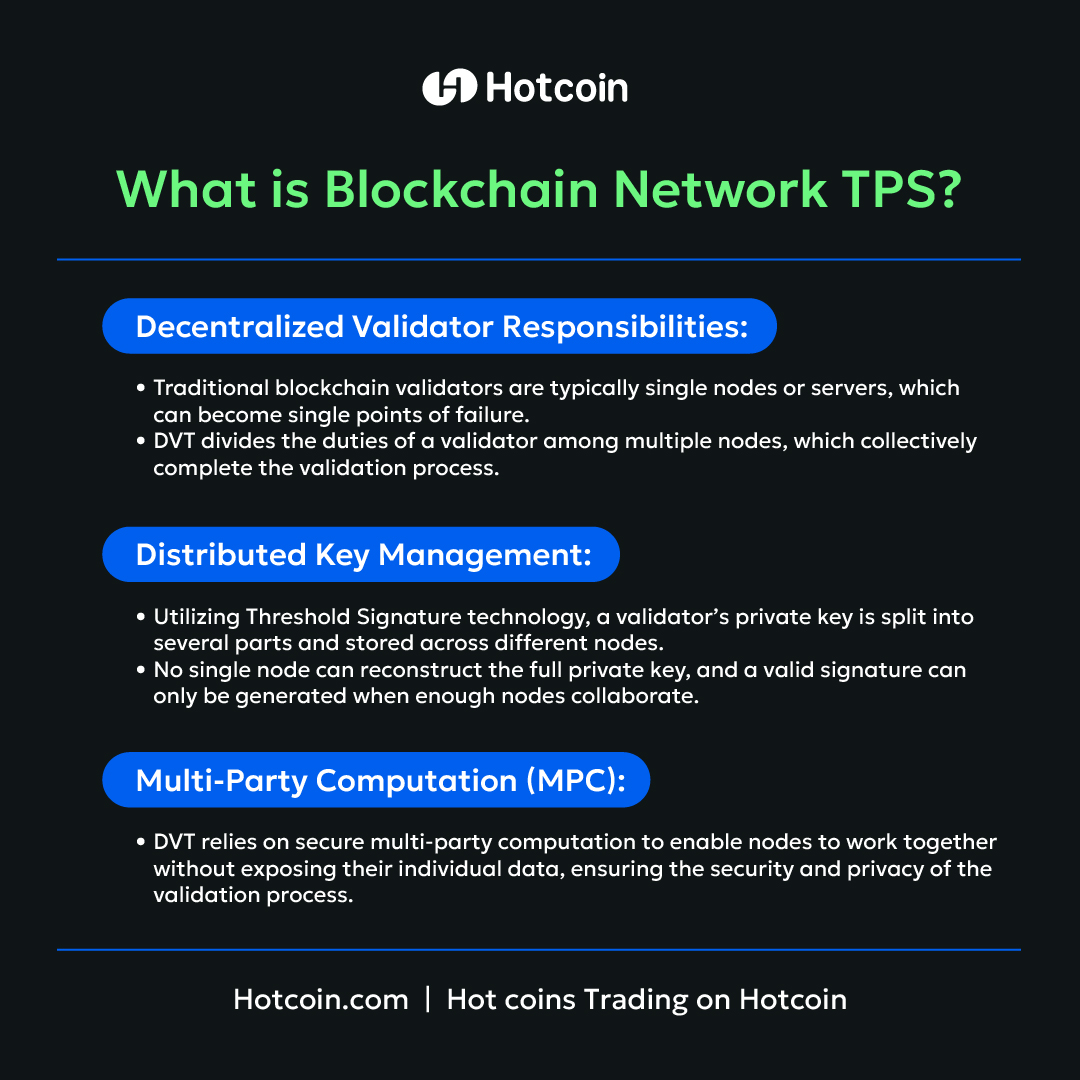
Decentralized Validator Responsibilities:
Traditional blockchain validators are typically single nodes or servers, which can become single points of failure.
DVT divides the duties of a validator among multiple nodes, which collectively complete the validation process.
Distributed Key Management:
Utilizing Threshold Signature technology, a validator’s private key is split into several parts and stored across different nodes.
No single node can reconstruct the full private key, and a valid signature can only be generated when enough nodes collaborate.
Multi-Party Computation (MPC):
DVT relies on secure multi-party computation to enable nodes to work together without exposing their individual data, ensuring the security and privacy of the validation process.
Key Advantages of DVT
Enhanced Security:
By distributing validator responsibilities across multiple nodes, attackers cannot disrupt a validator’s operation by compromising a single node.
Threshold signatures ensure the safety of private keys, even if some nodes are breached.
Improved Fault Tolerance:
Even if some nodes fail or go offline, the remaining nodes can continue to perform validation tasks, maintaining network stability and continuity.
Promotes Decentralization:
A distributed validator is formed by multiple independent nodes, reducing reliance on a single validator and further enhancing the decentralization of the blockchain network.
Lower Barrier to Entry:
Individuals and small organizations can collaborate to collectively serve as a validator, reducing the technical and hardware requirements for any single entity to run a validator node.
DVT is a groundbreaking technology that is advancing the security and decentralization of blockchain validation mechanisms. It is particularly suitable for high-value on-chain activities, such as staking, and scenarios that demand stringent security measures. DVT is expected to play a significant role in the future development of blockchain ecosystems.
Recommended
View more

Service@hotcoin.com
Product@hotcoin.com
Business@hotcoin.com
Casecn@hotcoin.com